How to Care for Leather Products: Complete Leather Cleaning & Conditioning Guide

Leather is one of the few materials that genuinely improves with age - but only when it is cared for properly. A well maintained leather wallet develops a richer patina over time. A leather belt that is cleaned and conditioned regularly holds its shape and color for years. A leather accessory that is stored and handled with attention becomes more personal and more beautiful the longer you own it. Neglect, on the other hand, leads to dryness, cracking, fading, and a shortened lifespan. This comprehensive guide covers everything you need to know about leather care: how to clean it, how to condition it, how to protect it from moisture, how to store it correctly, and how to maintain it as part of a simple, consistent routine that ensures your leather goods last for decades.

Why Leather Requires Regular Care

Genuine leather is a natural material. Unlike synthetic alternatives, it breathes, absorbs, and responds to its environment. Over time, leather loses moisture through everyday use. The oils that keep it supple gradually diminish. Exposure to heat, sunlight, humidity, and friction all accelerate this process. Without periodic attention, leather becomes dry and brittle, loses its flexibility, and eventually begins to crack along stress points such as wallet folds or belt curves.

Regular care does not need to be complicated or time consuming. A simple routine of cleaning and conditioning every few months is enough to keep most leather products in excellent condition. The earlier you establish this habit, the better your leather will age. Products that are cared for from the beginning develop a much more attractive patina than those that are only treated after visible damage appears. This is particularly true for men's leather wallets and other daily carry items that experience constant handling.

It is also worth understanding that different leather types respond slightly differently to care products. Full grain leather, which is the highest quality and most durable type, benefits most from conditioning because it retains the natural grain and breathes well. Top grain leather, while still genuine, has been sanded and refinished, which affects how it absorbs conditioner. If you want to understand more about how leather quality affects long term performance and care requirements, our leather accessories guide covers these differences in detail.

The investment in quality leather products is only worthwhile if you commit to basic maintenance. A properly cared for full grain leather wallet can last twenty years or more, developing character and richness that makes it more valuable over time. The same wallet, neglected, might last three to five years before becoming unusable. The difference is not the leather itself but the care it receives.

How to Clean Leather Properly

Cleaning is the foundation of leather care. Before conditioning or protecting leather, it needs to be free of surface dust, oils, and residue. For most leather products including wallets, belts, and small accessories, cleaning is straightforward but requires attention to detail.

Start with a soft, dry cloth and wipe down the entire surface. This removes loose dust and light debris. For more thorough cleaning, use a slightly damp cloth with a very small amount of mild, natural soap. Wipe gently in circular motions, working across the entire surface rather than scrubbing a single spot. After cleaning, wipe away any soap residue with a clean damp cloth and allow the leather to dry naturally at room temperature.

There are several things to avoid during cleaning. Never soak leather in water or expose it to prolonged moisture. Never use alcohol based cleaners, acetone, or harsh household detergents. These strip the natural oils from leather and cause rapid drying and discoloration. Avoid paper towels, which can scratch delicate surfaces. Always use soft cotton or microfiber cloths.

For wallets specifically, pay attention to the fold lines and corners, where oils from hands accumulate most. For women's leather wallets, which often feature more intricate designs and card slots, use a soft brush to gently clean between pockets and along seams. For belts, focus on the area around the buckle and the holes, which tend to collect the most grime. A light cleaning every two to three months is usually sufficient for products in regular daily use.

If your leather product has become particularly dirty or has developed surface staining, consider using a dedicated leather cleaner rather than household soap. These products are pH balanced for leather and remove dirt without stripping protective oils. Apply according to the manufacturer's instructions, always testing on a small inconspicuous area first.

Conditioning: The Most Important Step in Leather Care

If cleaning removes what should not be there, conditioning restores what leather needs. A good leather conditioner replenishes the natural oils that keep leather soft, flexible, and resistant to cracking. Conditioning is the single most impactful thing you can do for leather longevity, and it is also the step that most people skip.

Choose a conditioner that is designed for genuine leather and contains natural oils or waxes. Avoid products with silicone or petroleum bases, which can create a surface coating that prevents leather from breathing. Apply a small amount to a soft cloth and work it into the leather using gentle circular motions. Cover the entire surface evenly, paying extra attention to areas that flex frequently such as wallet folds or belt curves. Allow the conditioner to absorb for ten to twenty minutes, then buff lightly with a clean dry cloth to remove any excess.

For most leather products in regular use, conditioning every three to six months is sufficient. In dry or hot climates, or if the leather is used daily and exposed to the elements, conditioning more frequently makes sense. A simple test is to notice whether the leather feels slightly dry or stiff to the touch. If it does, it is ready for conditioning regardless of how recently you last treated it. This is especially important for leather belts, which experience constant flexing and environmental exposure.

Conditioning also deepens the natural patina of leather over time. Each application adds a subtle richness to the color and texture that makes well cared for leather visually distinct from neglected pieces. This is one of the reasons why quality leather products become more attractive with age rather than less. For women's wallets, belts, and handmade accessories, this process is part of what makes genuine leather worth choosing over synthetic alternatives.

When conditioning, pay special attention to edges and stitching. These areas dry out faster than flat surfaces because they have more exposed leather fibers. A small amount of conditioner worked into edges prevents cracking and maintains the clean finished appearance that distinguishes quality leather goods.

Protecting Leather from Water and Moisture

Leather is not naturally waterproof. Exposure to rain, spills, or prolonged humidity can cause staining, warping, and accelerated drying. Protecting leather from moisture is especially important for items used outdoors or in unpredictable conditions such as travel wallets and everyday carry accessories.

A leather waterproofing spray applied after cleaning and conditioning creates a protective barrier that repels water without blocking the natural breathability of the material. Apply the spray in a well ventilated area, holding it at an even distance from the surface. Allow the leather to dry completely before use. Reapply every few months or after the leather has been exposed to significant moisture.

If leather does get wet, allow it to dry slowly and naturally. Never use a hair dryer, radiator, or direct sunlight to speed up drying. Rapid heat causes leather to shrink, crack, and lose its shape. Once dry, apply conditioner to restore moisture lost during the drying process. For more detail on how different leather types handle water exposure, read our article on water resistance explained by leather type.

For leather products that will be used in wet conditions regularly, consider investing in a wax based waterproofing treatment rather than a spray. These create a more durable barrier but require more careful application. Test any waterproofing product on an inconspicuous area first, as some treatments can slightly darken the leather or change its surface texture.

How to Restore Dry or Neglected Leather

If a leather product has been neglected for a long time and shows signs of dryness or surface cracking, it may still be recoverable. The process requires patience but is straightforward and can bring even severely dried leather back to usable condition.

Begin with a gentle clean using a damp cloth to remove surface buildup and any accumulated dirt or oils. Allow the leather to dry naturally. Apply a generous amount of conditioner and allow it to absorb fully, ideally overnight. The next day, buff lightly and assess the condition. For severely dry leather, repeat this conditioning process several times over the course of a few weeks before expecting significant improvement. Gradual rehydration is far more effective than a single heavy application.

Deep cracks in leather are more difficult to address and may require a specialist leather repair product or professional treatment. However, minor surface scratches on smooth leather can often be reduced by gently rubbing with a fingertip, as the natural warmth and oils from skin help blend small marks into the surrounding surface. For a detailed approach to scratch repair, read our guide on how to repair leather scratches.

If the leather has developed mold from being stored in damp conditions, wipe it down with a cloth dampened with a mixture of equal parts water and white vinegar. Allow it to dry completely, then condition thoroughly. Mold can cause permanent staining if left untreated, so address it as soon as you notice it.

For handmade leather goods that have been neglected, pay particular attention to hand stitching and edge finishing. These areas can dry out and become brittle, leading to thread breakage or edge cracking. Conditioning these details carefully can extend the life of handmade pieces significantly.

Daily Habits That Extend Leather Life

Beyond periodic cleaning and conditioning, a few simple daily habits make a significant difference in how leather products age. Avoid overstuffing wallets, as constant pressure at fold lines accelerates cracking and distorts the shape over time. A wallet that is packed too tightly loses its natural form and develops stress points that eventually fail. Keep your wallet to a reasonable thickness by regularly removing unnecessary cards, receipts, and cash.

Store leather goods in a cool, dry place away from direct sunlight when not in use. Prolonged UV exposure fades color and dries out leather more quickly than almost any other factor. If you display leather items on a shelf or desk, rotate their position periodically to prevent uneven fading. For travel wallets and accessories that are used intermittently, proper storage between trips is essential to maintaining their condition.

For belts, hang them vertically rather than folding them in a drawer. Folding creates permanent crease marks over time. Rotate between two or more belts if you wear one daily, allowing each one to rest and recover its natural shape between uses. The same logic applies to wallets used every day. Having a secondary wallet for weekends or casual use extends the life of your primary wallet significantly.

Avoid storing leather in plastic bags or airtight containers. Leather needs airflow to prevent mold and maintain its natural moisture balance. A breathable dust bag or a simple shelf in a dry wardrobe is usually the best storage option. If you live in a humid climate, consider using silica gel packets in storage areas to control moisture without restricting airflow.

Handle leather products with clean, dry hands whenever possible. Oils, lotions, and dirt from hands transfer to leather surfaces and can cause discoloration or accelerate wear. If you apply hand lotion, wait a few minutes before handling leather wallets or accessories to allow the lotion to absorb fully.

Leather Care for Specific Product Types

While the principles of leather care are consistent, different product formats have slightly different priorities based on how they are used and what stresses they experience.

For wallets, the main concern is the fold line and the card slot openings, which experience the most friction and flexing. Conditioning these areas regularly prevents the fine cracking that often appears first along wallet folds. For bifold and trifold wallets, the spine where the wallet bends receives constant stress and should be conditioned every few months. Our bifold wallet collection features construction designed to distribute stress evenly, but regular conditioning is still essential.

For leather belts, the area near the buckle and the holes receives the most stress. Keep this section clean and conditioned, and check periodically for early signs of wear. The holes themselves can develop cracking around the edges from repeated use, so apply a small amount of conditioner to these areas with a cotton swab. Belt edges, especially on unfinished or hand burnished belts, benefit from occasional edge dressing or wax application to maintain their sealed appearance.

For handmade leather accessories such as passport cases, key holders, and luggage tags, the edges and stitching lines deserve particular attention. Handmade items often feature burnished or painted edges that can dry out and chip if not occasionally treated. A small amount of conditioner applied to the edges keeps them supple and maintains the clean finish. Hand stitching, typically done with waxed thread, does not usually require special treatment, but keeping the leather around stitching flexible prevents thread tension and potential breakage.

For handmade wallets, which often use thicker full grain leather than mass produced alternatives, conditioning is especially important because the leather takes longer to absorb treatments. Apply conditioner and allow extra time for absorption, sometimes up to thirty minutes, before buffing. The result is deeper penetration and longer lasting protection.

Choosing the Right Leather Care Products

Not all leather care products are created equal. The market is filled with options, many of which contain ingredients that provide short term shine but long term damage. Understanding what to look for helps you make better choices.

For cleaners, choose pH balanced products specifically formulated for leather. Saddle soap is a traditional option that works well for heavily soiled leather, but it can be drying, so always follow with conditioner. Dedicated leather cleaning foams or creams are gentler and more appropriate for fine leather goods.

For conditioners, look for products containing natural oils such as mink oil, neatsfoot oil, or lanolin. These penetrate leather fibers effectively and provide genuine nourishment. Avoid conditioners heavy in wax, which sit on the surface and can interfere with breathability. For vegetable tanned leather, which is what we use exclusively at Hedonist Chicago, conditioners with natural oils work particularly well because they complement the tanning process rather than fighting against it.

For waterproofing, choose sprays specifically designed for leather rather than general fabric protectors. Leather specific products allow the material to breathe while repelling water. Reapply after conditioning and before exposing leather to wet conditions.

Store your leather care products in a cool, dry place and check expiration dates. Old or improperly stored products can separate or degrade, potentially harming rather than helping your leather goods.

Common Leather Care Mistakes to Avoid

Even with good intentions, it is easy to make mistakes that damage leather. Being aware of common errors helps you avoid them.

Over conditioning is surprisingly common. Applying too much conditioner or conditioning too frequently can saturate leather fibers, making them soft and weak. Leather should feel supple but still have structure. If it becomes floppy or loses shape, you are conditioning too often.

Using the wrong products is another frequent mistake. Household cleaners, baby wipes, and hand sanitizer all damage leather despite seeming convenient. These products contain chemicals that strip oils, cause discoloration, or create surface damage. Always use products specifically designed for leather.

Ignoring storage conditions shortens leather life significantly. Storing leather in damp basements, hot attics, or in direct sunlight accelerates deterioration. Find a climate controlled area with stable temperature and humidity for long term storage.

Waiting until damage appears before starting care is perhaps the most common mistake. Leather care is preventive. Once cracking or severe drying occurs, restoration is difficult and never returns the leather to original condition. Start caring for leather products from the day you acquire them.

Full-Grain Vegetable-Tanned Leather and the Care Advantage

Not all leather responds to care the same way. Full-grain vegetable-tanned leather benefits most comprehensively from regular cleaning, conditioning, and protection because the natural fiber structure at the outer surface of the hide is intact and responsive. When you apply leather conditioner to full-grain vegetable-tanned leather, it absorbs through the same fiber structure that produces patina through daily use. The result is leather that becomes more supple, more resistant to cracking, and more visually interesting over time rather than simply less deteriorated.

Top-grain leather responds to care products but to a lesser degree because the most absorbent surface layer has been sanded away during processing. Genuine leather shows limited response to conditioning because the processed surface layer that remains does not absorb products as effectively. Bonded leather - reconstituted leather scraps held with adhesive - does not benefit meaningfully from conditioning because the adhesive matrix rather than leather fiber is what degrades under daily use.

This material difference explains why the care routine described in this guide produces visible results on Hedonist Chicago leather goods specifically. Every wallet, belt, and leather accessory in our collection uses full-grain vegetable-tanned leather. The leather that responds best to proper care is the same leather that develops the most individual patina through daily use - the combination of regular care and daily wear produces leather goods that look more personal and more refined at three years than they did new. How to clean leather products, how to condition leather, and how to protect leather from moisture all produce better outcomes on full-grain vegetable-tanned leather than on any alternative grade. For specific product guidance, read our leather treatments and conditioners guide, our leather cleaning guide, our leather water resistance guide, and our leather scratch repair guide.

"Leather care is not complicated, but it is consistent. The leather goods that develop the most beautiful patina and last the longest are almost always the ones that received basic care regularly rather than intensive treatment occasionally. Conditioning every three to four months, cleaning when visibly dirty, protecting before exposure to moisture - this routine takes less than ten minutes and extends the life of a quality leather good by years." - Hedonist Chicago founding team

Over 1,312 customers have reviewed Hedonist Chicago leather goods and rated us 4.78 stars on average. Browse our full-grain vegetable-tanned leather collections: men's leather wallets, women's leather wallets, leather belts, and leather accessories. For personalization options on any leather product, visit our personalization page.

Leather Care for Hedonist Chicago Products

All leather goods from Hedonist Chicago use full-grain vegetable-tanned leather throughout. The care routine in this guide applies to every product in the collection. For men's wallets including the best bifold wallet for men and slim wallet designs, the fold line and card slot edges benefit most from regular conditioning. For women's leather wallets including trifold wallet designs and zip wallets, the zipper and closure point benefit from conditioning attention. For leather belts including pin buckle belts and automatic ratchet designs, the buckle fold requires consistent conditioning.

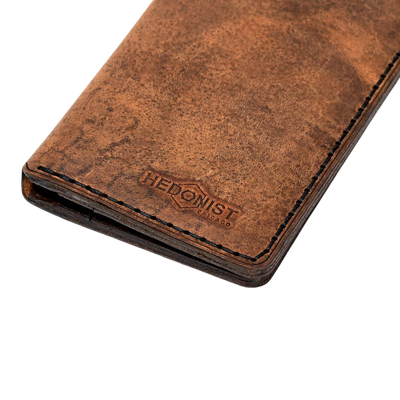
Customers frequently ask whether the care routine differs for products with personalization - hot-stamped initials or text pressed into the leather surface. The foil stamping used in our personalization process is permanently bonded into the leather and maintains its clarity through normal conditioning and cleaning. Apply conditioner around the stamped area the same as the rest of the leather surface - the foil does not absorb conditioner but the leather surrounding it benefits from the treatment.

Frequently Asked Questions

For leather products in regular daily use, conditioning every three to six months is generally sufficient. In dry or hot climates, or if you notice the leather feeling stiff or dry to the touch, condition more frequently. Belts that are worn daily may benefit from conditioning every two to three months, particularly around the buckle area and holes. Wallets used constantly should be checked quarterly and conditioned whenever they begin to lose suppleness.
No, you should avoid household cleaners, baby wipes, hand sanitizer, and similar products on leather. These contain chemicals that strip natural oils, cause discoloration, or damage the surface. Always use cleaners specifically formulated for leather, or simply use a damp cloth with a small amount of mild natural soap. Dedicated leather cleaning products are pH balanced and designed to clean without causing harm.
Allow wet leather to dry slowly and naturally at room temperature. Never use a hair dryer, place it near a radiator, or expose it to direct sunlight to speed drying. Rapid heat causes leather to shrink, crack, and lose shape. Once completely dry, apply leather conditioner to restore moisture lost during the drying process. For future protection, consider applying a leather waterproofing spray after conditioning.
Minor surface scratches on smooth leather can often be reduced by gently rubbing them with a fingertip. The natural warmth and oils from your skin help blend small marks into the surrounding surface. For deeper scratches, apply a small amount of leather conditioner directly to the affected area and work it in gently. If scratches remain visible after conditioning, consider using a leather repair cream matched to your leather's color, or consult a professional leather repair service for significant damage.
Yes, overstuffing a leather wallet accelerates wear and can cause permanent damage. Constant pressure at fold lines leads to cracking and distorts the wallet's shape over time. An overstuffed wallet loses its natural form and develops stress points that eventually fail. Keep your wallet to a reasonable thickness by regularly removing unnecessary cards, receipts, and cash. A properly maintained wallet should close easily without forcing and should lay relatively flat when empty.
Leather conditioner penetrates into the leather fibers to replenish natural oils, keeping leather soft, flexible, and resistant to cracking. Conditioner provides actual nourishment and is essential for leather health. Leather polish, on the other hand, sits primarily on the surface to provide shine and color enhancement. Polish can make leather look good temporarily but does not provide the deep treatment that conditioner offers. For long term leather care, conditioning is far more important than polishing.
In many cases, yes, though severely neglected leather may not return to perfect condition. Begin with gentle cleaning to remove surface buildup, then apply leather conditioner generously and allow it to absorb overnight. Repeat this conditioning process several times over a few weeks. Gradual rehydration is more effective than heavy single applications. Minor surface cracks may improve, but deep structural cracks usually require professional repair. The key is patience and consistent treatment rather than expecting immediate results.
Store leather in a cool, dry place away from direct sunlight. Avoid plastic bags or airtight containers, as leather needs airflow to prevent mold and maintain moisture balance. Use breathable dust bags or simply place items on a shelf in a dry wardrobe. In humid climates, consider silica gel packets in storage areas. Before long term storage, clean and condition the leather thoroughly, as this provides protection during the storage period. Check stored leather periodically for signs of mold or excessive drying.

Leave a comment

Please note, comments must be approved before they are published

This site is protected by hCaptcha and the hCaptcha Privacy Policy and Terms of Service apply.