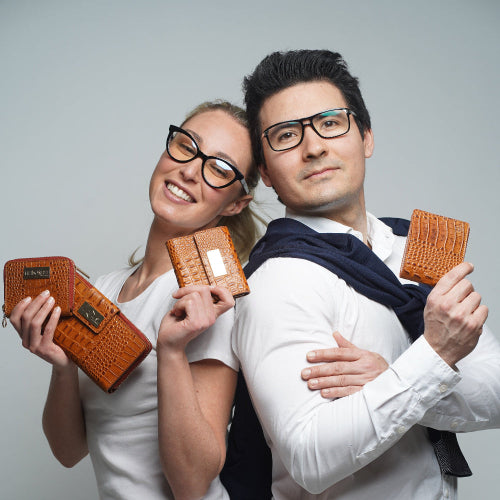
Hedonist Chicago: A Commitment to Ethical Luxury

The word luxury is used so broadly that it has lost much of its meaning. It appears on packaging, in marketing copy, and in product descriptions for items that share little beyond a price point. At Hedonist Chicago, we use the word deliberately and with a specific meaning in mind. Luxury, as we understand it, is not defined by cost alone. It is defined by the quality of materials, the care taken in construction, the durability of the finished product, and the integrity of the process that produced it. A leather wallet or belt that is beautifully made, built to last, and produced through responsible sourcing practices is a genuinely luxurious object. One that simply carries a premium price tag without those underlying qualities is not.

This distinction shapes every decision we make at Hedonist Chicago, from the leather we source to the tanning methods we support to the way we approach design and construction. This article explains what ethical luxury means in practice for our brand, why it matters for the people who carry our products every day, and how these principles show up in the specific choices we have made since the brand began.

Responsible Sourcing: Where It Begins

Every leather product begins with a material choice. The leather used in a wallet or belt determines not only how it feels and performs in everyday use but also what environmental and ethical standards were upheld in its production. At Hedonist Chicago, we source full-grain cowhide leather exclusively from tanneries that adhere to strict guidelines on both environmental practice and labor conditions. This is not a marketing position. It is a sourcing requirement that has been in place since the brand's founding and that informs every material we bring into production.

Full-grain leather is the highest quality grade available because it retains the complete natural surface of the hide. This surface layer is where the fiber density is greatest, which is what gives the leather its durability, its ability to develop a patina, and its resistance to cracking under sustained daily use. Lower grades of leather, including top-grain, corrected, and bonded leather, each remove or compromise this surface layer in processing. The result is a material that looks similar at purchase and behaves very differently over years of daily use.

We prioritize vegetable-tanning methods wherever possible. Vegetable-tanning uses natural plant-based tannins rather than the heavy metals and synthetic chemicals used in conventional chrome tanning processes. It is slower, more labor-intensive, and more expensive, which is part of why it is less common in mass market leather production. But it produces leather with a more natural character, a more attractive and distinctive aging process, and a significantly lower environmental footprint. The tanneries we work with share our commitment to these standards, and that shared commitment is a condition of the relationship rather than a preference.

Full-Grain Vegetable-Tanned Leather: Why It Matters

The practical case for full-grain vegetable-tanned leather is straightforward: it is the only grade of leather that genuinely improves with daily use rather than degrading. Most people have owned leather goods made from lower-grade materials without knowing the difference. A wallet that cracks at the fold after eighteen months, a belt that peels at the edges after two years of daily wear, a bag that loses its shape after a season of use: these are the predictable outcomes of lower-grade leather under daily mechanical stress.

Full-grain vegetable-tanned leather behaves differently. The intact fiber structure resists cracking at stress points. The natural tannins in the leather interact with light and oils from daily handling to produce a patina that deepens and personalizes the surface over time. A wallet carried daily for three years in full-grain vegetable-tanned leather looks more refined and more individual than it did when new. That is not a marketing claim. It is a material property that every owner of a quality leather product eventually experiences firsthand.

"We chose full-grain vegetable-tanned leather for every wallet we make because we wanted to build something that gets better with time, not worse. A long wallet handled daily for two years should feel more personal and more refined than it did on day one. That is what this leather does. We have seen it ourselves, and we hear it consistently from customers who have been carrying our wallets for years." - Hedonist Chicago founding team

Over 1,312 verified customers have rated Hedonist Chicago leather goods an average of 4.78 stars. The most consistently cited reason across reviews is how the material holds up and develops character over extended daily use. That feedback reflects the material choice more than any other single decision we make. Browse our women's leather wallets and leather wallets for men to see this material across every format we make.

Design for Longevity, Not Trend

One of the most meaningful ways a leather goods brand can operate responsibly is through the design choices it makes. Fast fashion and trend-driven design create a cycle of consumption that produces enormous waste. Products are designed to feel outdated quickly, which encourages replacement before the item has reached the end of its functional life. The environmental cost of this model is significant, and it is a cost that is rarely visible to the consumer at the point of purchase.

At Hedonist Chicago, we design leather goods that are built to last and styled to remain relevant across years rather than seasons. A wallet in a clean, classic bifold format does not become dated. A leather belt in a timeless color and hardware finish works as well in five years as it does today. This approach asks our customers to invest more thoughtfully in fewer, better objects rather than buying replaceable items on a short cycle. That is a harder proposition to make than simply offering the newest style, but it is the one that aligns with the material quality we put into every product.

Durability is not just a design principle at Hedonist Chicago. It is also a construction standard. Every wallet, belt, and accessory is made with specific attention to stitching quality, hardware selection, edge finishing, and material consistency across each piece. These details determine how a product performs over years of daily use. They are the difference between a leather accessory that improves with age and one that simply wears out on schedule.

Handmade Construction and the Value of Skilled Work

Mass production is efficient but it comes with tradeoffs that are rarely discussed honestly. When a product is made at scale with automated processes, the human judgment and skill that distinguish exceptional work from adequate work are largely removed from the equation. Variation is averaged out. Edge cases are not caught. The result is a product that meets a specification rather than one that reflects the attention of a specific person who cared about the outcome.

Handmade production reintroduces that judgment at every stage. The person finishing an edge, stitching a seam, or assembling a wallet by hand makes decisions that a machine cannot make: how much tension to apply at a particular point in the stitch, how to treat an area where the leather's natural grain requires a slightly different approach, when a piece meets the standard and when it does not. These decisions happen continuously throughout the construction of a handmade piece, and the result reflects a level of care that is genuinely different from what automated production can achieve.

Our handmade leather goods are produced by skilled artisans working with full-grain vegetable-tanned leather and traditional construction techniques including hand saddle stitching, which uses two needles working in opposite directions to create a stitch that does not unravel when a single thread breaks. Each piece is finished individually, which means that edge treatment, stitching tension, and surface quality are assessed and adjusted by hand rather than averaged across a production run. Explore our handmade leather goods collection to see wallets, passport cases, key holders, luggage tags, and accessories produced through this process. Each product in this collection represents the kind of craftsmanship that produces objects worth keeping for years rather than replacing after a season.

Made in Chicago: Craftsmanship with a Specific Address

Ethical luxury is also about accountability. Knowing where something is made, and being willing to say so clearly, is a different proposition from labeling a product with vague geographic claims that obscure the actual origin of the work. Hedonist Chicago is built around craft that has a specific address. Our handmade pieces are made in Chicago, Illinois, by people whose work we know and stand behind.

That specificity matters for several reasons. It creates accountability in the supply chain that global mass production does not. It supports skilled craft work in a specific community rather than abstracting that work into an anonymous production process. And it connects our products to a place and a set of values that are more meaningful than a generic country-of-origin label. For customers who care about where things come from, that accountability is part of what ethical luxury means in practice rather than in marketing language.

Personalization as a Deeper Connection

A personalized object carries a different kind of meaning than a generic one. When a wallet or belt has your initials or name hot stamped into the leather, it becomes specifically yours in a way that goes beyond ownership. It is harder to lose, more meaningful to receive as a gift, and more likely to be maintained and kept over time rather than discarded and replaced when the next version becomes available.

This connection between personalization and longevity is consistent with our broader approach to ethical luxury. An object that carries personal meaning is an object that is less likely to end up discarded before its functional life is over. It enters a personal history rather than simply completing a purchasing cycle. That is a meaningful difference in terms of both the emotional value of the object and its environmental footprint over time.

"Every Hedonist product comes with free professional monogramming using our commercial hot stamping press and the highest-grade foil available." - Hedonist Chicago founding team

Our free personalization service uses a commercial hot stamping press and the highest-grade foil available to create a clean, permanent impression directly in the leather. It is available on all of our wallet and belt products at no additional cost and can be applied to initials, full names, or short custom messages. For gift occasions in particular, personalization transforms an already thoughtful choice into something genuinely memorable. Our leather gift sets for her and leather gift sets for him can be personalized to create a complete and meaningful gift for any occasion.

Care as Part of the Ethical Equation

The lifespan of a leather product is not determined only by how it is made. It is also determined by how it is cared for after purchase. A well-made leather wallet that is never cleaned or conditioned will deteriorate faster than a moderately made one that receives consistent care. We take our responsibility to our customers seriously enough to provide the information they need to keep their leather products in excellent condition over years of use, not just at the point of purchase.

Regular conditioning restores the natural oils that leather loses through everyday handling and prevents the drying and cracking that shortens product lifespan. Cleaning removes surface contamination that would otherwise work its way into the leather's surface over time. Waterproofing treatment applied periodically protects against moisture damage. These practices extend the functional life of a leather product significantly and support the kind of long-term ownership that ethical luxury is built around.

Our leather care guides cover cleaning, conditioning, water protection, and long-term maintenance for all of the leather types we work with. Read our guides on how to clean leather products, leather treatments and conditioners, and leather water resistance for a complete overview of the practices that keep leather goods performing well over years of daily use.

Our Vision Going Forward

Ethical luxury is not a destination we have reached. It is a standard we continue to work toward with each sourcing decision, each construction choice, and each product we bring to market. We look for opportunities to strengthen our tannery relationships, improve our construction practices, and deepen the connection between our products and the people who carry them every day.

The goal remains consistent: to make leather goods that are beautiful, durable, responsibly produced, and genuinely worth owning for years. Not objects that are designed to be replaced, but ones that are designed to be kept. That is what ethical luxury means to us, and it is what we aim to deliver in every product that carries the Hedonist Chicago name.

If you want to explore the full range of products that reflect these values, start with our men's leather wallets, our women's leather wallets, our leather belts collection, and our handmade leather goods collection. Every product in our catalog is made with the same underlying commitment to quality, responsibility, and long-term value. If you have questions about any of our products or practices, our contact page connects you directly with our team.

Frequently Asked Questions

Ethical luxury at Hedonist Chicago means making products that are genuinely worth owning for years rather than seasons. It means sourcing full-grain vegetable-tanned leather from tanneries that meet strict environmental and labor standards. It means designing in classic formats that do not become dated rather than trend-driven styles that encourage early replacement. It means making leather goods with construction quality that reflects real craft rather than production efficiency. And it means providing the care information customers need to maintain their products over the long term.
Full-grain vegetable-tanned leather is the only grade that genuinely improves with daily use rather than degrading. It retains the complete natural fiber structure of the hide, which is what gives it durability at stress points, the ability to develop a patina, and resistance to cracking under sustained daily mechanical stress. Vegetable tanning uses plant-based tannins rather than the heavy metals and synthetic chemicals used in chrome tanning, which produces leather with a more natural character, a more attractive aging process, and a lower environmental footprint. This has been the only leather we use since the brand's founding.
Full-grain leather retains the complete outer surface of the hide, where fiber density is highest. Top-grain leather has been sanded or buffed to remove natural surface imperfections, which reduces fiber density and requires protective coatings to compensate. Corrected leather has been further processed to create a uniform artificial surface. Bonded leather is reconstructed from leather scraps and adhesive. Each of these grades performs progressively worse under daily mechanical stress. Full-grain leather resists cracking and develops a patina over time. Lower grades degrade in ways that become apparent within one to two years of daily use.
Vegetable tanning is a leather processing method that uses plant-derived tannins, historically from tree bark and other botanical sources, rather than the chromium salts and synthetic chemicals used in faster industrial tanning methods. It is slower and more labor-intensive, which is why it is less common in mass market production. The leather it produces has a more natural character, ages more attractively, and has a significantly lower environmental footprint than chrome-tanned alternatives. Vegetable-tanned leather also develops a more distinctive and individual patina with daily use, which is part of what makes it the right choice for everyday objects like wallets and belts.
Handmade construction means that skilled artisans make decisions throughout the production of each piece that automated processes cannot make. This includes hand saddle stitching, which uses two needles working in opposite directions to create a stitch that does not unravel when a single thread breaks, individually finished and burnished edges, and surface quality assessment by hand rather than by specification average. Each handmade piece is unique in the way that any individually crafted object is unique: the person making it brings judgment and attention that a machine cannot replicate, and the result reflects that care in ways that are felt in daily use.
A personalized object carries a different kind of meaning than a generic one. When a wallet or belt has initials or a name hot stamped into the leather, it becomes specifically and permanently that person's in a way that goes beyond simple ownership. It is more likely to be maintained, kept, and valued over time rather than replaced when a newer version becomes available. This connection between personalization and longevity is consistent with ethical luxury as a concept: an object that carries personal meaning is one that is less likely to be discarded before its functional life is over, which is the most straightforward form of sustainability.
The lifespan of a leather product is determined both by how it is made and by how it is maintained after purchase. A well-made leather wallet that receives regular cleaning and conditioning will outlast a poorly maintained one by years. Conditioning replaces the natural oils that daily handling gradually removes, keeping the leather supple and preventing cracking at stress points. Cleaning prevents surface contamination from working into the leather over time. These simple practices extend the functional life of a leather product significantly and support the kind of long-term ownership that genuine quality is built around.
Hedonist Chicago's handmade leather goods are crafted in Chicago, Illinois. Knowing where a product is made and being willing to say so clearly is part of what accountability means in the context of ethical luxury. Our handmade pieces are produced by artisans whose work we know and stand behind. This specificity creates a supply chain accountability that global mass production does not, supports skilled craft work in a specific community, and connects our products to a place and set of values that are more meaningful than a generic country-of-origin claim.

Leave a comment

Please note, comments must be approved before they are published

This site is protected by hCaptcha and the hCaptcha Privacy Policy and Terms of Service apply.