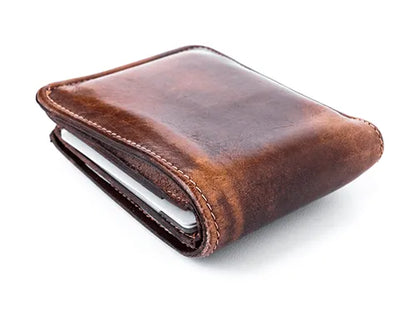
How to Clean a Leather Wallet

Cleaning a leather wallet regularly takes almost no special equipment: a slightly damp cloth for routine dirt, a leather cleaner formulated for vegetable-tanned leather for anything more stubborn, and a conditioner applied every few months to keep the leather from drying out. What matters most is avoiding products not made for leather, which can strip natural oils or leave discoloration.

Routine cleaning

  • Empty the wallet completely, including card slots and any hidden pockets, before cleaning
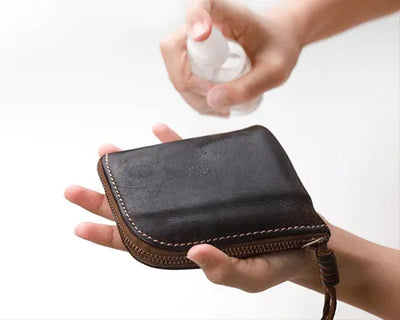
  • Wipe the exterior and interior with a cloth dampened with water, not soaked, to remove surface dirt and hand oils
  • Let it air dry fully, away from direct heat or sunlight, before using it again

For stubborn stains or buildup

Issue What to use
General grime or dark spots Leather cleaner formulated for vegetable-tanned leather, applied with a soft cloth in small circular motions
Ink stains Best left to a professional leather cleaner; DIY ink removal often spreads the stain or damages the surface
Salt residue from sweat Wipe with a cloth dampened in distilled water, then let dry fully before conditioning

Conditioning

Apply leather conditioner every 3 to 4 months for a wallet in normal use, or every 6 to 8 weeks if it sees heavy daily handling or hot, humid conditions. Work a small amount into the leather with a soft cloth and let it absorb for a few hours before carrying the wallet again. Conditioning prevents the drying and cracking that eventually shows up at fold lines and card slot edges.

What to avoid

  • Household soap, which strips the natural oils vegetable-tanned leather needs to stay supple
  • Baby wipes or alcohol-based cleaning wipes, which can dry out or discolor leather over repeated use
  • Submerging the wallet in water or machine washing it, which can warp the shape and damage stitching
  • Direct heat sources like a hair dryer or radiator to speed up drying, which can crack the leather

A simple monthly cleaning routine

Step What to do
1 Empty the wallet fully and check every slot and pocket for loose debris
2 Wipe the exterior and interior with a slightly damp cloth
3 Spot-treat any visible marks with a leather-specific cleaner if needed
4 Let it air dry completely before reloading with cards and cash

Combined with conditioning every 3 to 4 months, this routine covers essentially all the maintenance a full-grain leather wallet needs to last well over a decade.

Cleaning different wallet colors

Darker colors like black and dark brown tend to show less visible change from routine cleaning, since minor variation in tone blends into the base color more easily. Lighter colors such as tan or light mahogany can show subtle darkening where cleaner or conditioner is applied unevenly, so it helps to work the product in with smooth, even strokes across the full surface rather than spot-treating just one section, which can leave a visible patch that's slightly different from the surrounding leather.

Frequently asked questions

Can I use regular soap and water on a leather wallet?

It's better to avoid it. Household soap can strip the natural oils in the leather, leaving it drier and more prone to cracking over time. A slightly damp cloth alone handles most routine cleaning.

How do I clean the inside of card slots?

A cotton swab or a folded corner of a soft cloth, slightly damp, works well for the tighter space inside card slots. Avoid soaking this area since it's harder to fully dry.

How often should I clean vs. condition my wallet?

Wipe it down whenever it looks visibly dirty, which for daily use might be every few weeks. Condition on a separate, less frequent schedule, roughly every 3 to 4 months under normal use.

Will cleaning remove the patina my wallet has developed?

No. Patina develops from oils and handling within the leather itself, not surface dirt. A proper cleaning and conditioning routine actually helps patina develop evenly rather than removing it.

Does cleaning a lighter-colored wallet require extra care?

Somewhat. Lighter colors show uneven cleaner or conditioner application more visibly than darker ones, so it's worth working the product across the full surface with even strokes rather than spot-treating a single area.

Is it safe to use a leather cleaner on embossed or textured leather?

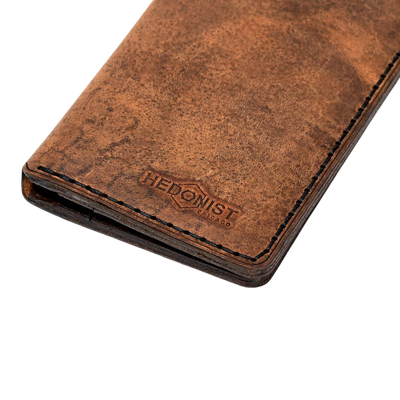
Generally yes, as long as the cleaner is formulated for the leather type. Work gently around embossed patterns rather than scrubbing, since aggressive rubbing can wear down raised texture faster than flat leather.

Updated: September 27, 2026

Shop full-grain leather wallets

Frequently Asked Questions

It's better to avoid it. Household soap can strip the natural oils in the leather, leaving it drier and more prone to cracking over time.
A cotton swab or a folded corner of a soft cloth, slightly damp, works well for the tighter space inside card slots.
Wipe it down whenever it looks visibly dirty. Condition on a separate, less frequent schedule, roughly every 3 to 4 months under normal use.
No. Patina develops from oils and handling within the leather itself, not surface dirt.
Somewhat. Lighter colors show uneven cleaner or conditioner application more visibly than darker ones.
Generally yes, as long as the cleaner is formulated for the leather type. Work gently around embossed patterns rather than scrubbing.
Test any cleaner on a hidden spot, like inside a card slot, before treating the whole wallet. Red dyes are more prone to lifting with solvent-based cleaners than black or brown, so plain water on a damp cloth is usually the safer first move, followed by a conditioner rated safe for dyed leather.
Start with the gentlest option: a barely damp cloth and air drying. Only move to a dedicated leather cleaner if that doesn't handle the dirt, and always skip household soap, baby wipes, and direct heat, which cause more damage than the grime they're meant to remove.
Yes, for routine dirt. A cloth dampened with plain water handles most everyday grime just as well as a dedicated cleaner. Save the leather-specific cleaner for stubborn stains or buildup that water alone won't lift.

Leave a comment

Please note, comments must be approved before they are published

This site is protected by hCaptcha and the hCaptcha Privacy Policy and Terms of Service apply.