


· Updated: October 12, 2026
How Long Does a Leather Watch Band Last?
Quick answer: A leather watch band worn daily typically lasts 1 to 3 years, depending mostly on sweat, sun and care. That is shorter than most leather goods because a band sits against skin all day and flexes with every wrist movement.
What determines lifespan
| Factor | Effect |
|---|---|
| Sweat and moisture | The biggest factor; it stiffens and cracks leather. See preventing odor |
| Leather quality | Better leather and construction last longer |
| Sun | UV dries and fades leather |
| Care | Regular wiping and conditioning extends life |
| Thickness | Thicker bands tolerate flexing better |
Realistic lifespan
| Wearing pattern | Lifespan |
|---|---|
| Light, office wear, good care | 2 to 3 years or more |
| Daily all-day wear, moderate activity | 1 to 2 years |
| Heavy sweat, outdoor work, little cleaning | Under 1 year |
| Rotating two bands, regular conditioning | Often past 3 years each |
Signs it is time to replace
- Cracking at the flex points near the buckle or lugs.
- Odor that cleaning does not remove.
- Loose or broken stitching at the attachment points.
- Stiffness that conditioning does not fix.
A cracked band can snap, risking the watch itself.
Extending its life
- Wipe it after sweating and let it dry fully.
- Condition every 2 to 3 months, more in hot conditions.
- Take it off for swimming, showers and intense exercise.
- Rotate between two bands.
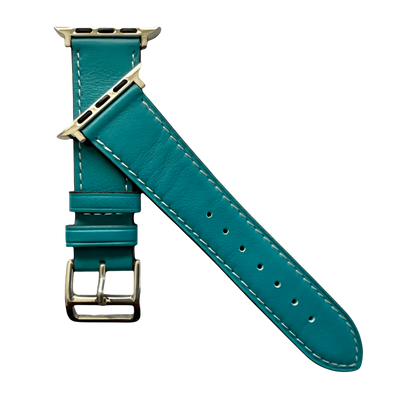
Our Apple Watch bands are full-grain vegetable-tanned leather and our traditional watch bands are top-grain. Metal avoids this cycle, see leather vs metal. A new band feels stiff at first, see breaking in a band.
Browse leather watch bands.
Updated: October 12, 2026
Frequently Asked Questions
It's shorter than most leather goods, but it reflects the unusually demanding conditions a watch band faces: constant skin contact, sweat, and flexing at the wrist all day, every day. A quality full-grain band that lasts 2 to 3 years with proper care is performing well given those conditions, and rotating two bands can push that window even further.
Not usually in a way that restores it fully. Cracking means the leather fibers have already broken down at that point, so patching or conditioning won't reverse the damage. Replacement is generally more practical than repair for a component this size and cost, especially once cracking shows up near the buckle or lug attachment points.
Generally, yes, if the higher price reflects better leather grade and construction rather than just brand name. A full-grain, saddle-stitched band with reinforced attachment points will outlast a cheaper corrected-grain or bonded leather band under the same wear conditions, since the underlying material and stitching are what actually determine durability.
It's not strictly necessary for lifespan reasons alone, but giving the leather a break from skin contact and moisture, especially after a sweaty day, helps it dry out fully and can modestly extend its life. It also gives you a natural point to check the band for early wear or odor.
Yes. Hot, sweaty summer months put more wear on a leather band than cooler, drier conditions, so a band worn heavily through a hot summer may need replacing sooner than one worn mostly in mild weather. Wiping the band down more often during warmer months helps offset this.
For daily wearers, yes. Giving each band a full day to dry out and rest between wears reduces cumulative moisture exposure, which can meaningfully extend how long each individual band lasts. It also means you're never stuck without a band while one is being cleaned or conditioned.
Leave a comment