


· Updated: October 09, 2026
Leather vs. Metal Watch Band: Which Should You Choose?
Quick answer: Choose leather for comfort, a lighter feel and a look that suits dress and business wear, and choose metal if you sweat a lot, get your watch wet often, or want a band that needs no care. Leather needs occasional conditioning and replacement every 1 to 3 years; metal can last for many years.
Side by side
| Factor | Leather band | Metal band |
|---|---|---|
| Weight | Lighter | Heavier |
| Water and sweat | Needs care; can stain or smell | Handles water and sweat |
| Comfort | Softens and molds to the wrist | Consistent feel |
| Appearance over time | Develops patina | Stays consistent, may scratch |
| Maintenance | Occasional cleaning and conditioning | Minimal |
| Lifespan | About 1 to 3 years of regular wear | Many years |
Choose leather if
You wear the watch mostly at the office or indoors, want it to feel personal, and do not mind swapping the band every year or two.
Choose metal if
You exercise often, work in wet or humid conditions, or want a band you can set and forget.
Can you have both?
Most watches let you swap bands in seconds, so many people use metal for workouts and leather for work. See NATO strap vs leather and how long a leather band lasts.
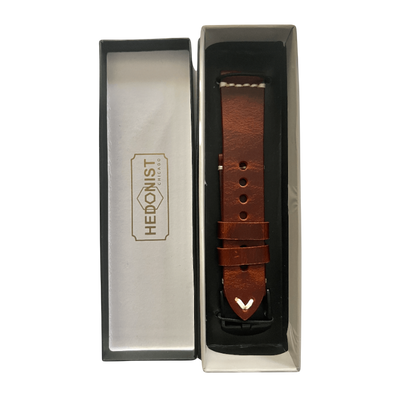
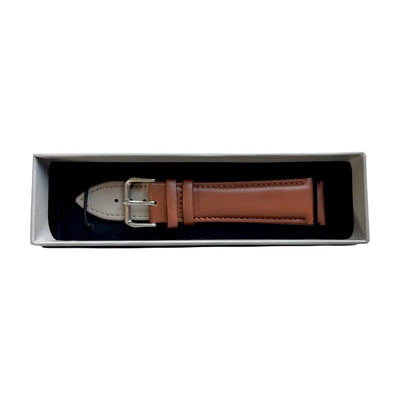
Browse our leather watch bands.
Updated: October 9, 2026
Frequently Asked Questions
Yes. Watches with standard spring bars or a quick-release mechanism let you switch bands in seconds, and quick-release designs need no tools. Keeping both on hand covers most situations: metal for workouts, swimming, or wet conditions, and leather for the office or everyday wear where comfort and appearance matter more. Both bands just need to match your watch's lug width to fit properly.
Generally, yes. A well-maintained leather band typically lasts 1 to 3 years of regular wear before it needs replacing, while a quality metal band often outlasts the watch itself with only occasional wipe-downs. The gap comes down to material: leather absorbs sweat and flexes constantly at the wrist, while metal doesn't break down the same way under daily use.
It's not ideal. Sweat exposure without prompt cleaning leads to salt buildup, odor, and eventually staining or stiffening in the leather. A metal or synthetic sport band handles workouts with no special care, which is why it's generally the better choice for regular exercise. Save leather for lower-sweat, everyday situations where it can dry out fully between wears.
Neither is inherently more expensive-looking; it comes down to quality and context rather than material. A well-made full-grain leather band tends to read as considered and personal in business or dress settings, while a quality metal band suits a more technical or sporty look. Price and finish matter more to perceived value than whether the band is leather or metal.
Yes. Hot, humid, or consistently sweaty conditions favor metal, since leather in those environments is more prone to odor and salt-related stiffening without frequent care. Drier, milder climates are more forgiving for leather and let it develop its patina without the added maintenance. If you travel between climates often, keeping one of each band gives you the better option either way.
It depends on the individual. Some people find leather more comfortable against skin over long wear since it breathes better than metal, while others prefer metal's consistent, non-porous surface. Anyone with a known metal allergy, particularly to nickel, should check the specific alloy used in a metal band and consider surgical-grade stainless steel or titanium instead.
Replacing a metal band with leather takes a few minutes if the lug width matches. Standard spring bars need a small spring bar tool to compress and lift the old band free; quick-release bars just need a lever pressed with a fingernail. Seat the new leather band's spring bars into the lug holes until they click, and you're done. No watchmaker visit required for most models.
Yes, switching back to metal works the same way in reverse. Remove the leather band with a spring bar tool or quick-release lever, then fit a metal bracelet with matching lug width. The only catch is that some metal bracelets use proprietary end-links built for a specific watch model, so confirm fit before buying rather than assuming any bracelet at the right width will work.
It depends on how you'll wear it. Leather gives a lighter, more personal feel that develops character over months, and suits dry, low-sweat conditions best. Metal lets you set it up once and forget about maintenance, especially for workouts or humid climates. Many people keep one of each and swap between them.


Leave a comment