



Wallet Color Meaning: What Each Color Says
Wallet color meaning is cultural association, not fact. In Western color psychology, black reads as authority, brown as dependability, red as confidence, green as balance, blue as trust and pink as approachability. Feng shui adds its own rules: black and dark blue are favored for wallets, and red is often discouraged. Treat all of it as a style signal, not a rule, and pick the color you will enjoy seeing every day.

A wallet is small, but you take it out in public more often than almost anything else you own. At checkout, at a restaurant table, in a meeting. That is why people search for what a wallet color says about them, and why the question has two separate answers: what color communicates in everyday style, and what color is said to do for money in feng shui and other traditions. This guide covers both, color by color, and ends with a simple way to use the meanings without letting them make the decision for you.
What Wallet Color Meaning Really Is
Color meaning comes from association. Red is linked to energy because it is the color of fire and warning signs. Green is linked to money in the United States because of the dollar bill. Blue is linked to trust because banks, airlines and software companies use it so often. None of these links is built into the color itself, and they shift between cultures and over time.
So treat wallet color meaning as a vocabulary, not a verdict. It helps you understand the impression a color is likely to make, and it gives you a reason to choose one shade over another when the practical factors are equal. It does not predict your finances, and no color changes what is in the wallet.
Wallet Color Meanings at a Glance
| Color | Common Western meaning | Feng shui view | Choose it when you want |
|---|---|---|---|
| Black | Control, authority, formality | Favored (Water element, wealth) | The safest, most professional option |
| Brown / Cognac | Warmth, dependability, substance | Stable and grounding (Earth element) | A natural, understated look |
| Red | Confidence, energy, attention | Often discouraged for wallets (Fire element) | A bold, easy-to-find statement |
| Green | Balance, growth, money | Supports growth (Wood element) | Distinctive but quiet personality |
| Blue / Navy | Trust, calm, competence | Favored when dark (Water element) | Color with a professional feel |
| Pink | Approachable, soft, considered | Neutral | Personality without the intensity of red |
| Purple / Violet | Luxury, creativity, individuality | Associated with prosperity in some schools | A distinctive, less common choice |
| White, Gold, Silver | Precision, celebration, polish | Metal element (gold, silver, white) | An occasion or evening accessory |
Black Wallet Meaning
Black reads as controlled, serious and authoritative. That is why it is the default in professional settings and why a black wallet rarely raises a question. In feng shui, black is one of the two colors most often recommended for wallets because it belongs to the Water element, which is tied to wealth and flow.
In style terms a black wallet says you prefer reliability to display. It works with every bag and outfit, which makes it the lowest-risk choice if you are unsure.
Brown and Cognac Wallet Meaning
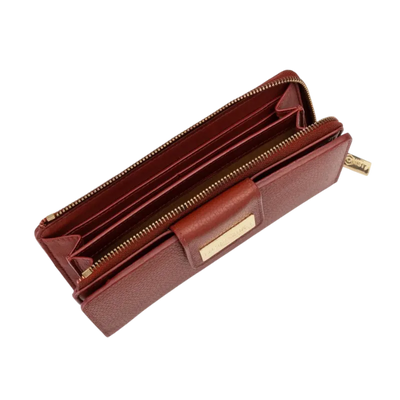
Brown is the color of untreated leather, so it reads as natural, warm and dependable. People tend to associate it with someone who values substance over show. Cognac and tan shades add warmth and show wear more visibly, which many buyers read as character rather than damage.
Feng shui places brown under the Earth element, which stands for stability and grounding. It is considered a safe everyday color. If you are deciding between this and black, our black vs brown wallet comparison goes through the practical differences.
Red Wallet Meaning
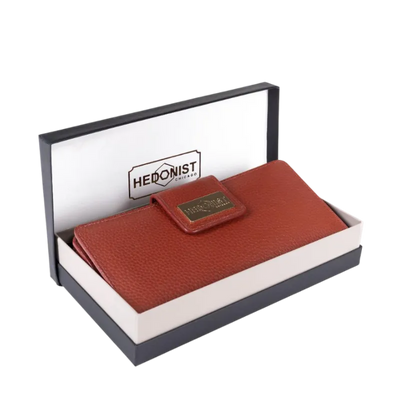
In Western color psychology, red signals confidence, energy and assertiveness, and it is the color that gets noticed first. In Chinese culture red is a lucky color tied to prosperity and celebration, which is why money is given in red envelopes at the New Year.
Feng shui is more mixed. Some practitioners advise against a red wallet because red belongs to the Fire element, which is described as spending energy rather than holding it. Others treat red as lucky. Both views exist, so use whichever one you find convincing. For the style side, see our guide to red wallets for women or browse the red leather collection.
Green Wallet Meaning and Money
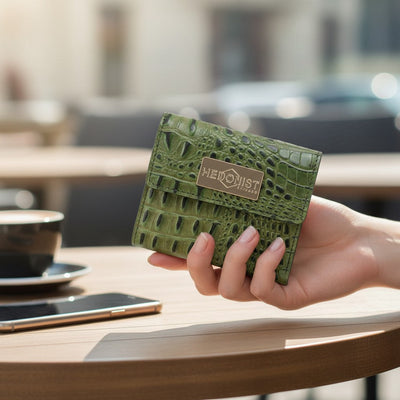
Green is the most direct money color in the United States because of the dollar. More broadly it stands for balance, growth and steadiness, without the intensity of red. In feng shui green belongs to the Wood element, which is linked to growth, and green wallets are often described as supporting savings over time.
As a style choice, green says you are comfortable standing out quietly. Our green croco wallet guide covers the available formats.
Blue and Navy Wallet Meaning
Blue is the color of trust and composure. Corporate branding leans on it for that reason, and a navy wallet carries the same quiet competence. Dark blue shares the Water element with black in feng shui, so it is also considered a good wallet color there. It is nearly as versatile as black and slightly more personal.
Pink, Purple and Other Colors
Pink softens a first impression toward approachable and considered. It carries personality without the force of red. Our pink leather wallet guide covers shades and formats.
Purple and violet have long been linked to luxury and creativity, and some feng shui schools connect purple with prosperity. It is an uncommon wallet color, so it reads as a deliberate, individual choice. White and metallic finishes read as precise and, in the case of gold and silver, celebratory. In some East Asian cultures white is associated with mourning, so it is worth knowing if you are buying a gift for someone from that background.
Does Wallet Color Affect Money?
There is no evidence that the color of a wallet changes how much money you have or keep. Feng shui treats color as part of a belief tradition about energy and flow, and many people use it as a prompt for good habits: an organized wallet, one you open without dread, and a color you like looking at. That is a reasonable way to use it.
If you follow the tradition, the usual advice is black or dark blue for accumulation, brown for stability, green for growth, and caution with red. If you do not, choose on the practical factors: how easy the wallet is to find in your bag, how it ages, and what it goes with.
How to Use Color Meaning When You Choose
- Decide the signal you want. Authority and polish point to black or navy. Warmth points to brown or cognac. Confidence points to red. Quiet individuality points to green.
- Check it against your bag and wardrobe. A wallet lives in a bag, so compatibility matters more than the message. Our wallet color guide walks through bag, wardrobe and daily use.
- Break the tie with how you feel. If two colors fit, take the one you would be glad to see every day for the next few years.
Browse the women's leather wallets or men's leather wallets to compare colors across formats.
Leave a comment