


Light Brown vs Dark Brown vs Tan: How to Pick Your Shade
Tan is the lightest brown and shows the most patina; light brown is the flexible everyday middle; chestnut and cognac are warmer red-browns with more visual interest; dark brown is the most formal and hides wear best. Choose dark brown to pair with black leather or for the office, tan or light brown for casual wear and visible aging, and cognac if you want brown with more character. Warm shades suit gold hardware; dark brown suits gold or silver.
"Brown leather" is a family of colors, not a single shade, and the difference between them is bigger than most people expect until they see two browns side by side. Tan, light brown, chestnut, cognac and dark brown come from the same tanning process applied to different dyes and finishing steps, and each wears, matches and ages differently. This guide separates them so you can choose the shade that fits how you dress, not just the first brown wallet or belt you find.
Picks to go with this guide

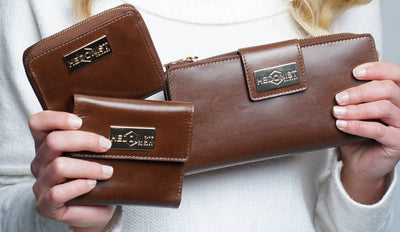
Small Brown Leather Wallet for Women
5 card slots plus ID window, coin zip, RFID lining
View product →
Small Brown Leather Zip-Around Wallet for Women
5 card slots, bill zip, RFID lining, zip-around closure
View product →
Dark Brown Leather Bifold Wallet for Men
6-12 cards, RFID blocking, flat bill section
View product →Brown Leather Shades Compared
| Shade | Look | Formality | Patina | Best hardware | Shows dirt? |
|---|---|---|---|---|---|
| Tan | Light, warm, golden | Casual | Most visible change | Gold, brass | Most |
| Light brown | A step darker than tan | Casual to business-casual | Clear change | Gold, brass | Moderate |
| Chestnut | Medium brown with a reddish warmth | Smart-casual | Moderate | Gold, brass, silver | Moderate |
| Cognac | Warm red-brown, amber when light hits | Smart-casual | Deepens toward richer red-brown | Gold, brass | Moderate |
| Dark brown | Espresso or chocolate | Most formal | Subtle | Gold or silver | Least |

Tan Leather
Tan is the lightest shade in the brown family and sits closest to the natural color of vegetable-tanned hide before extra dyeing. It has a warm, slightly golden undertone and reads casually in almost every context. It develops the most visible patina of any shade, since it starts from the lightest base and has the most room to deepen, which suits anyone who wants to watch a wallet or belt visibly change over the first year or two.
The trade-off is that tan shows dirt and dark stains more readily. If you carry your wallet next to dark denim, dye transfer can show, so condition it regularly and keep it away from unfinished dyed fabric while it is new.
Light Brown
Light brown sits a step darker than tan without moving into the richness of a classic saddle brown. It is a flexible everyday shade that pairs with casual and business-casual outfits, hides light surface marks slightly better than tan, and still shows a clear patina. If you are unsure between tan and a deeper brown, light brown is the safer middle choice.
Chestnut and Cognac
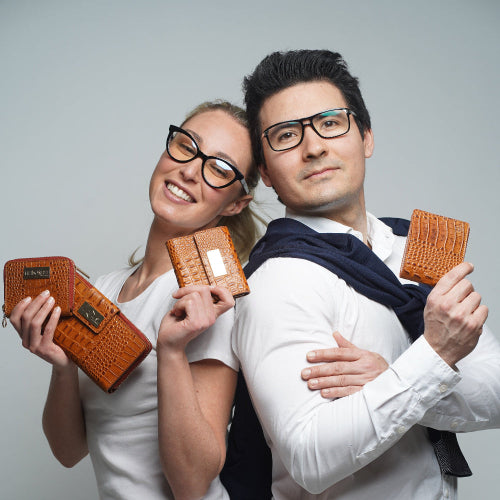
Chestnut is a medium brown with a reddish warmth. Cognac is warmer and redder still, closer to the color of the drink it is named after, with amber tones where light hits it. Both read as more distinctive than a plain mid-tone brown without leaving the brown family, the way a true red leather does. Our cognac and tan croco wallet set shows cognac next to a lighter tan for comparison. Cognac suits anyone who wants brown's versatility with more visual interest.
Dark Brown
Dark brown, sometimes closer to espresso or chocolate, is the most formal shade in the family. It hides everyday handling marks best and reads as a credible alternative to black in offices where black is the unspoken default. Our dark brown bifold wallet and several of our dark brown ratchet belts use this shade because it works in casual and dressier settings without looking out of place.
Tan vs Cognac vs Chestnut: Which to Choose
- Tan: choose it for casual wardrobes and if you want to see the most change with use.
- Cognac: choose it if you want the most character and warmth within brown.
- Chestnut: choose it if you want a warm medium brown that is less orange than tan and less red than cognac.
- Dark brown: choose it for formal or office use, or to sit alongside black leather.
How Each Shade Patinas Differently
Patina is proportional to how light the starting shade is. Tan and light brown change the most, darkening and warming at contact points such as the fold of a wallet or the buckle end of a belt. Dark brown changes more subtly because it starts close to its eventual tone. Cognac tends to deepen toward a richer red-brown. Our guide to how leather develops patina explains what to expect from any of these a year or two into ownership.
Matching Shade to Hardware and Wardrobe
Warmer shades, such as tan, light brown and cognac, look best against gold or brass hardware, which shares their warm undertone. Dark brown pairs equally well with gold or silver, giving it more flexibility with a buckle or watch case you already own. If you are buying to match gold jewelry or a gold watch, lean toward the warmer end. For wardrobe, tan and light brown suit denim, khaki and olive; cognac and chestnut suit navy, grey and cream; dark brown suits suits, charcoal and black. To build a full coordinated set, see how to match brown leather accessories.
Choosing Your Shade
If you want a wallet or belt that visibly transforms with use, choose tan or light brown. If you want a shade that reads formally and hides daily wear, choose dark brown. If you want something distinctive without leaving brown behind, look at cognac or chestnut. Shade does not change how long a piece lasts, only how the color looks on day one and how it changes from there. For which brown to buy, see our brown wallets and belts guide, for brown against black see black vs brown, and to browse every shade go to the brown leather collection. Over 2,500 customers have reviewed our leather goods and rated us 4.78 stars on average.
Leave a comment