Embossed & Croco-Pattern Leather Explained

Embossed leather causes more confusion than almost any other material choice in leather goods, particularly when the pattern resembles crocodile or alligator skin. Shoppers see a croc-style wallet or belt and reasonably wonder whether it came from an actual exotic animal, whether it is even real leather at all, or whether it is a cheap imitation dressed up to look expensive. The answer is more straightforward than the confusion suggests, and understanding how embossing actually works makes it much easier to shop with confidence.

What Embossed Leather Actually Is

Embossing is a finishing process, not a material. A manufacturer takes a piece of real leather, typically top grain leather since its surface takes an even pattern more consistently than full grain, and presses it under heat and pressure using a textured plate or roller. That plate carries a pattern engraved into its surface, and the heat and pressure transfer that pattern permanently into the leather.

The result is a piece of leather with a raised, repeating texture stamped into the surface, whether that pattern mimics reptile skin, ostrich, pebble grain, or something entirely decorative. The leather underneath the embossed surface is the same material used in any other leather product. Our guide to leather grades covers how full grain and top grain leather differ in more detail, since the grade used underneath an embossed pattern still matters for how the finished piece performs over time.

Embossing lets a brand offer a distinctive, decorative look without sourcing rare or expensive exotic hides, and it lets manufacturers produce a consistent pattern across every unit in a product line, since a natural exotic hide would vary piece to piece in ways that make mass production difficult.

Embossed patterns go well beyond croco styles. Ostrich-pattern embossing mimics the distinctive quill bump texture of ostrich leather, pebble grain embossing creates a small, repeating bumpy texture used on more casual pieces, and some brands offer entirely custom decorative patterns that do not mimic any specific animal at all. Croco and alligator patterns remain the most popular because the scale texture reads as premium and adds visual interest to an otherwise plain wallet or belt surface.

Croco-Embossed Leather Is Not Crocodile Skin

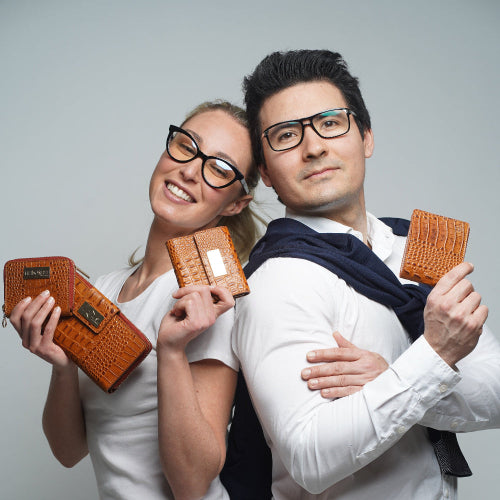
This point deserves to be stated plainly because it is the single most common point of confusion customers run into: croco-embossed leather at Hedonist Chicago is leather with a pattern pressed into the surface to resemble crocodile skin. It is not made from an actual crocodile, alligator, or any other exotic animal. The material is cowhide, finished with a stamped pattern that echoes the scale texture of reptile skin.

Genuine exotic skin products, made from actual crocodile or alligator hide, are a completely different category. They come from a specific regulated supply chain, they carry irregular, non-repeating scale patterns unique to each individual animal, and they typically cost many times more than any embossed cowhide product. If you compare an embossed croco-pattern wallet to genuine exotic leather side by side, the pattern on the embossed piece usually repeats in a visible, symmetrical cycle, while a genuine exotic hide shows natural irregularity in scale size and spacing since it grew that way on a living animal.

We describe every embossed product on our site clearly as embossed leather, and we never suggest or imply that a croco-pattern piece comes from an actual reptile. If a listing does not specify the leather as exotic or genuine crocodile, and instead uses language like "croco-embossed" or "croc-pattern," you can take that as a reliable signal you are looking at a stamped cowhide product rather than genuine exotic skin. You can browse our full lineup in the embossed leather collection to see the range of patterns we offer.

How the Embossing Process Works

The process starts with selecting leather that has a relatively smooth, even surface, since a heavily textured or blemished hide will not take a clean stamped pattern. Top grain leather is the common choice for this reason, though full grain can also be embossed in some cases depending on the desired look and the natural texture of the specific hide.

The leather is then fed through or pressed against a heated plate or roller carrying the desired pattern, engraved as a mirror image of the final texture. Heat softens the leather fibers slightly, and pressure forces the surface to take on the shape of the plate. Once the leather cools, the pattern holds permanently, since the fiber structure has been physically reshaped rather than just printed on top.

Dyeing and finishing typically happen either before or after the embossing step, depending on the specific pattern and color combination a brand wants to achieve. Some pieces get a contrasting finish applied after embossing to make the raised pattern stand out more, which is common on croco-style pieces where the scale edges are often highlighted with a slightly different tone than the recessed areas between scales.

Does Embossing Weaken the Leather

This is a fair question, since pressing a pattern into leather under heat and pressure sounds like it could compromise the material. In practice, embossing does not meaningfully weaken well made leather when done correctly. The process reshapes the surface fibers rather than cutting or removing material, so the overall fiber density and strength of the hide stay largely intact.

Where problems can occur is with lower quality leather or careless production. If a hide has weak spots, thin areas, or gets embossed at excessive heat or pressure, the surface can become more prone to cracking at the raised edges of the pattern over time. This is one reason why the underlying leather grade matters even for embossed products, since starting with a solid top grain hide and controlled embossing conditions produces a piece that holds up as well as a smooth leather item of the same grade.

Our embossed pieces go through the same quality control as our smooth leather products, and the embossing itself does not change our expectations for how long a piece should last with reasonable care. If you want to understand realistic lifespan expectations by leather type, our article on how long a leather wallet should last applies to embossed pieces just as much as smooth ones.

One detail worth checking when you are evaluating an embossed piece in person or in photos is the sharpness and depth of the pattern near stitched seams and fold lines. A well controlled embossing process keeps the pattern consistent right up to the edge of a seam, while a rushed or lower quality process can show the pattern flattening out or distorting near areas that were folded or stitched after embossing. This is a small detail, but it is a useful indicator of overall production care on any embossed product.

Caring for Embossed Leather

Embossed leather generally needs the same basic care as smooth leather, with a couple of extra considerations because of the raised texture. Dust and debris can settle into the recessed areas of the pattern more easily than on a flat surface, so a soft brush works better than a cloth alone when cleaning an embossed piece, since a cloth tends to skip over the low points of the pattern and miss buildup there.

Conditioning still matters for embossed leather, though it is worth applying conditioner sparingly and testing on a small area first, since some embossed finishes use a topcoat that reacts differently to oil based conditioners than a fully exposed natural grain would. Our guides on leather cleaning and leather treatments and conditioners cover the general process in detail, and the same principles apply to embossed pieces with the small adjustments mentioned here.

Moisture exposure is another point worth watching. Water resistance varies by leather type and finish, and a heavier embossed finish can actually offer slightly more resistance to light moisture than an unfinished natural surface, since the surface coating adds a layer of protection. Our article on water resistance by leather type breaks down what to expect across different finishes, including embossed leather.

Why Embossed Leather Is Priced Differently

Pricing on embossed leather varies for a few reasons that have nothing to do with the material being lower quality. The embossing process itself adds a manufacturing step, requiring specialized plates or rollers, controlled heat and pressure equipment, and additional handling time compared to a smooth finish. That added step can push the price of an embossed piece slightly higher than an equivalent smooth leather item using the same grade of hide.

At the same time, embossing allows manufacturers to use hides with more surface variation than a smooth finish would tolerate, since the stamped pattern helps even out minor natural marks that would otherwise be visible on an unembossed surface. This can offset some of the added processing cost, which is why pricing between embossed and smooth pieces from the same brand does not always move in a single predictable direction. It depends on the specific pattern complexity, the leather grade used, and the finishing steps applied afterward.

What should stay consistent regardless of pattern is transparency about grade. Whether a piece is smooth or embossed, croco-pattern or plain, we list the underlying leather grade on every product page, and none of our pieces are described as genuine leather in the lower, industry-grade sense, since our lineup uses full grain and top grain leather depending on the product line.

Choosing Embossed vs Smooth Leather

Neither option is objectively better, the choice comes down to personal style and how you want a piece to age. Smooth leather, particularly full grain, develops a visible patina over time that many people specifically want, since the surface darkens and softens in a way that reflects years of use. Embossed leather also ages and softens with use, but the pattern itself stays more visually consistent over time, since the stamped texture does not shift the way an exposed natural grain does.

Embossed pieces tend to hide minor surface scuffs and light scratches slightly better than a smooth surface, since the textured pattern breaks up light reflection and camouflages small marks more effectively. Smooth leather shows every mark more clearly, which some people prefer specifically because it tells an honest story of how the piece has been used.

If you like the look of exotic patterns but want a piece with a distinctive daily wearer's price point, embossed croco-pattern leather is a practical choice. Our green croco leather wallets article looks at one popular color and pattern combination in more detail, and our broader leather accessories guide can help you weigh embossed versus smooth options against your daily habits and style preferences.

Some shoppers mix both finishes across their accessories, choosing an embossed wallet paired with a smooth belt, or the reverse, rather than matching every piece to the same finish. There is no rule requiring a matched set, and either combination reads as intentional as long as the tones coordinate. Our men's wallet collection and leather belts collection both include smooth and embossed options side by side, which makes comparing the two finishes in the same browsing session straightforward.

Embossed Leather for Women's Accessories

Embossed patterns show up across women's leather goods just as often as men's, and the same principles apply regardless of the product category. A croco-embossed women's wallet uses the same cowhide base and the same stamping process described earlier in this article, finished in colors and sizes suited to smaller wallet formats. Our women's leather wallets collection includes embossed options alongside smooth leather styles, so you can compare finishes directly when deciding what fits your daily carry.

Embossed textures also tend to photograph and wear well on smaller accessories like card holders, since the pattern adds visual interest to a compact item that might otherwise look plain in a smooth finish. If you are shopping for a gift rather than for yourself, an embossed piece can feel like a more distinctive choice than a plain smooth wallet, without the higher price tag that genuine exotic leather would carry.

Shopping for Embossed Leather with Confidence

The most useful habit when shopping for embossed leather is to read the product description carefully rather than relying on the photo alone. A clear, honest listing will specify the leather grade underneath the embossed pattern and will describe the pattern as embossed or stamped rather than implying it comes from an exotic animal unless that is genuinely the case. If a listing is vague about material, skips the leather grade entirely, or avoids stating the leather type directly, that combination is worth treating as a caution sign rather than a minor oversight, similar to the vague language patterns covered in our guide on how to spot real versus fake leather.

Over 1,300 customers have reviewed Hedonist Chicago leather goods and rated us 4.78 stars on average, and our embossed lines carry the same grade transparency and construction standards as every other product line we sell. You can browse the full range in our embossed leather products collection, and if you are shopping for matching pieces, our best sellers collection includes several embossed options alongside our smooth leather favorites. Whether you choose embossed or smooth, understanding what you are actually buying makes the decision a lot easier.

Frequently Asked Questions

Embossed leather is real leather that has been pressed under heat and pressure using a textured plate or roller, permanently stamping a raised pattern into the surface. The leather underneath is the same material used in smooth leather products, typically top grain leather, since it takes an even pattern more consistently than full grain. The pattern can mimic reptile skin, ostrich texture, pebble grain, or a purely decorative design.
No, croco-embossed leather is cowhide finished with a stamped pattern that resembles crocodile scale texture. It is not made from an actual crocodile, alligator, or any exotic animal. Genuine exotic skin comes from a completely different, more expensive supply chain and shows irregular, non-repeating scale patterns unique to each animal, while embossed cowhide typically shows a symmetrical, repeating pattern from the stamping plate.
Embossing does not meaningfully weaken well made leather, since the process reshapes the surface fibers under heat and pressure rather than cutting or removing material. The overall fiber density and strength of the hide stay largely intact when the process is controlled properly. Problems can occur with lower quality leather or excessive heat and pressure, which is why the underlying leather grade still matters even on embossed pieces.
The basic care routine is similar, but embossed leather benefits from a soft brush rather than a cloth alone, since dust and debris can settle into the recessed areas of the raised pattern. Conditioner should be applied sparingly and tested on a small area first, since some embossed finishes include a topcoat that reacts differently to oil based conditioners than fully exposed natural grain. Otherwise, the same cleaning and conditioning principles that apply to smooth leather apply here too.
The embossing process adds a manufacturing step, requiring specialized plates, controlled heat and pressure equipment, and extra handling time, which can push prices slightly higher than an equivalent smooth piece using the same leather grade. At the same time, embossing allows manufacturers to use hides with more natural surface variation, since the stamped pattern evens out minor marks that would show on an unembossed surface, which can offset some of that added cost. The direction of the price difference depends on the specific pattern and finishing steps involved.

Leave a comment

Please note, comments must be approved before they are published

This site is protected by hCaptcha and the hCaptcha Privacy Policy and Terms of Service apply.