


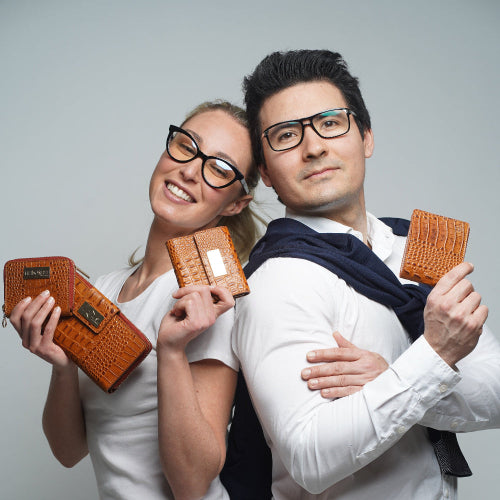
Full Grain vs Top Grain vs Genuine Leather Explained
"Leather" on a product tag can mean several different things depending on which part of the hide was used and how it was processed. Two wallets can both be labeled "leather" and behave completely differently over five years of daily use. The real difference usually comes down to grade, specifically whether the material is full grain, top grain, or what the industry labels genuine leather. Once you understand what separates these three grades, shopping for leather goods stops being a guessing game. It also explains why two similar looking products can carry very different price tags and age in completely different ways.
Here's the three-grade comparison before the full breakdown below:
| Leather Grade | Surface | Durability (Daily Carry) | Patina | Typical Price Tier |
|---|---|---|---|---|
| Full-Grain | Natural grain intact | 5-10+ years | Rich, deepens with use | Premium |
| Top-Grain | Sanded and buffed, uniform | 2-4 years | Minimal, may crack | Mid-range |
| Genuine / Bonded | Lower splits or scrap fibers glued together | Under 1-2 years | Peels, delaminates | Budget |
What Leather Grade Actually Means
A cow hide is thick, and tanneries split it into layers before it becomes usable material. The top layer, closest to the animal's skin surface, carries the natural grain pattern, the texture variations, and the fiber density that make leather strong and long wearing. Lower layers, cut from beneath that top layer, are thinner, looser in fiber structure, and lack the natural grain entirely.
Grade describes which layer a product is made from and how much that layer has been altered afterward. Full grain and top grain both come from the top layer of the hide. Genuine leather, despite the reassuring name, usually comes from the lower splits. Bonded leather, a fourth category worth knowing about even though it is not part of this comparison, is not a layer at all. It is scrap leather fibers glued together and pressed to look like a hide.
Processing matters as much as the layer. Tanneries sand, buff, or stamp a corrected grain pattern onto lower grade material to disguise scars, insect bites, and other natural marks. A heavily corrected surface can look flawless on a shelf, but it lacks the fiber density that makes top layer leather resist cracking and abrasion over years of use. This is also why grade affects how a piece handles routine wear. A wallet that sees daily use in a back pocket benefits enormously from starting with a denser, better structured hide, which is one reason routine leather care habits matter more on some grades than others.
Manufacturers are not always required to disclose grade clearly on a tag, and terminology varies by country and by brand. That inconsistency is exactly why grade confuses so many shoppers, and why it pays to understand what each term actually promises before comparing price tags side by side.
Full Grain Leather Explained
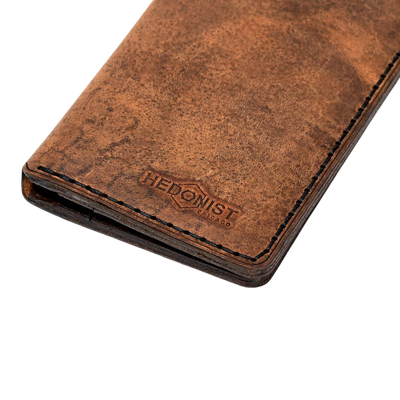
Full grain leather uses the top layer of the hide with the grain left intact. Tanners clean and finish the surface, but they do not sand away the natural texture or stamp a fake pattern on top. Every mark in a full grain hide, from small wrinkles to subtle variations in texture, comes from the animal itself rather than from a machine trying to imitate one.
"We turn down more hides than we accept. If a skin does not have the tight, unbroken grain that full-grain requires, it does not matter how good the price is, it does not go into production."
This intact fiber structure is what makes full grain the strongest and longest wearing leather grade available. The tightly packed fibers near the surface resist punctures, abrasion, and stretching far better than the looser fibers found deeper in the hide. Full grain leather also develops a patina, a gradual darkening and softening of the surface caused by oils, sunlight, and handling. That patina is part of why full grain pieces tend to look better with age rather than simply looking worn out.
At Hedonist Chicago, our belts and premium wallet lines use full grain leather specifically because those are the pieces that take the most daily friction, folding, and pocket wear. A belt flexes every time it goes through a buckle, and a wallet gets pulled out dozens of times a day, so starting with the densest, most durable layer of the hide makes a measurable difference over years of ownership. You can browse the current lineup in our leather belts collection, read our belt buying guide for more on construction, and see how the grain looks different from piece to piece since no two hides are identical.
The tradeoff is cost and appearance consistency. Full grain hides show more natural variation, including small marks that some shoppers mistake for flaws rather than proof of an unaltered surface. Full grain leather also costs more to source, since tanneries have to select hides with fewer natural blemishes to work with in the first place.
Top Grain Leather Explained
Top grain leather also comes from the upper layer of the hide, but tanneries sand off the outermost part of the grain and often stamp a more uniform texture back onto the surface. The result is a material that is thinner and more consistent looking than full grain, with fewer visible natural marks.
This process makes top grain leather easier to work with for certain designs, particularly pieces with fine detailing, embossed patterns, or bright colors that need an even surface to take dye evenly. It is still genuine top layer leather, not a lower grade split, and it holds up well under normal use. It simply will not develop as pronounced a patina as full grain, since much of the surface that would darken and change texture over time has already been altered during tanning.
Some of our accessory lines, including certain embossed leather pieces, use top grain leather rather than full grain. The sanding and stamping process required to create a clean, consistent embossed pattern works better on a top grain surface, and the resulting pieces still hold up to years of regular use. You can see the current selection in our embossed leather collection.
Top grain sits in a middle position on both price and durability. It costs less to produce than full grain because tanneries can use hides with more natural imperfections, sanding those away rather than rejecting the hide outright. It also wears well, though not quite as long as full grain under identical conditions. For a lot of everyday accessories, that tradeoff makes sense, since the difference in longevity is smaller than the difference between top grain and genuine leather.
Genuine Leather: The Confusing Name Explained
Genuine leather is the most misleading term in the entire leather industry, and the confusion is not an accident. The name sounds like a guarantee of quality or authenticity, when in the technical, industry sense it actually refers to one of the lowest leather grades available. Genuine leather is typically made from a lower split of the hide, the layer beneath the top grain, finished with a heavy coat of dye, sealant, or an artificial texture stamped on to imitate a natural grain.
Because the fiber structure in these lower splits is looser and less dense, genuine leather is more prone to cracking, peeling, and general wear within a few years rather than a few decades. The heavy surface coating that gives it an even, glossy look at the store often starts flaking once the material flexes repeatedly, which is a common complaint people run into when they buy a low cost wallet or belt and it looks worn out within a single year.
It is worth being direct here: at Hedonist Chicago, none of our products are made from genuine leather in this lower grade, industry sense. Our pieces use full grain or top grain leather depending on the product line, and we describe each item accordingly rather than using the term genuine leather to describe our own goods, since that term technically points to a lower quality category. When mass market retailers list "genuine leather" wallets at a fraction of the price of a full grain equivalent, this grading difference is usually the reason the price gap exists in the first place.
That said, genuine leather is still real animal hide, not plastic, and it is a step above synthetic materials in most cases. It just sits at the bottom of the natural leather hierarchy rather than the top, despite what the name implies. If you are trying to figure out whether a product you already own or are considering buying uses real leather at all, our guide on how to spot real leather versus fake leather walks through the physical tests that work regardless of grade.
Full Grain vs Top Grain vs Genuine Leather Side by Side
Lined up next to each other, the differences between the three grades become easier to see in practical terms rather than just definitions.
Full grain leather keeps the entire natural grain intact, uses the densest part of the hide, and typically lasts the longest under regular use, often for decades with basic care. It shows visible natural texture and small marks unique to each hide, and it develops a rich patina that many people consider part of the appeal rather than a downside. It also costs the most to produce and to buy, since tanneries need higher quality hides with fewer blemishes to start with.
Top grain leather sands away part of the natural surface and often stamps on a more even texture, which produces a smoother, more consistent look. It still comes from the strong upper portion of the hide, so it holds up well, generally for many years, though it does not develop as dramatic a patina as full grain. It costs less than full grain but more than genuine leather, and it works especially well for designs that need a uniform surface, like embossed patterns.
Genuine leather uses a lower, looser layer of the hide and relies on a heavy artificial coating to look presentable. It is the least durable of the three, often showing cracking or peeling within a few years of regular use, and it does not develop a natural patina since the coating prevents the surface from aging the way real exposed grain does. It is the least expensive option, which is exactly why it dominates the low end of the leather goods market.
None of the three grades is inherently wrong for every situation. A genuine leather product used occasionally might last long enough for its purpose. But if you are buying something for daily use over years, like a wallet you will carry every day or a belt you will wear several times a week, the gap between grades becomes very noticeable very quickly.
How Grade Affects Durability and Patina
Durability comes down to fiber density, and fiber density comes down to which layer of the hide you started with. The tightly packed fibers near the top of the hide resist tearing, stretching, and abrasion far better than the loose fibers found in lower splits. That is true regardless of how good the finishing work looks on day one.
Patina is the other major difference, and it only happens on leather with an exposed, unaltered or lightly finished surface. As natural oils from your hands, exposure to light, and general handling interact with the hide over months and years, the surface gradually darkens and develops a richer, deeper tone. Full grain leather patinas the most dramatically because its surface is the least altered. Top grain still patinas, just more subtly, since part of the surface was sanded and refinished during tanning. Genuine leather rarely patinas in any meaningful way because the thick artificial coating blocks the natural aging process the material would otherwise go through.
If patina is something you specifically want from a piece, our guide on how leather develops patina goes deeper into the timeline and what actually causes the color change. Proper care also plays a role in how gracefully any grade of leather ages. Conditioning at the right intervals, described in our piece on leather treatments and conditioners, keeps the fibers supple and helps prevent the kind of drying out that leads to cracking, particularly on full grain and top grain pieces that are meant to last for years rather than months.
How Grade Affects Price
Price differences between leather grades are not arbitrary markup, they reflect real differences in sourcing and processing cost. Full grain leather requires tanneries to select higher quality hides with fewer natural blemishes, since there is no sanding step to hide imperfections later. That selective sourcing raises the base material cost before a single stitch is sewn.
Top grain leather costs less to source because tanneries can use hides with more visible imperfections, sanding the surface to even things out. That extra processing step adds labor cost but saves on material cost overall, which usually puts top grain pieces at a lower price point than full grain equivalents from the same brand.
Genuine leather is the cheapest to produce by a wide margin. It uses the leftover lower splits of the hide, material that would otherwise go to waste or become bonded leather, and covers it with a low cost synthetic finish. This is why genuine leather dominates budget accessories and why a genuine leather wallet can sell for a fraction of the price of a full grain one.
When you are comparing prices across brands, it helps to think in terms of cost per year of expected use rather than sticker price alone. A full grain wallet that lasts ten years with basic care can end up costing less annually than a genuine leather wallet that needs replacing every year or two. Our men's wallet collection and wallet buying guide break down how to weigh price against expected lifespan when comparing specific pieces, and our best selling leather goods collection includes pieces across both full grain and top grain lines, priced according to the material and construction that goes into each one.
How to Check the Grade Before You Buy
Grade is not always printed clearly on a tag, so it helps to know what to look for in person or in product photos. Check the surface first. Full grain leather shows small natural variations, faint wrinkles, and texture that is not perfectly uniform across the piece. Top grain looks smoother and more consistent, though it should still have some visible grain texture rather than a completely flat, plasticky surface. If a surface looks glassy, perfectly even, and shows no texture variation at all, that is often a sign of a heavy synthetic coating typical of genuine leather.
Smell and flex are also useful checks in person. Real top layer leather has a distinct, slightly sweet, earthy smell, while heavily coated genuine leather often smells more chemical due to the finish. Flexing a corner and watching how it responds tells you a lot too, since full grain and top grain leather flex and slowly relax back into shape, while a stiff synthetic coating on lower grade material tends to crease sharply and stay creased.
For handmade pieces specifically, our handmade leather goods guide covers what to look for in artisan crafted items, where grade and construction quality both play a role in how the finished piece performs.
Over 2,500 customers have reviewed Hedonist Chicago leather goods and rated us 4.78 stars on average, and grade transparency is part of why. We list which grade each product line uses so you know exactly what you are paying for before you buy, whether that is a full grain belt meant to last decades or a top grain accessory built for a specific design. If you want to understand how long a well chosen piece should realistically last once you bring it home, our guide on how long a leather wallet should last sets reasonable expectations by grade and daily use pattern.



Leave a comment