


How to Spot Real vs Fake Leather When Shopping
Online shopping has made it harder to judge leather quality before you buy. You cannot touch the material, smell it, or flex a corner before the item arrives, so a lot of shoppers end up disappointed when a "leather" product turns out to be a synthetic look-alike or a low grade material dressed up in good photography. Learning the physical differences between real and fake leather protects you from that disappointment, whether you are shopping online or standing in a store deciding between two nearly identical looking wallets. It also helps to know that the terminology on a tag is not always straightforward, since real leather comes in several grades and fake leather comes in several forms, and both categories overlap in ways that catch shoppers off guard.
Here are the physical tests that tell real leather from synthetic:
| Test | Real Leather | Fake / Synthetic |
|---|---|---|
| Smell | Earthy, slightly sweet | Plastic or chemical odor |
| Edge | Fibrous, irregular texture | Perfectly uniform, sometimes printed |
| Flex / Crease | Creases unevenly, softens with use | Cracks or shows uniform fold lines |
| Touch | Warms gradually to body temperature | Stays cool and plasticky longer |
Why Real and Fake Leather Get Confused So Easily
Manufacturers have gotten very good at making synthetic materials that mimic leather visually. Polyurethane and PVC based materials, often labeled "vegan leather," "PU leather," or "faux leather," can replicate a convincing grain pattern from a few feet away and in a product photo shot under good lighting. Some low grade genuine leather, a technical industry term for one of the lower leather grades, is finished with such a heavy synthetic coating that it starts to resemble the same smooth, uniform look. For a deeper look at how leather grades work and why the term "genuine leather" is more confusing than it sounds, our guide on full grain versus top grain versus genuine leather breaks down the terminology in detail.
The confusion is not just a marketing trick. Even people who work with leather regularly can be fooled by a photo alone, since the differences that matter most, texture, smell, and how the material responds to flexing, only show up in person. That is exactly why physical tests matter so much more than visual impressions when you are trying to confirm what a product is actually made from. It also explains why price alone is not a reliable indicator, since a well made synthetic item can sometimes cost more than an entry level real leather piece, and a heavily discounted "leather" item can turn out to be neither.
Retail labeling adds another layer of confusion. Some countries allow the word "leather" on a tag as long as any percentage of the material is animal hide, even if the visible surface is mostly synthetic coating. That loophole is part of why relying on physical tests, rather than the label alone, gives you a much more reliable answer.
The Smell Test
Real leather has a distinct smell that is hard to fake convincingly. It is earthy, slightly sweet, and a little smoky depending on how the hide was tanned. That smell comes from the tanning process itself and from the natural oils still present in the material, and it tends to get more noticeable, not less, as the leather warms up in your hands or sits in a warm room.
"The quickest test we use ourselves: real leather never smells like plastic, even brand new. Every hide that comes through our workshop gets that same check before anything else."
If you are shopping in a physical store, do not be shy about asking to smell an item before you buy, particularly for a higher priced purchase like a belt or a wallet you intend to use daily for years. Staff at a store that sells genuine leather goods are used to this question and should not hesitate to let you check. A retailer that discourages you from getting close to the material or seems evasive about the question is worth treating with extra caution.
Synthetic materials smell different. Most faux leather has a chemical or plastic smell, sometimes masked with a manufactured "leather scent" that smells slightly off compared to the real thing, more like an air freshener than an actual hide. If you can get close to a product before buying, the smell test is one of the fastest ways to settle the question, and it works regardless of color, pattern, or finish. It is worth noting that a brand new real leather item can smell stronger right out of the box and then mellow with air exposure over the first few weeks, which is normal and not a sign of anything wrong with the material.
The Texture and Grain Test
Real leather, especially full grain and top grain leather, has texture that varies slightly across the surface. Look closely and you will see small variations, faint wrinkles, and pores that are not perfectly repeating. No two pieces from the same hide look exactly identical, since the pattern comes from a living animal rather than a mold.
Synthetic materials, on the other hand, often have a grain pattern that repeats in a visible cycle, since it is embossed by a machine using the same texture roller over and over. If you look at a large enough surface, like a belt or a large wallet panel, and notice the same swirl or wrinkle pattern showing up more than once, that is a strong sign you are looking at a faux material rather than real hide. Genuine leather that has been heavily corrected and stamped can also show this kind of repeating pattern, since the natural grain has been sanded off and a fake texture applied on top.
A useful trick if you are shopping in person is to press your fingertip lightly into the surface. Real leather has a small amount of give and a slightly warm feel almost immediately, since it responds to body heat. Synthetic material tends to feel cooler and more rigid, and pressing into it rarely produces the same subtle texture shift.
The Flex and Crease Test
How a material responds when you bend it tells you a lot. Real leather flexes smoothly and creates soft, irregular creases that follow the direction of the fold naturally. Fold a corner and release it, and real leather slowly relaxes, sometimes retaining a faint mark where you folded it, but without a sharp, permanent crack line.
Synthetic leather tends to crease sharply and can develop a whitish line or visible crack right along the fold, especially in cheaper vinyl based materials. That whitening happens because the synthetic coating cannot flex the way natural fibers can, so repeated folding eventually breaks down the surface layer. This is one reason a well made leather wallet holds its shape over years of folding and unfolding in a pocket, while a synthetic one starts to show cracks at the fold lines within months. Our wallet size guide covers how fold points and material choice interact if you are comparing bifold and trifold styles, and the same flex principle applies to belts, where the fold around the buckle takes repeated stress every time you put it on.
The Edge and Backside Check
The back of a leather product, or the inside of a fold, often reveals more than the front. Real leather has a fibrous, suede-like backside, since it comes from an animal hide with a natural cross section. Synthetic materials usually have a fabric backing, a woven or knit texture bonded to the plastic top layer, which is a fairly reliable giveaway once you know to check for it.
Edges tell a similar story. A cut edge of real leather shows a dense, slightly rough fiber structure, while a cut edge of synthetic material typically reveals a uniform plastic cross section, sometimes with visible layers if the backing fabric is a different color than the surface coating. If a product listing includes a close up photo of a raw edge or the interior lining, it is worth zooming in before you buy. Well made leather goods often finish the edge with burnishing or a painted edge coat, which is a good sign of construction quality regardless of grade, and our handmade wallets collection shows this kind of edge finishing up close in the product photography.
Does Embossed Leather Count as Real Leather
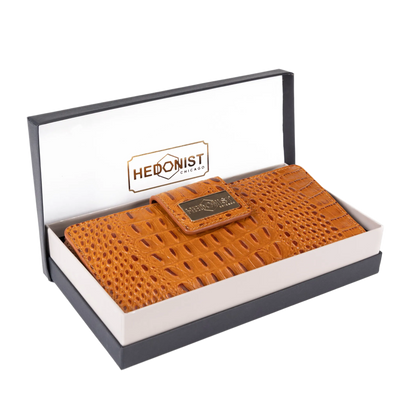
Embossing confuses a lot of shoppers because they assume any product with a printed or stamped pattern, like a croc-style texture, must be fake. That is not true. Embossing is a finishing technique, not a material, and it can be applied to real leather just as easily as to synthetic material. A crocodile-pattern wallet made from top grain leather is completely real leather, it is simply real leather with a decorative pattern pressed into the surface. Our guide on embossed and croco pattern leather explains exactly how that process works and how to tell an embossed real leather piece from a synthetic one that is trying to look the same.
The safest way to check is to combine the embossing question with the other tests in this article. An embossed pattern on real leather still shows the smell, backside texture, and flex behavior of natural hide. An embossed pattern on synthetic material will show the telltale plastic backing and chemical smell regardless of how convincing the front surface looks. You can browse examples of genuinely embossed leather pieces in our embossed leather collection to see how the pattern sits on real hide compared to photos of synthetic alternatives you might come across elsewhere.
Where This Matters Most by Product Type
Wallets and belts see the most flexing and folding of any leather accessory, which makes them the products where the difference between real and synthetic material shows up fastest. A wallet folds dozens of times a day, and a belt bends every time it goes through a buckle, so any weakness in the material becomes obvious within months rather than years. Our leather belts collection and men's leather wallets collection both list the specific leather grade used for each product, since material choice matters more on these high flex items than almost anywhere else.
Watch bands present a slightly different case, since they see constant flexing around the wrist along with regular exposure to sweat and moisture. A synthetic watch band tends to crack along the buckle holes within a year of daily wear, while a real leather band ages more gracefully with basic care. If you are shopping for one, note that personalization is not offered on watch bands regardless of material, so double check that detail separately from the material question if engraving or monogramming matters to you.
Smaller accessories like card holders and keychains are lower risk in terms of daily flex, but the same tests still apply if you want to confirm the material before buying, particularly for gifts where you want to be confident about what you are actually giving. Our handmade card holders collection and handmade key chains guide both cover construction details worth checking on smaller items, since the smaller surface area can sometimes make material differences harder to spot at a glance.
Personalized items deserve one more note. A monogram or hot stamped initial only looks sharp over time on a material that ages well, and personalization on Hedonist Chicago products is limited to 40 characters to keep the stamped area proportional to the piece. Watch bands are the one product line where we do not offer personalization at all, regardless of material, so keep that in mind if engraving is part of what you are shopping for. You can read more about how the process works on our personalization page.
What to Check Before Buying Leather Online
Shopping online removes the ability to touch or smell a product before you buy, so the checklist shifts toward reading carefully and looking at photos critically. Start with the product description itself. A brand that is confident in its materials will usually state the leather type directly, for example full grain or top grain, rather than using a vague term like "leather look" or "leather style," which are common euphemisms for synthetic material.
Zoom into product photos and look for the natural variation described earlier in this article. Ask whether the listing includes any interior or backside shots, since those are harder to fake convincingly than a glossy front view. Check the return policy too, since a legitimate leather goods brand will typically stand behind material claims with a reasonable return window if the product does not match the description once it arrives in hand.
Reviews are also worth reading closely, specifically looking for comments about smell, how the material has aged, or whether it cracked after a few months, since those details tend to surface real material problems that photos alone will not reveal. Over 2,500 customers have reviewed Hedonist Chicago leather goods and rated us 4.78 stars on average, and a large share of that feedback comments specifically on how the material has held up over months and years of daily use, which is the kind of detail worth looking for on any product you are considering.
How Hedonist Chicago Approaches Material Honesty
Every product description across our site states which leather grade a piece uses, whether that is full grain for our belts and premium wallets or top grain for certain accessory lines. We do not use vague marketing language to describe material, and we do not apply the term genuine leather to our own products, since that term technically refers to a lower grade than what we use throughout our lineup.
You can browse our current best selling leather goods to see how material information is presented product by product, or start with our broader leather accessories guide if you are still narrowing down what type of piece fits your daily routine. For care tips once you have a real leather piece in hand, our leather care tips article and our leather cleaning guide cover the basics of keeping a genuine hide looking good for years rather than months. If you want to understand how a well chosen piece should hold up over the long run, our article on how long a leather wallet should last sets realistic expectations based on material and daily use.


Leave a comment