



Why Are Leather Wallets So Expensive? What You Pay For
Quick answer: leather wallets are expensive because of what goes into them: the leather grade (full-grain uses only the best part of the hide), the tanning time (vegetable tanning takes weeks, chrome tanning about a day), construction quality, and the margins between tannery and customer. A full-grain wallet costs more up front but often lasts 5 to 15 years, while a $15 to $25 bonded wallet is typically replaced within one to three. Per year of use, the full-grain wallet is frequently cheaper.
| Factor | Budget wallet | Quality full-grain wallet |
|---|---|---|
| Leather grade | Bonded or corrected-grain: scraps glued, or sanded and stamped with an artificial grain | Full-grain: the hide's actual outer layer, left intact |
| Tanning | Chrome tanning, finished in about a day | Vegetable tanning, several weeks with plant-based tannins |
| Stitching | Single thin seam that can unravel end to end | Tight, even stitching with backstitched ends |
| Edges | Painted or coated, prone to peeling | Smooth, sealed edges that wear in instead of off |
| Lining and hardware | Thin, minimal | Thin tightly woven lining, solid hardware |
Picks to go with this guide

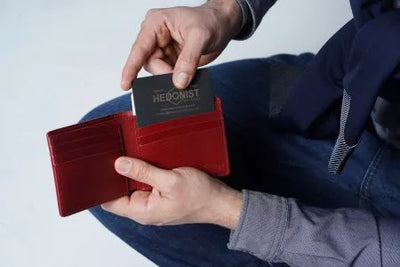
Red Leather Bifold Wallet for Men
6-12 cards, RFID blocking, flat bill section
View product →
Men's Black Slim Bifold Leather Wallet
0.5" profile, 6-12 cards, ID window, RFID lining
View product →
Green Croco Leather Bifold Wallet for Men
6-12 cards, RFID blocking, croco-embossed texture
View product →Why Are Leather Wallets So Expensive?
A leather wallet's price comes down to four things: the grade of leather, how it was tanned, how carefully it was assembled, and how many middlemen sit between the workshop and you. A mass-produced bonded-leather wallet can sell for $15. A full-grain, vegetable-tanned wallet costs several times that. And a luxury-brand version of a similar full-grain wallet can cost $300 or more, where much of the price is brand and retail markup, not better material.

Why Full-Grain Leather Costs More
Full-grain leather keeps the hide's original outer surface, the densest part of the skin. That is why it resists cracking at fold lines and develops a real patina. Only a limited share of each hide qualifies, because any scarring, insect bites, brand marks or stretch marks take a section out of the full-grain category. Depending on the herd and the tannery, the usable full-grain portion can be well under half of a hide's surface.
Everything else is still used, just downgraded into corrected-grain, split or bonded leather. Those lower grades cost less because they come from parts of the hide that would otherwise go to waste and are processed to hide imperfections rather than avoid them. Premium hides can cost two to four times what standard hides cost before any cutting begins, and a workshop cutting full-grain leather around natural marks gets less usable material per hide than a factory working with leather sanded flat and uniform. Our guide to full-grain vs top-grain leather explains the grades.
Why Vegetable Tanning Takes Longer and Costs More
Vegetable tanning uses plant tannins and takes several weeks per hide, against roughly one day for chrome tanning. The slow process is what lets the leather age into a deeper color over years and gives it a firmer hand-feel. That extra time is real cost: more days holding inventory, more space and more handling. Chrome-tanned leather can feel soft from the first day, but it tends to stay that way instead of developing character.
What Quality Construction Adds
Construction is the other half of the price. A durable wallet uses different leather weights for different parts: firmer leather on structural panels and thinner leather in the card slots so they keep their tension. That means cutting more distinct pieces instead of one uniform sheet. Stitching needs to be tight and even and finished with a backstitch, and edges need to be sealed and smooth instead of painted. Each step adds minutes of skilled work per wallet, which a high-volume line avoids. See the men's leather wallet guide for what to look for.
How Many Hands a Wallet Passes Through
A traditional retail wallet often moves from tannery to manufacturer, then to a wholesale distributor, a retail brand and a physical store before it reaches you. Each step adds its own margin. Two wallets with identical leather and construction can carry very different price tags depending on how many of those steps a brand skips. Brands that sell direct to customers remove several markup layers, which is one reason a full-grain wallet sold direct can undercut a department-store price for comparable material.
Does RFID Lining Add to the Price?
Sometimes, but usually not by much. The metal mesh is inexpensive compared with the leather and labor in a wallet. Where it adds cost is assembly time, since the layer has to be positioned and sewn in separately. Our guide on whether a wallet needs RFID-blocking protection explains how much the feature is worth.
What You Pay For at Each Price Point
| Price range | What that usually buys |
|---|---|
| Under $25 | Bonded or PU leather, thin machine seam, painted edges |
| $50 to $100 | Full-grain, vegetable-tanned leather, quality construction, sold direct by smaller brands |
| $300 and up | Often similar leather and construction to the tier above, plus brand name and retail markup |
These are typical market ranges, not rules. Above roughly $150, price increasingly reflects brand and retail markup rather than better materials.
Is a Leather Wallet Worth It? Cost Per Year
A well-cared-for full-grain wallet can last a decade or more of daily use and often looks better after years of handling. A bonded or corrected-grain wallet typically needs replacing within one to three years as the coating cracks or the seams give way. Compare them per year, using round numbers as an example:
| Wallet | Price | Years of use | Cost per year |
|---|---|---|---|
| Bonded leather | $20 | 2 | $10.00 |
| Full-grain, vegetable-tanned | $80 | 10 | $8.00 |
And the cracked $20 wallet has to be thrown away, while a scuffed full-grain wallet can usually be conditioned and kept going. See how long a leather wallet should last for lifespan by grade. The full-grain wallet also keeps improving: it softens and molds to your pocket over the first weeks, a process covered in how to break in a new leather wallet, and develops a patina that coated surfaces never do.
When a Cheaper Wallet Makes Sense
For occasional or short-term use, such as a trip or a wallet you will outgrow soon, a lower-priced wallet can be a reasonable choice. For a wallet carried daily, the cost of replacing a low-grade wallet every one to three years often exceeds the upfront price of a full-grain wallet built to last a decade or more. Our guide on whether a leather wallet stretches or sags explains how cheaper leather loses shape.
How to Judge Whether a Price Is Fair
- Check that the listing names the grade, such as full-grain, not just "leather" or "genuine leather."
- Look for close-up photos of stitching and edges.
- Compare return and warranty terms. Ours are 30-day free US returns and a one-year warranty.
- Compare the price with the leather grade and construction, not with the brand name. Our brand buying guide shows how to line brands up side by side, and how to tell if a wallet is real leather covers the physical checks.
Free Personalization Adds Value Without Adding Cost
Every wallet we make can be personalized at no charge, with initials, a name or a short phrase of up to 40 characters. See the personalization page for details. Browse our full-grain leather wallets for men, women's leather wallets or best sellers.
More picks from the same range

Men's Black Leather Bifold Wallet
6-12 cards, flat bill section, RFID blocking, 0.5" profile
View product →
Dark Brown Leather Bifold Wallet for Men
6-12 cards, RFID blocking, flat bill section
View product →
Black Croco Slim Leather Bifold Wallet for Men
6-12 cards, ID window, RFID lining, 0.5" profile
View product →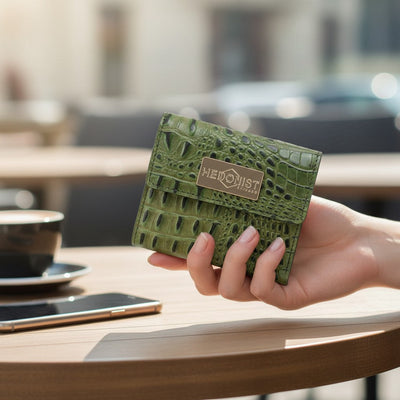


Leave a comment