


Best Leather Wallets for Men: How to Choose One That Lasts
Quick answer: the best leather wallet for a man is full-grain, vegetable-tanned leather in the format that matches his real daily carry. A slim bifold suits 4 to 6 cards, a standard bifold suits 6 to 8, and a long wallet suits 8 or more. Leather grade matters more than format, because full-grain leather softens and develops patina while lower grades crack at the fold and card slots.
| If you carry | Best format | Typical size, folded | Where to look |
|---|---|---|---|
| 2 to 5 cards, little cash | Slim bifold or card holder | 4.1 x 3.0 x 0.5 in | Slim wallets |
| 6 to 8 cards, some cash | Standard bifold | 4.1 x 3.3 x 0.5 in | Bifold wallets |
| 8 to 12+ cards, receipts, flat bills | Classic bifold with full slots, or a long wallet | 4.1 x 3.3 x 0.5 in, or 7.5 x 3.5 x 0.5 in for long | Classic wallets |
Picks to go with this guide

Red Leather Bifold Wallet for Men
6-12 cards, RFID blocking, flat bill section
View product →
Men's Black Slim Bifold Leather Wallet
0.5" profile, 6-12 cards, ID window, RFID lining
View product →
Green Croco Leather Bifold Wallet for Men
6-12 cards, RFID blocking, croco-embossed texture
View product →What Makes the Best Leather Wallets for Men?
Most lists of the best men's leather wallets rank styles. That misses the two things that decide whether you still like the wallet in five years: what the leather is and how the wallet is built. Style is a personal choice. Leather grade and construction are not.

Good leather wallets meet five tests, and the highest quality leather wallets pass all of them. The leather is full-grain, so the strongest layer of the hide is intact. The tanning is vegetable-based, so the leather softens and darkens instead of drying out. The stitching is even and tight at the corners and the fold. The card slots grip a card without a stiff first week. And the capacity matches what you actually carry, so the wallet is never overfilled.
The rest of this guide covers those five tests in order, then shows how to check them before you buy. Format-specific advice lives in separate guides, linked where it applies.
Start With the Leather, Not the Style
Leather is sold under several names, and the names are not interchangeable. Here is what each one means in practice:
| Grade | What it is | How it ages |
|---|---|---|
| Full-grain | The top of the hide with the natural grain intact | Softens, darkens, develops patina |
| Top-grain | Top layer sanded to remove marks, then coated | Stays uniform, can peel or crack at the coating |
| Genuine leather | Lower layers of the hide, often heavily finished | Wears out faster, stiffens, scuffs |
| Bonded leather | Scraps glued together with a coating | Peels and flakes, often within a year or two |
"Genuine leather" sounds like a guarantee. It is actually one of the lower grades, so treat the phrase as a warning rather than a selling point. All of our men's wallets are made from full-grain leather. For a deeper look at how real leather differs from imitation, see our guide to how to tell if a wallet is real leather.
Vegetable tanning uses plant tannins instead of chromium salts. It is slower, and the result is a firmer leather that starts a little stiff and relaxes with use. It also takes on color from handling and light, which is where the patina comes from. A vegetable-tanned wallet that shows creases and darker edges after two years is doing exactly what it should.
Choose the Best Men's Leather Wallet Format for Your Carry
Format decides how the wallet feels in your pocket every day. Start from the number of cards you actually use in a normal week, not the number you own.
Slim bifolds keep the wallet around 0.5 inch thick folded and suit front-pocket carry. They hold fewer cards comfortably, so they reward a short daily list. Our slim wallet guide covers sizes and card counts in detail.
Standard bifolds are the default for a reason. They fold once, give each card its own slot, and keep bills in a flat compartment. They fit a back pocket well and a front pocket for many men. See the bifold wallet guide for what to look for in the fold and the slots.
Classic bifolds and long wallets trade pocket size for capacity. A classic bifold takes up to 12 cards in individual slots. A long wallet, about 7.5 inches tall, holds bills flat and suits men who carry many cards or prefer unfolded cash. It sits best in a jacket pocket or bag.
If you are torn between the first two, the slim vs bifold comparison sets out the trade-offs. For exact dimensions, use the men's wallet size guide. For a choice based on habits and daily routine, read the men's wallet guide.
Construction Details That Separate Lasting Wallets
Two wallets cut from the same hide can age very differently. These are the places to look.
Stitching. Look at the corners and the base of the card slots. Stitches should be even in length, tight to the leather, and finished with a backstitch so they cannot pull out. Loose or wavy thread near the fold is the first sign of a short life.
Edges. A well-finished edge is smooth and sealed, with no fuzzy fibers. Raw, sanded edges absorb moisture and fray. Sealed and burnished edges keep their shape longer.
The fold. A bifold flexes at the same line thousands of times. Leather that is too thick makes a stiff, bulky fold, and leather that is too thin cracks. Full-grain leather at a moderate thickness bends cleanly and creases softly.
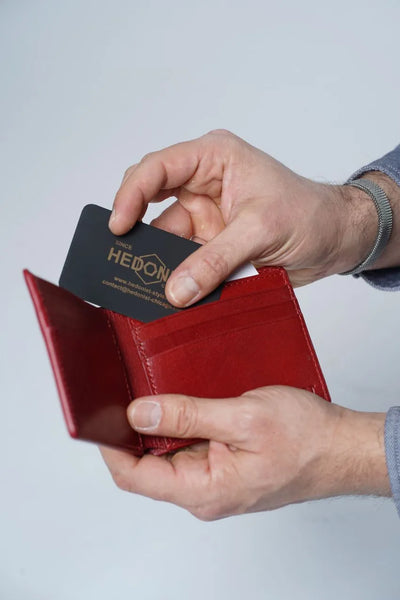
Card slots. Slots should be tight when new. Leather stretches a little with use, so a slot that is loose on day one will let cards slip within weeks.
Lining. Interior lining affects thickness more than most buyers expect. A thin, tightly woven lining keeps a slim wallet slim.
Match Capacity to What You Really Carry
Overfilling is the most common reason a good wallet looks bad. A card adds about 0.03 inch, and each folded bill and each receipt adds more. A wallet loaded past about 80 percent of its card capacity bulges, stretches its slots and loses its shape.

The fix is to count first and buy second. Take everything out of your current wallet and sort it into cards you used in the last week and cards you did not. For most men the first pile is four to six cards. Our guide to how many card slots you need walks through the method, and the thin vs regular wallet comparison shows how thickness changes how a wallet feels in the pocket.
RFID Protection: Useful, Not Essential
RFID-blocking lining stops a scanner from reading the chip in a contactless card through the wallet. Real-world skimming is uncommon, so treat RFID as a small extra layer of protection, not a reason to choose one wallet over another. Our slim and classic bifold wallets include RFID-blocking lining that adds no visible thickness. If you are weighing the question, our guide on whether a leather wallet needs RFID protection explains it in more detail.
Color and Finish
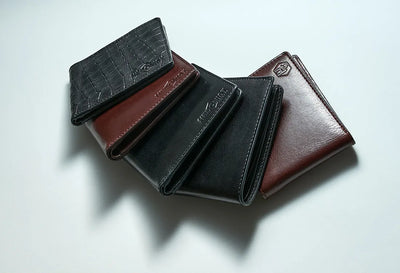
Black and brown cover almost every wardrobe. Black reads formal and hides wear well. Brown shows patina more clearly and warms with age. Red, green and embossed finishes make a wallet easy to find in a bag and stand out as a personal choice. Because full-grain leather darkens over time, a lighter brown today may look like a deeper cognac in a year. Our guide on how to choose a wallet color goes through it by wardrobe and occasion.
How to Check a Wallet Before You Buy
Whether you are in a store or looking at product photos, run through this list:
- Read the leather description. It should say full-grain, ideally vegetable-tanned. "Genuine leather" alone is not enough.
- Check the dimensions listed as folded size and thickness, then compare them with the table at the top of this guide.
- Look closely at photos of the stitching, corners and fold. Even thread and clean edges show care.
- Count the slots against your daily cards, and leave about 20 percent spare.
- Confirm the return and warranty terms. We offer 30-day free US returns and a one-year warranty on our wallets.
Price and Value
A wallet is handled more than almost anything else you own, so cost per year of use is the useful measure. Full-grain leather costs more than bonded or genuine leather, but it lasts through years of daily carry and looks better as it ages. A low-priced wallet that cracks in eighteen months is not the cheaper option. If you want the full breakdown, read why leather wallets are expensive and how long a leather wallet should last.
Free Personalization
Every men's wallet we make can be personalized at no charge. Choose initials, a name, a date or a short phrase of up to 40 characters, then pick hot stamping or gold, silver, black or white foil. The text is stamped into the leather and cannot be removed, so it stays sharp as the wallet ages. Personalization adds one to two business days to dispatch. Details and examples are on the personalization page.
Break-In and Care in Brief
A new full-grain wallet is firm at first. Carry it for a few weeks and the fold and slots relax. Wipe it with a dry cloth, keep it away from heat, and condition it a couple of times a year. Our guides on breaking in a new wallet and leather conditioners cover the steps, and the article on whether a leather wallet stretches or sags explains what is normal.
Where to Start
If you already know your carry, go straight to the matching collection: slim wallets, bifold wallets or classic wallets. To see all leather wallets for men in one place, open the full men's wallet collection. If you want a proven pick, start with our best sellers.
More picks from the same range

Men's Black Leather Bifold Wallet
6-12 cards, flat bill section, RFID blocking, 0.5" profile
View product →
Dark Brown Leather Bifold Wallet for Men
6-12 cards, RFID blocking, flat bill section
View product →
Black Croco Slim Leather Bifold Wallet for Men
6-12 cards, ID window, RFID lining, 0.5" profile
View product →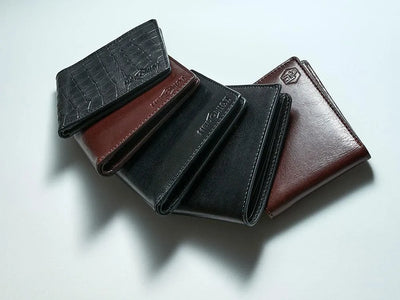
Leave a comment