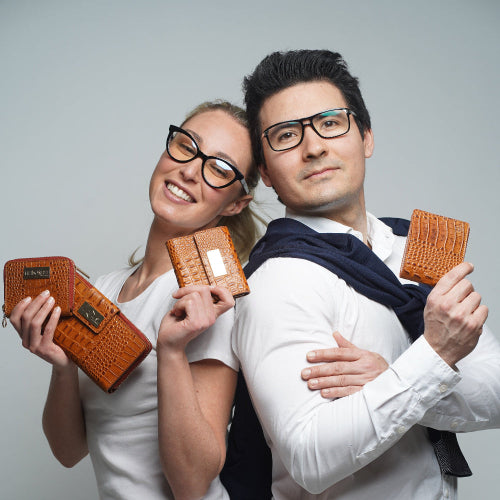
Guide To Men's Wallet

Complete Guide to Men's Wallets: Formats, Carry Habits, and Long-Term Value

A men's wallet is one of the most used everyday objects most men own - opened and closed a dozen or more times daily, carried for years, and rarely thought about until it starts creating problems. This guide covers every meaningful aspect of men's wallet selection from a purely practical standpoint: what the different formats actually provide, how to match a wallet to real carry habits rather than imagined ones, what construction details determine long-term performance, and how to avoid the most common selection mistakes that leave men carrying wallets that frustrate rather than function. For a comprehensive look at the best options across formats, see our best men's leather wallets guide.

The Three Men's Wallet Formats and When Each Is Right

Men's wallets divide into three formats that address genuinely different carry needs. Understanding what each format does - and what it trades away to achieve its primary advantage - makes the selection decision straightforward rather than a matter of defaulting to whichever option looks most familiar.

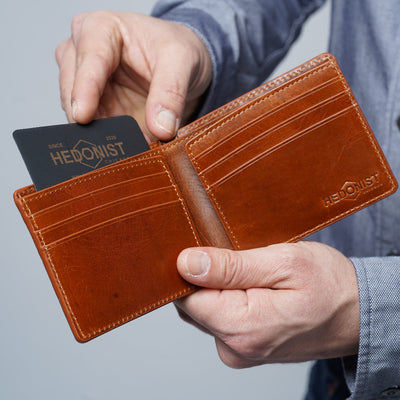
A bifold wallet is the most common format for good reason: it balances card capacity, cash storage, and usability in a two-panel layout that works reliably across professional and casual contexts. The bifold fold creates a flat wallet that suits back pocket and jacket pocket carry at a reasonable thickness. Card slots on both interior panels provide individual access to six to eight cards, and the center bill compartment accommodates folded cash without additional management. Men who carry six to eight cards, use cash sometimes, and carry in a jacket or back pocket consistently find the bifold the most versatile daily choice. Our best bifold wallet for men guide covers the format in full.

A slim wallet is a different design philosophy rather than a smaller bifold. Where a bifold balances capacity and usability, a slim wallet optimizes specifically for minimal thickness at the cost of some capacity. Best slim wallet for men and best slim wallets for men searches both show high search volume, reflecting that front pocket carry has become a significant preference among men who have stopped tolerating back pocket discomfort. A slim wallet carrying four to six cards in a front trouser pocket creates less bulk and discomfort than any other wallet format at the same card count. The format requires genuine carry editing - carrying only what you actually use daily rather than everything you might theoretically need. Our best slim wallet guide covers this format specifically.

A classic wallet provides the most organizational capacity: eight to twelve individual card slots, deep bill storage, and often dedicated sections for IDs, receipts, and folded documents. Classic wallet formats suit men whose daily carry genuinely exceeds what a bifold handles comfortably - eight or more cards that are actually used regularly, regular cash handling, and carry in a jacket or coat pocket where the additional thickness is not a constraint. The classic format's individual slot structure means every card has a designated place, which makes specific card retrieval faster during transactions than stacking cards in shared slots.

Format Comparisons That Actually Matter

Slim wallet vs bifold is the most common format comparison among men reconsidering their wallet choice. The decision is a card count and carry position question: if you carry six or more cards and use a back pocket or jacket, a bifold suits you. If you carry four to six cards and want front pocket comfort, a slim wallet serves you better. Our slim wallet vs bifold comparison covers this in complete detail. Our thin wallet vs regular wallet guide addresses the thickness dimension specifically - what genuine slim dimensions look like, what a wallet described as slim actually achieves, and how to evaluate thickness claims honestly before buying.

The wallet size question runs underneath all format comparisons. A wallet that is the right format but the wrong size for your actual carry creates the same daily frustration as the wrong format entirely. Our wallet size guide for men covers how to match wallet dimensions to real card count and carry habits, including how to break the overfilling habit that makes even quality wallets uncomfortable.

Leather Quality: The Decision That Affects Everything Else

Leather quality has more impact on long-term ownership satisfaction than format, color, or price point. A bifold in poor leather frustrates within a year. The same bifold in full-grain vegetable-tanned leather improves with daily use for years. Understanding leather grades before buying eliminates a large proportion of the market from serious consideration.

Full-grain leather retains the natural outer surface of the hide where fiber density is highest. This surface layer is what makes leather resistant to the concentrated stresses of daily wallet carry: fold line flex that occurs every time the wallet opens, card slot stress from daily card insertion and removal, and pocket friction against fabric lining. Top-grain leather has had this surface layer sanded away for uniformity, which removes precisely the fibers that handle these stresses best. Genuine leather is real leather but lower grade. Bonded leather is reconstituted leather scraps held with adhesive - it fails faster than any other grade under sustained daily use.

Vegetable tanning produces leather that develops patina through use rather than simply degrading. The natural tannins penetrate the hide structure and create leather that becomes more supple and develops individual character at high-contact areas. Chrome-tanned leather is faster and cheaper to produce but does not develop the same aging character. Best mens leather wallet searches show interest in options that last - vegetable-tanned full-grain leather is the material answer to that search intent.

"Most men replace their wallet every two to three years because the wallet wears out - card slots loosen, fold lines crack, the profile distorts. That replacement cycle is not inevitable. It is the direct result of leather grade and construction decisions made during manufacturing. Full-grain vegetable-tanned leather with saddle-stitch construction does not follow that timeline. The men who have carried our wallets for five or ten years are not exceptional - they just chose the right material." - Hedonist Chicago founding team

Over 1,312 customers have reviewed Hedonist Chicago leather goods and rated us 4.78 stars on average. Every men's wallet in our collection uses full-grain vegetable-tanned leather exclusively - no top-grain, no bonded leather. Personalization through hot stamping and foil stamping in gold, silver, black, or white is available on every wallet - up to 120 characters, adding 1-2 business days to dispatch. See our personalization page for details.

Construction Details That Determine Longevity

Leather grade and construction quality together determine whether a wallet lasts two years or ten. A wallet with excellent leather and poor construction fails at the seams. A wallet with good construction and poor leather fails at the material level. Both need to be right simultaneously.

Saddle-stitch construction uses two needles and waxed thread, passing through each hole from both directions to create an interlocking pattern at every stitch point. When a saddle-stitch thread breaks, the neighboring stitches hold because each one is independently locked. Machine lock-stitch creates a continuous loop - when one stitch breaks under stress, the seam unravels progressively. This difference is invisible on a new wallet and becomes significant at the card slot seams and fold line stitching over two to three years of daily carry.

Hand-burnished edges seal every cut leather surface at the perimeter, card slot openings, and spine. Unburnished edges absorb moisture, fray under friction, and eventually delaminate. Burnished edges maintain the wallet's clean profile across years of pocket carry. This finishing step takes additional time and is consistently absent in factory-produced wallets where edge treatment is either skipped entirely or done with paint that chips within months.

Color and Coordination

The conventional color guidance for men's leather wallets - black with black, brown with brown - reflects real coordination logic rather than arbitrary tradition. A leather wallet is visible during payment, at a restaurant table, and whenever a jacket is open. Color coordination between wallet, belt, and shoes creates a unified appearance that signals attention to detail in professional contexts.

Green leather wallet mens and red leather wallet mens searches both show significant impression volumes, confirming that many men are actively looking for distinctive wallet colors rather than defaulting to neutral. A green wallet for men or a red wallet for men in full-grain vegetable-tanned leather develops its own patina over time - the green develops warm undertones at wear points, the red develops burgundy depth. These are not trend choices but considered color decisions that age well in quality leather. Our red or green wallet guide for men and our wallet color guide cover color selection in practical detail.

The Most Common Wallet Selection Mistakes

Choosing format before establishing leather grade is the most consequential mistake. Any format becomes a poor wallet in poor leather. Establish minimum leather quality first - full-grain if budget allows, top-grain as the next acceptable tier - then evaluate format within that quality threshold.

Buying for theoretical maximum carry rather than actual daily carry is the second most common mistake. Men consistently imagine they carry less than they do, buy a slim wallet that does not fit their actual card count, and end up overstuffing it within days. Counting actual cards from the past week - not the cards you could theoretically leave at home - provides the honest count that should drive format selection.

Ignoring carry position is the third consistent mistake. Men who carry front pocket but choose a standard bifold end up with visible fabric distortion and pocket discomfort that they tolerate rather than solve. Men who carry a jacket pocket but choose a slim wallet end up with a wallet that feels inadequate for their actual capacity needs. Match format dimensions to carry position as precisely as you match capacity to card count.

Browse our men's leather wallets collection to compare all formats including our bifold wallets, slim wallets, and classic wallets. For wallet and belt coordination, our leather wallet and belt sets cover coordinated combinations. For leather maintenance, our leather treatments guide covers the conditioning schedule that extends wallet life significantly.

Leather Accessories and Wallet Coordination

A men's wallet does not exist in isolation - it is part of a daily carry that also typically includes a belt and sometimes other leather accessories. Color and material coordination between wallet and belt creates a unified appearance that reads as intentional rather than assembled from separate decisions. Full-grain vegetable-tanned leather ages consistently across both pieces when used together, developing compatible patina that makes a matched set look more considered over time.

Black leather wallet with black belt, brown leather wallet with brown belt - these are the standard coordination rules for good reason. They create the visual coherence that professional contexts signal. Beyond these standards, a green leather wallet mens design with a tan or brown belt creates earthy color harmony. A red wallet for men with a black belt creates controlled contrast. Neither combination is wrong - coordination is about deliberate intention rather than rigid rules. Our leather wallet and belt sets collection covers coordinated combinations for men who prefer selecting together.

Caring for a Men's Leather Wallet

Full-grain vegetable-tanned leather benefits from minimal regular maintenance. Every three to four months, wipe the exterior with a slightly damp cloth to remove accumulated oils and surface grime at fold lines and card slot edges. Apply leather conditioner formulated for vegetable-tanned leather to maintain suppleness and prevent the drying that leads to cracking at stress points.

If the wallet gets wet, blot immediately and allow to air dry naturally away from direct heat. A hair dryer or heater accelerates cracking at fold lines. Coins left in a wallet against wet leather create oxidation staining - remove them before the wallet dries after water exposure. For complete leather maintenance guidance, our leather treatments guide covers conditioning schedules, product selection, and water exposure handling for vegetable-tanned leather. Our leather accessories guide covers the broader context of building a leather goods collection that ages well together.

Men's Wallet Context and Lifestyle Matching

A wallet that works perfectly for one man's daily routine may work poorly for another's because the relevant variables - card count, carry position, cash use frequency, professional context - differ enough to make different format requirements the right answer. The guide to men's wallets that produces useful results is one that identifies your specific variables and maps them to format requirements rather than providing a universal recommendation that applies to everyone.

Professional contexts where the wallet is visible during payment at business lunches, client meetings, and professional events have one set of requirements: the wallet should look considered without being ostentatious, open cleanly for one-card retrieval, and close flat without requiring management. A well-maintained bifold or slim wallet in full-grain leather in a neutral or distinctive color meets these requirements. A visibly overstuffed wallet in any format does not, regardless of the leather quality.

Casual everyday carry in non-professional contexts has different requirements: easy access during quick transactions, comfortable in the primary carry position for extended periods, durable enough for the physical handling that active daily carry creates. A slim wallet for front pocket carry in an active lifestyle, a bifold for jacket pocket carry in a less active routine - the format matches the physical demand rather than the professional appearance requirement.

Travel creates a third set of requirements: document capacity alongside regular card and cash storage, reliable closure during transit where the wallet may be handled repeatedly in variable conditions, and easy access at checkpoints where specific card and document retrieval happens quickly under pressure. A bifold or classic wallet with adequate card slots and a clean organizational layout suits travel carry. The thin wallet category often creates insufficient capacity for the expanded card set that travel requires.

Building a Leather Accessories Routine

A leather wallet is most effective as part of a coordinated everyday carry that includes a leather belt and potentially other leather accessories in compatible materials. The coordination is both aesthetic and practical - aesthetically, matching or complementary leather colors across wallet and belt create a unified appearance; practically, using the same leather type across accessories means the pieces age with compatible character over time.

Full-grain vegetable-tanned leather used consistently across wallet and belt develops patina on a similar timeline at comparable contact points. A wallet and belt that have been carried together for two years develop aging character that makes the combination read as a set rather than two unrelated pieces. This coordinated aging is specific to vegetable-tanned leather - chrome-tanned or synthetic alternatives do not develop patina the same way and cannot achieve the same long-term coherence. For coordinated selection, our leather wallet and belt sets cover matched combinations. For the complete leather accessories approach, our leather accessories guide covers building a coherent everyday carry from compatible leather goods.

Final Selection Checklist

Before finalising any men's leather wallet purchase, four questions produce a reliable outcome. First: is the leather grade full-grain or top-grain? If the answer is not clearly one of these two, the wallet will not hold up to sustained daily carry across multiple years regardless of its other qualities. Second: does the format match actual daily card count and carry position? Slim for four to six cards in a front pocket, bifold for six to eight cards in jacket or back pocket, classic for eight or more cards. Third: is the construction saddle-stitched with burnished edges? These finishing details distinguish lasting construction from the production shortcuts that produce early seam failure and edge fraying. Fourth: does the closed profile when loaded match the carry position requirement? A wallet that measures right when empty but right when loaded with actual daily carry is the correct size.

Men who work through these four questions honestly before buying replace wallets significantly less often than those who choose based on appearance alone. The best leather wallets for men - leather wallet mens searches, best mens wallet leather queries - converge on the same answer: full-grain leather, appropriate format, quality construction, right size. Everything else is secondary. For coordinated leather accessories, our leather wallet and belt sets collection covers matched combinations that age together. For the complete accessories approach, our leather accessories guide covers building coordinated everyday carry from compatible leather goods.

Frequently Asked Questions

The best men's leather wallet is the one that matches your actual daily card count rather than your theoretical maximum. For men who carry three to five cards, a slim wallet provides the thinnest profile and simplest daily carry. For men who carry five to eight cards and use cash regularly, a bifold is the most reliable everyday format. For men who carry more and want maximum organization, a classic wallet provides dedicated card slots and a full bill compartment. The material matters as much as the format: full-grain vegetable-tanned leather outlasts lower-grade alternatives significantly in every format.
A slim wallet minimizes thickness at the cost of capacity, typically holding three to five cards with a minimal profile suited for front pocket carry. A bifold wallet provides more card slots, a full bill compartment, and a structured layout at the cost of slightly more thickness. The right choice depends on how many cards you actually use daily. If the answer is three to four, a slim wallet fits your carry. If the answer is five to eight, a bifold provides better organization without the daily editing that a slim wallet requires.
A wallet is handled more than almost any other object a man owns, taken in and out of a pocket hundreds of times per year and flexed at the same points daily. Lower-grade leathers including top-grain and bonded alternatives crack and lose structure at those stress points within one to two years of real daily use. Full-grain vegetable-tanned leather retains the complete natural fiber structure of the hide, which resists this failure. Rather than degrading, it softens and develops a patina that makes it look more refined and more personal over time.
The right card capacity is determined by how many cards you reach for on a typical day, not how many you own or carry. Most men use three to four cards daily: a bank card, a credit card, an ID, and one or two others. A wallet sized for this carry stays flat, opens cleanly, and does not require sorting through unused cards to find what you need. If your current wallet requires you to search through stacked cards regularly, the format is either too small for your carry or you are carrying more cards than you actually need daily.
A handmade leather wallet is constructed by hand rather than on a production line, with structural differences that are felt in daily use rather than seen from a distance. Hand saddle stitching uses two needles working in opposite directions through the same holes, creating a stitch pattern that does not unravel when a single thread breaks. The edges are individually finished and burnished by hand. These details make a handmade wallet structurally more durable at the points of daily stress, and they give the finished piece a character that no two wallets share exactly.
Yes. RFID-blocking wallets use materials embedded within the wallet structure that prevent scanners from reading the data on contactless payment cards. The protection is most relevant for frequent travelers, commuters in crowded transit environments, and men who carry multiple contactless cards in the same wallet. The blocking technology in our RFID wallets is integrated within the wallet structure rather than added as an external layer, which means the protection does not affect the feel, thickness, or appearance of the wallet in daily use.
Full-grain vegetable-tanned leather requires less maintenance than most men expect. Clean the surface every few months with a slightly damp cloth to remove surface dirt and oils. Condition the leather with a natural leather conditioner two to three times per year to replace the oils that daily use gradually depletes. The conditioning step is the one most men skip and the one that matters most for long-term appearance. Leather that dries out becomes stiff and is more prone to cracking at the fold and stress points. A conditioned wallet remains supple, holds its color consistently, and continues to develop patina attractively over years of daily use.
Yes. Free professional personalization is included at no additional cost on every wallet we make. We use a commercial hot stamping press and the highest-grade foil available, producing a clean, permanent impression directly in the leather surface. The monogram is part of the wallet rather than applied on top of it, which means it remains sharp and legible for the life of the wallet. Options include initials, a full name, or a short message. A personalized wallet in full-grain leather is one of the strongest gift options available because the personalization and the material quality both last for a decade or more of daily use.

Leave a comment

Please note, comments must be approved before they are published

This site is protected by hCaptcha and the hCaptcha Privacy Policy and Terms of Service apply.