Thin Wallet vs Regular Wallet: What Is Better for Everyday Carry
The thin wallet versus regular wallet question is really a question about carry habits masquerading as a question about preferences. Men who carry four to six cards in a front pocket genuinely benefit from thin wallet dimensions. Men who carry eight to ten cards in a back pocket or jacket pocket genuinely benefit from the organizational structure a regular wallet provides. The answer is not universal - it follows directly from how you actually carry things, not how you prefer to think about minimalism or traditional carry. This guide covers the practical differences, what genuine thin wallet dimensions look like, when thin wallets create problems rather than solving them, and how to make the right choice for your specific routine. For a complete format comparison, see our slim wallet vs bifold comparison and our complete guide to men's wallets.
What "Thin" Actually Means in Practice
Best thin wallets for men is a high-volume search term that reflects genuine demand among men who want front pocket carry without the bulk of a standard bifold. Best thin wallet and best thin wallet for men searches show similar intent. The problem is that the descriptor "thin" is applied inconsistently - some manufacturers call wallets thin that measure twelve millimeters loaded, which creates no meaningful advantage over a standard bifold in a front pocket.
Genuine thin wallet dimensions for front pocket carry are under eight millimeters loaded with your actual daily card count. Under six millimeters loaded is the ultra-thin range where the wallet is nearly imperceptible in a front pocket. Between eight and twelve millimeters is the range where the wallet may be marketed as thin but creates noticeable front pocket distortion and some discomfort during extended sitting. Over twelve millimeters loaded is effectively a regular wallet profile regardless of the product description.
Thin wallet mens and thin wallets for men searches often come from men who have already bought a wallet described as thin and found it did not deliver front pocket comfort. The follow-up research produces more specific searches: ultra thin wallet, super slim wallet, very thin wallet. This pattern reflects that genuine thinness requires specific construction decisions - leather thickness calibration, card slot count limits, material selection - that not all "thin" wallets make.
Ultra thin wallet designs achieve under six millimeters by using very thin leather and limiting card slots to two to four cards. Ultra thin wallets for men who carry two to three cards are genuinely viable. For men who carry six cards, an ultra-thin wallet creates immediate overfilling that destroys the thin profile within days. The right thin wallet matches actual card count, not ideal card count. Our wallet size guide for men covers how to determine the right capacity for your actual carry.
Regular Wallet: What It Actually Provides
A regular wallet - typically a bifold or classic format - provides card capacity, bill storage, and organizational structure that thin wallets reduce or eliminate. The difference between a designer wallet and a regular wallet is not primarily in thickness but in material quality, construction, and how the wallet ages over time. The difference between a thin wallet and a regular wallet is primarily in thickness and card capacity.
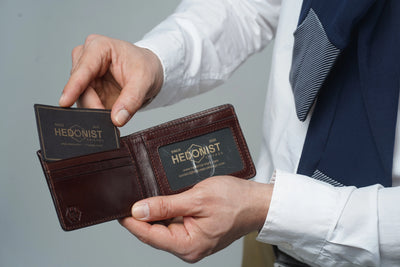
Regular bifold wallets carry six to eight cards across two panels with a full-length bill compartment. Classic wallet formats carry eight to twelve cards with more organizational sections. Both provide individual card slot access that thin wallets with shared slots do not. At six to ten cards of daily carry, the regular wallet's individual slot structure means every card has a designated location that is accessible without disturbing other cards - a genuine organizational advantage that becomes apparent during the kind of fast transactions where finding a specific card quickly matters.
Regular wallets also accommodate cash carry more naturally than thin wallets. A thin wallet's bill section, when present, is often shallow - bills may need to be folded more than once, creating a thick cash section that undermines the thin profile the wallet was designed to achieve. A regular bifold's full-length bill compartment keeps bills in a single fold without creating the compact cash-section thickness that undermines thin wallet dimensions.
The Carry Position Determines the Right Choice
Where a wallet is carried daily determines whether thin dimensions provide a meaningful advantage. Front pocket carry makes thin dimensions matter significantly: front trouser pockets have limited depth and create visible fabric distortion from wallets over eight to ten millimeters. A thin wallet under eight millimeters disappears in a front pocket. A regular bifold at ten to twelve millimeters creates visible distortion and discomfort during extended sitting.
Back pocket and jacket pocket carry makes thin dimensions less important: these positions have more depth and give than front pockets, accommodating regular bifold thickness without the discomfort that the same thickness creates in a front pocket. Men who carry in a jacket pocket gain little from thin wallet dimensions because the constraint that thin wallets solve does not apply in that carry position. The additional capacity and organizational structure of a regular wallet is available without the thickness penalty that front pocket carry imposes.
Men who carry in both positions across a typical day - front pocket in casual settings, jacket pocket in professional settings - face the clearest tradeoff. A thin wallet suits front pocket carry but may feel limited in jacket carry contexts. A regular wallet suits jacket carry but creates front pocket bulk. The practical solution depends on which carry position is primary and how much the secondary position's limitations are tolerable.
Leather Quality in Thin Wallets
Thin wallets require thinner leather than regular wallets to achieve genuine slim dimensions. This creates a material challenge: thinner leather means less material to handle the mechanical stress of daily card carry. Card slot edges, the wallet perimeter, and any fold point all take the same stress as in a regular wallet but with less leather surface area to distribute it. This is why leather quality matters more in thin wallets than in regular formats.
Full-grain vegetable-tanned leather handles concentrated stress at thin dimensions better than lower grades because the natural fiber structure at the outer surface of the hide remains intact. A thin wallet in full-grain leather maintains card slot tension and edge integrity across years of daily carry. The same thin dimensions in top-grain leather - which has had its strongest surface layer removed - shows card slot edge fraying and stress cracking faster under the same conditions. The thinness that makes a wallet slim also makes it more dependent on leather quality than a regular wallet where additional material provides more stress distribution.
"The question men usually ask is whether a thin wallet is as durable as a regular wallet. The honest answer is that it can be, but only if the thinner leather is compensated by higher leather grade. A thin wallet in poor leather fails faster than a regular wallet in the same leather. A thin wallet in full-grain vegetable-tanned leather outlasts a regular wallet in lower-grade leather. The format is not the durability variable - the leather is." - Hedonist Chicago founding team
Over 1,312 customers have reviewed Hedonist Chicago leather goods and rated us 4.78 stars on average. Every wallet in our collection - thin and regular - uses full-grain vegetable-tanned leather. Personalization through hot stamping and foil stamping in gold, silver, black, or white is available on every wallet - up to 120 characters, adding 1-2 business days to dispatch. See our personalization page for details.
Making the Right Choice
The decision between thin and regular wallet comes down to three honest answers: how many cards do you actually use daily, where do you actually carry your wallet most of the time, and do you use cash regularly enough that bill compartment quality matters. Under six cards and front pocket carry points clearly to a thin or slim wallet. Six to eight cards and back or jacket pocket carry points to a regular bifold. Over eight cards in any position points to a regular classic wallet.
The common mistake is choosing based on how you want to carry rather than how you actually carry. Men who prefer the idea of front pocket minimal carry but realistically carry eight cards end up overfilling thin wallets and negating both the slim profile and the organizational function the format provides. The right format is the one that works for your actual habits, not your ideal habits.
Browse our slim wallets collection for thin wallet formats in full-grain leather. Our bifold wallets collection and classic wallets collection cover regular wallet formats. Our full men's leather wallets collection covers all three format categories in one place. For complete format comparison, our best bifold wallet guide and our best slim wallet guide cover each format in detail. For leather care guidance applicable to both thin and regular formats, our leather treatments guide covers the conditioning schedule for vegetable-tanned leather.
Thin vs Regular Wallet: Maintenance Considerations
Thin wallets require slightly more attentive maintenance than regular wallets because the thinner leather is less forgiving of neglect. Conditioning every three months rather than every four months benefits thin wallet leather - the reduced material thickness means moisture loss has a faster impact on card slot tension and edge integrity. A thin wallet in full-grain vegetable-tanned leather that is regularly conditioned maintains its dimensions and card slot function significantly longer than the same wallet that is conditioned infrequently or not at all.
Regular bifold and classic wallets benefit from the same conditioning schedule with specific attention to the fold line. For complete leather maintenance guidance applicable to both thin and regular formats, our leather treatments guide covers conditioning schedules and product selection for vegetable-tanned leather. For the broader leather accessories care context, our leather accessories guide covers wallet and belt maintenance together.
When to Replace vs Maintain
A thin or regular wallet in full-grain vegetable-tanned leather that has been properly maintained and not consistently overfilled should not require replacement for five years or more of daily carry. Card slot tension remains within functional range. The fold line stays supple. The exterior profile maintains its flat profile. These outcomes are specific to the leather quality and carry discipline combination - full-grain leather at appropriate load, maintained with regular conditioning.
A wallet that has been consistently overfilled or made from lower-grade leather may require replacement at two to three years or sooner regardless of maintenance. Stretched card slots that have lost tension cannot be restored by conditioning. A cracked fold line in top-grain or lower leather is structural damage that conditioning cannot reverse. The right maintenance extends the life of a quality wallet - it cannot overcome the material limitations of a lower-grade one. Our leather accessories guide covers this material quality and longevity relationship in broader context. Wallet and belt combinations in our leather wallet and belt sets use the same full-grain vegetable-tanned leather across both pieces.
Thin Wallets and Specific Carry Scenarios
Thin wallet versus regular wallet produces the clearest answers in specific carry scenarios. Front pocket carry in slim trousers: thin wallet wins clearly - the thickness advantage is meaningful and the capacity limitation is manageable at four to six cards. Jacket pocket carry with eight or more cards: regular bifold wins clearly - the thickness advantage of a thin wallet provides no benefit in a position where thickness is not the constraint, and the capacity advantage of a regular wallet addresses the actual limitation. The ambiguous middle ground is front pocket carry with six to eight cards - the card count that creates friction for thin wallets but where the front pocket carry preference makes regular bifold dimensions uncomfortable.
Men in this ambiguous middle carry the most benefit from the slim bifold format - thin enough for front pocket carry when appropriately loaded with six cards, organized enough to handle eight cards when carry editing reduces the count to the right range. Our slim vs bifold comparison covers this specific middle ground and how to identify whether slim bifold dimensions suit your card count and carry position combination.
How Leather Grade Affects the Thin vs Regular Comparison
The thin versus regular wallet comparison is not simply a size question - it is a combined size and leather quality question. A thin wallet in poor leather and a thin wallet in full-grain leather occupy the same dimensions on day one but create entirely different experiences by month six. The thin leather in the poor-grade wallet shows card slot edge fraying, exterior surface wear, and potentially fold or edge cracking within the first year. The thin full-grain leather in the quality wallet shows patina development at the same stress points - darkening and burnishing that makes the wallet more distinctive over time.
Best thin wallets for men searches produce results that vary dramatically in leather quality under similar thickness descriptions. The evaluation criteria that separate adequate from excellent thin wallets are the same as for any leather wallet: full-grain over top-grain over genuine leather, vegetable tanning over chrome tanning, saddle-stitch over machine lock-stitch at seams. In a thin wallet, these quality indicators matter more because the reduced material thickness leaves less margin for construction shortcomings. Our best men's leather wallets guide covers leather quality evaluation criteria that apply to both thin and regular wallet formats. For the complete leather accessories approach, our leather accessories guide covers leather quality selection in the broader context of building a coordinated everyday carry.
Thin vs Regular Wallet: The Long-Term Ownership Comparison
The thin versus regular wallet comparison becomes clearest at the two-to-three-year ownership mark rather than on day one. On day one, a thin wallet and a regular bifold in the same leather quality look similarly new - the differences in aging character and stress accumulation are not yet visible. At two years of daily carry, the differences are pronounced: the thin wallet has developed patina at card slot edges and pocket contact areas in ways that reflect its specific carry position and handling pattern, while the regular bifold has developed patina at its fold line and card slot edges that reflects its own carry pattern.
In both cases, full-grain vegetable-tanned leather produces aging character that makes the wallet look more personal and considered over time. In both cases, lower-grade leather produces aging that makes the wallet look simply old. The thin versus regular format decision determines the aging pattern but not whether the aging is positive or negative - that is determined entirely by leather quality.
Ultra thin wallet designs at the extreme of the thin category show this most clearly: an ultra-thin wallet in full-grain leather develops the most concentrated and visible patina because daily handling covers the smallest surface area, creating the most dramatic contrast between handled and protected areas. The same ultra-thin dimensions in bonded or genuine leather show the most rapid deterioration because the concentrated stress has the least material quality to work against. Thin wallet for men decisions that prioritize quality within the thin format are the ones that produce multi-year ownership satisfaction. Our best slim wallet guide covers thin and slim wallet quality evaluation in complete detail. For the broader leather wallet context, our best men's leather wallets guide and our leather accessories guide cover quality selection across the full range of men's leather goods.
Thin Wallet Testing Before Buying
The thin wallet decision benefits from the same practical test as the slim versus bifold decision: carry only your actually-used daily cards for one week and observe whether the reduced card set creates friction. If you carry six cards and the daily-used set is four, a thin wallet is viable. If the daily-used set is six, a thin wallet creates immediate overfilling. Thin wallets for men that are purchased based on aspirational minimal carry rather than actual carry produce the disappointment cycle that drives the best thin wallets for men search pattern - men who have already tried and been disappointed looking for the version that actually works. The version that works is always the one sized to actual carry, not ideal carry. For the complete wallet size analysis, our wallet size guide covers card count assessment in systematic practical detail. For quality evaluation criteria that make the chosen format - thin or regular - perform well across years, our best men's leather wallets guide covers leather grade and construction quality assessment for both format categories.
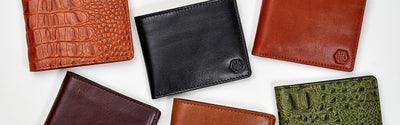
Thin wallet vs regular wallet, best thin wallets for men, thin wallets for men, ultra thin wallet, thin wallet mens, and very thin wallet searches all focus on the thickness dimension of the men's wallet decision. Best thin wallet for men and best thin wallets searches that go beyond the descriptor to find options that actually achieve claimed thin dimensions reflect the disappointment cycle common in this category. Red wallet mens, green wallet mens, and green leather wallet mens searches within thin wallet queries confirm that color preference is independent of thickness preference - a thin wallet in red or green full-grain leather provides genuine slim dimensions with a distinctive color. Browse our classic wallets collection for the maximum capacity alternative, and our leather wallets for men and women for coordinated options in the same material quality across both men's and women's formats.
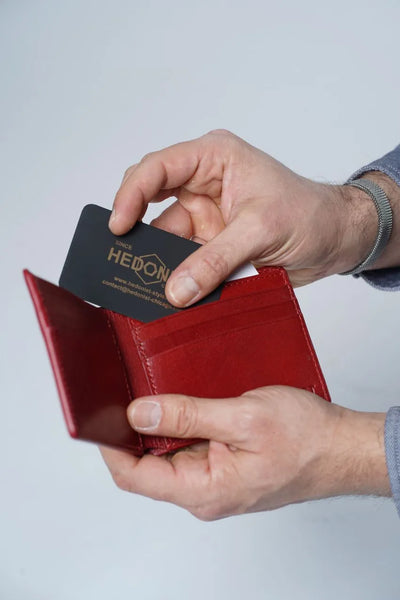
Red leather wallet searches and green wallets for men queries appear in thin wallet research because color preference is established independently of thickness preference. A thin red leather wallet in full-grain vegetable-tanned leather provides genuine slim dimensions with the visibility advantage of red leather. A thin green wallet mens design provides the same dimensional advantage with a color that coordinates with earth-tone wardrobes. In both cases, the color choice and the thickness choice are independent decisions that do not constrain each other. Green wallet mens and red leather wallet options are available across both thin and regular wallet formats.
Difference between designer wallet and regular wallet searches reflect a broader version of the thin versus regular question - men researching whether price point correlates with the performance difference the thin category requires. The meaningful difference is not brand recognition but leather grade and construction quality. A designer wallet label on bonded leather provides no durability advantage over a regular wallet in the same material. Full-grain vegetable-tanned leather with saddle-stitch construction provides the durability advantage regardless of which label it carries - the material and construction are the variables that determine whether the difference is real.
Leave a comment