Slim Wallet vs Traditional Bifold Wallet: Key Differences Explained

Slim Wallet vs Traditional Bifold Wallet: Key Differences Explained

The slim wallet versus traditional bifold wallet comparison is the most common format decision men face when reconsidering a wallet that is no longer working well. Both formats carry cards and cash. Both are made in leather. The practical differences between them are significant enough that choosing the wrong format for your carry habits creates daily frustration that compounds over years of use. This guide covers the differences honestly, including when each format genuinely works better and when neither is clearly superior - the answer depends on specific carry habits rather than a universal ranking. For a comprehensive look at all men's wallet formats, see our complete guide to men's wallets.

The Core Structural Difference

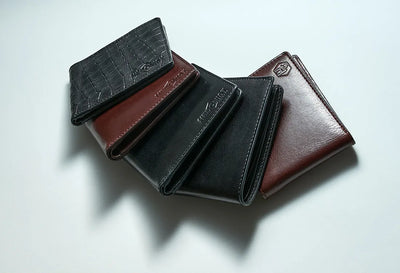
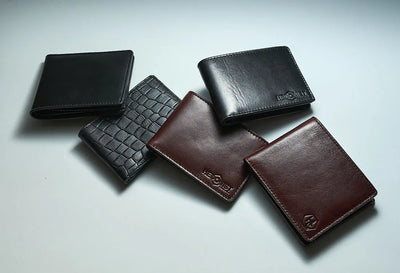
A traditional bifold wallet folds once along a center spine. The two resulting panels each carry card slots on their interior faces, and the center creates a full-length bill compartment when the wallet is opened. Closed, the bifold creates a flat rectangle at a thickness determined by the leather weight and how many cards it is carrying. A bifold carrying six cards typically measures eight to ten millimeters closed. The same bifold carrying twelve cards measures considerably more.

A slim wallet achieves reduced thickness by eliminating one or both fold panels and reducing card slot count. Most slim wallets have one card section rather than the bifold's two-panel layout, and use thinner leather throughout. The resulting wallet is genuinely thinner than a bifold at the same card count - a slim wallet carrying four to six cards achieves six to eight millimeters where a bifold at the same count achieves eight to ten. The tradeoff is reduced maximum card capacity and in some designs reduced access speed to individual cards.

Minimalist wallet vs traditional wallet searches reflect the same comparison phrased differently - the minimalist wallet category overlaps significantly with slim wallets, describing any design that reduces capacity and profile compared to a standard bifold. Minimalist wallet vs regular wallet describes the same tradeoff: less capacity and thickness versus more capacity and thickness.

When Slim Wallets Win the Comparison

Front pocket carry is the clearest case for a slim wallet over a bifold. A front trouser pocket has less depth and less give than a back pocket or jacket pocket. A bifold carrying eight cards creates visible fabric distortion in a front trouser pocket during normal standing and noticeable discomfort during extended sitting when carried front pocket. A slim wallet at six to eight millimeters loaded disappears in the same front pocket without distortion or discomfort. If front pocket carry is the priority, a slim wallet outperforms a bifold for this specific use case regardless of other preferences.

Minimal carry habits favor slim wallets. Men who have genuinely reduced their daily carry to four to six cards find that a bifold is more wallet than they need - the additional structure, weight, and thickness of the bifold format provides capacity they do not use while adding bulk they do not want. A slim wallet sized for four to six cards carrying four to six cards is lighter, thinner, and less noticeable than a bifold at the same card count. The slim format is not a compromise at this card count - it is the more appropriate format.

Slim wallets also suit men who have decided to actively edit their carry rather than accommodate accumulation. A slim wallet's limited capacity enforces discipline: you cannot add cards indefinitely because there is no room. A bifold accommodates gradual card accumulation until it becomes uncomfortable - the format tolerates overfilling in a way that slim wallets do not. If carry discipline is a goal rather than a burden, slim wallet capacity constraints support it rather than fighting against it.

When Traditional Bifold Wallets Win the Comparison

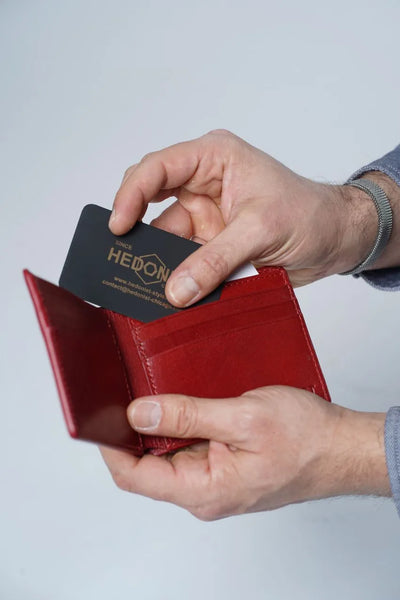
Higher card counts favor bifolds. Men who genuinely carry six to eight cards daily - not cards they theoretically could leave at home but cards they actually used in the past week - find that slim wallets either force uncomfortable stacking in shared slots or leave insufficient capacity. A bifold sized for eight cards carrying eight cards is comfortable, organized, and immediately accessible. The same carry in a slim wallet creates the overfilling that destroys card slot tension within months.

Cash carry habits favor bifolds. The bifold's full-length bill compartment keeps bills flat and organized. Slim wallets either lack a bill section entirely or include a minimal one that folds bills multiple times. For men who handle cash regularly - restaurants, markets, small businesses - the bifold's bill compartment is a genuine functional advantage that slim wallets do not match.

Back pocket and jacket pocket carry favor bifolds. In these positions, thickness is less constrained than in front pockets, and the bifold's additional structure and capacity provide advantages without the drawbacks that front pocket carry creates. A bifold in a jacket pocket is invisible and completely comfortable. The same jacket pocket accommodates a slim wallet equally well, but provides no additional benefit from the reduced thickness since thickness was not the constraint to begin with.

Our best bifold wallet for men guide covers bifold selection in complete detail. Our best slim wallet for men guide covers slim wallet evaluation. Both guides address construction quality and leather grade alongside format considerations.

The Thickness Question in Practice

Best thin wallets for men searches and best thin wallet queries show consistent interest in the thickness dimension specifically - men who want to know what a thin wallet actually achieves rather than what it claims. Thin wallet mens searches reflect the same interest from men already looking in this category.

The honest thickness comparison requires measuring both formats loaded with the same card count. A slim wallet carrying four cards and a bifold carrying four cards both perform at similar thickness because neither is heavily loaded relative to its capacity. The thickness difference becomes meaningful when carry volume increases: at six cards, a slim wallet stays under eight millimeters while a bifold may reach ten to twelve depending on leather weight. At eight cards, the slim wallet is typically overfilled while the bifold is comfortably loaded.

Ultra thin wallet designs push slim dimensions to their limit by using very thin leather and minimal card slot structure. These suit men whose daily carry is genuinely two to four cards and for whom absolute minimal thickness is the primary priority. The tradeoff is reduced capacity and potentially faster card slot tension loss if ultra-thin leather cannot maintain the calibrated grip that makes card retrieval clean. Our thin wallet vs regular wallet guide covers this extreme of the thin wallet category directly.

"The slim versus bifold question is not really a preference question. It is a carry habits question with a clear answer once you know the honest answer to two things: how many cards do you actually use daily, and where do you actually carry your wallet. Those two answers point directly to the right format. The preference question comes after the practical question is answered." - Hedonist Chicago founding team

Over 1,312 customers have reviewed Hedonist Chicago leather goods and rated us 4.78 stars on average. Every wallet in our collection - slim and bifold - uses full-grain vegetable-tanned leather exclusively. Personalization through hot stamping and foil stamping in gold, silver, black, or white is available on every wallet - up to 120 characters, adding 1-2 business days to dispatch. See our personalization page for details.

Making the Decision

The decision framework is straightforward once the carry questions are answered honestly. Count actual daily cards from the past week. Identify actual carry position - front pocket, back pocket, or jacket. Assess cash carry frequency.

Under six cards, front pocket carry, minimal cash: slim wallet. Six to eight cards, back pocket or jacket carry, regular cash: bifold. Over eight cards, any carry position: classic wallet format provides individual slot access that both slim and bifold cannot. Our wallet size guide for men covers how to apply these criteria to your specific carry habits.

Browse our slim wallets collection and our bifold wallets collection to compare both formats in full-grain vegetable-tanned leather. Our full men's leather wallets collection covers all three format categories. For color selection guidance applicable to both formats, see our red or green wallet guide and our wallet color guide. For leather maintenance, our leather treatments guide covers the conditioning schedule for both slim and bifold vegetable-tanned leather. Wallet and belt combinations are available in our leather wallet and belt sets collection.

Personalization Across Both Formats

Both slim wallets and bifold wallets are available with personalization through hot stamping and foil stamping. The format decision does not affect personalization options - initials, a name, or a short phrase can be pressed permanently into the leather of either format in gold, silver, black, or white foil. Personalization is available across all colors in both formats.

A personalized slim wallet as a gift suits men who carry front pocket and have mentioned interest in reducing wallet bulk. A personalized bifold suits men who carry a standard bifold and want a quality upgrade in the same format they already prefer. Understanding the recipient's current carry habits - which format they use, where they carry it - helps identify which personalized option is the more considerate choice.

Leather Care for Both Formats

Slim wallets and bifold wallets in full-grain vegetable-tanned leather benefit from the same maintenance approach with slightly different emphasis. Slim wallets benefit from more frequent attention to card slot edges - the concentrated stress on thinner leather makes this area the most likely to show wear first. Bifold wallets benefit from specific conditioning at the fold line - the single fold concentrates flex stress at one point that benefits from maintained suppleness.

Both formats benefit from conditioning every three to four months with a product formulated for vegetable-tanned leather. For complete guidance on maintaining both formats, our leather treatments guide covers conditioning schedules and product selection. For leather care in the context of complete accessories maintenance, our leather accessories guide covers wallet and belt care together. For coordinated wallet and belt options, our leather wallet and belt sets collection covers combinations in both slim and bifold formats.

How Daily Routine Changes the Comparison

The slim wallet versus bifold comparison produces different answers for different daily routines, and the most useful way to apply this comparison is to specific daily carry scenarios rather than as a universal ranking.

A man who commutes by transit, carries four cards, and wears slim trousers with front pockets gets a clear answer from the comparison: slim wallet. The front pocket carry constraint, the minimal card count, and the commuting context where quick card access at transit gates matters all point to the slim format. A bifold in this scenario is more wallet than the routine requires.

A man who works in an office, wears a jacket, carries eight cards, and uses cash several times a week gets an equally clear answer: bifold. The jacket pocket carry removes the thickness constraint, the eight-card count exceeds what slim wallets handle comfortably, and the regular cash use benefits from the bifold's full-length bill compartment. A slim wallet in this scenario creates daily friction through capacity limitations.

The ambiguous case is the man who does both - front pocket casual carry on weekends and jacket pocket professional carry during the week. A slim wallet works for both positions but may feel limited in the jacket carry context. A bifold works comfortably for the jacket carry but creates front pocket bulk on weekends. The practical solution depends on which context is primary and how much limitation in the secondary context is acceptable. Many men in this situation carry a slim wallet that suits both reasonably rather than a bifold that suits one well and one poorly. Our wallet size guide covers this multi-context carry question with specific guidance on how to identify the primary carry position and optimize for it. Our complete guide to men's wallets covers the full format decision in the broader context of men's leather wallet selection.

Long-Term Ownership Across Both Formats

A slim wallet and a bifold wallet both become more personal over time when made from full-grain vegetable-tanned leather, but the patina development patterns differ because the carry positions and handling patterns differ. A slim wallet carried in a front pocket develops its most distinctive patina on the exterior face that contacts pocket lining - the friction polishing from daily pocket insertion and removal creates a slightly different texture and tone on the carry face than on the interior. A bifold carried in a jacket pocket develops its most distinctive patina at the fold line and card slot edges, which are the highest-stress handling points rather than exterior friction points.

Both patterns are attractive results of daily use rather than signs of deterioration, and both are specific to full-grain vegetable-tanned leather. A slim wallet in poor leather shows exterior surface wear at the pocket contact face - the coating or surface layer degrades under friction rather than developing character. A bifold in poor leather shows fold line cracking and card slot edge fraying - the leather fails under mechanical stress rather than developing patina. The format does not determine the outcome - the leather does.

For men choosing between formats for a long-term carry investment, the more relevant question is not which format looks better in year one but which format still performs its organizational function well in year four. Both slim wallets and bifolds in full-grain vegetable-tanned leather with quality construction meet that standard. Both formats in lower-grade leather typically do not. Our best men's leather wallets guide covers leather quality evaluation that applies to both formats. For leather maintenance applicable to both slim and bifold formats, our leather treatments guide covers the conditioning schedule that extends functional life across both format categories. For coordinated leather accessories including both slim and bifold wallet options, our leather accessories guide covers the broader everyday carry approach.

Testing Both Formats Before Committing

The slim versus bifold decision benefits from honest testing rather than theoretical analysis alone. If you currently carry a bifold, carry only the cards you actually use daily for one week without adding back the cards that stay for convenience or habit. If the reduced card set creates no practical problems - no missed transactions, no inconvenience - the slim wallet format is viable for your actual carry. If the reduced set creates friction, the bifold capacity is earning its thickness in your routine. This practical test is more reliable than any format comparison because it reveals actual carry habits rather than assumed ones. The slim wallet's capacity constraints and the bifold's thickness are both revealed as either meaningful limitations or irrelevant factors by the same honest card count test. Our wallet size guide covers this card count analysis in systematic detail. For complete leather wallet quality guidance applicable to both formats, our best men's leather wallets guide covers the leather quality and construction evaluation that makes the chosen format last across years of daily carry regardless of which format the testing reveals as the right choice.

The Slim vs Bifold Decision Across Years of Carry

The slim versus bifold wallet decision made at time of purchase tends to be stable over time when it was made based on accurate carry assessment. Men who choose a slim wallet based on genuine four-to-six-card front pocket carry rarely regret the decision because the format continues to suit their routine. Men who choose a bifold based on genuine six-to-eight-card jacket pocket carry have the same experience of consistent format satisfaction. The decisions that create regret are the ones made based on aspirational carry rather than actual carry - the bifold bought for the organizational capacity of twelve cards by a man who genuinely uses six, or the slim wallet bought for the minimal aesthetic by a man who genuinely carries nine cards. Getting the format decision right requires only honest self-assessment at the time of purchase, which produces satisfaction across the full ownership period rather than the gradual frustration of carrying the wrong format for your actual routine. Our complete guide to men's wallets covers this honest carry assessment in the context of the full men's wallet format decision. For leather quality evaluation that makes the right format choice last across years of daily carry, our best men's leather wallets guide covers the material and construction standards that apply to both slim and bifold formats equally.

Slim wallet vs bifold wallet, slim wallet vs traditional bifold wallet, minimalist wallet vs traditional wallet, and minimalist wallet vs regular wallet searches all reflect the same practical comparison need. Men searching these terms have usually already encountered both format descriptions and want to understand which one suits their specific routine before committing. Green wallet mens, red wallet for men, and green leather wallet mens searches within format comparison queries reflect that color is a consideration that follows the format decision - once the slim versus bifold choice is made based on carry habits, the color choice applies to that format. Browse our classic wallets collection for the third format option for higher card counts, and our leather wallets for men and women collection for coordinated options that span both mens and womens formats in the same full-grain vegetable-tanned material.

Red leather wallet and green wallets for men searches cross both slim and bifold format categories, confirming that color preference is genuinely independent of format preference. Men who have already decided on slim versus bifold based on carry habits can then apply red or green color preference to their chosen format without constraint. Red wallet mens designs are available in both slim and bifold formats. Green wallet mens designs are equally available across both format categories. The color choice follows the format choice rather than constraining it.

Frequently Asked Questions

Choose a slim wallet if you regularly use only three to six cards, handle cash occasionally or not at all, and prioritize front pocket carry comfort over comprehensive organization. Choose a traditional bifold if you regularly use six to ten cards, handle cash frequently, and want organized accessibility with dedicated bill compartments. The right choice depends entirely on your actual daily carry needs rather than which format seems more appealing theoretically. Try editing your current wallet contents to slim wallet capacity for a week before deciding. If you can function comfortably with that reduced carry, a slim wallet will serve well. If you constantly need items you had to remove, traditional formats suit your reality better.
Yes, if the bifold measures three-quarters inch or less when loaded and you avoid overstuffing. Quality traditional bifolds at this thickness work adequately in front pockets for many men, providing bifold organization while enabling front pocket carry benefits. Thicker bifolds or those stuffed beyond designed capacity create awkward bulk in front pockets that makes this carry position impractical. The key is selecting appropriately sized bifolds and maintaining reasonable loading rather than maxing out every slot.
No, when properly designed using quality materials. Slim wallets using full-grain leather at appropriate thickness (0.8-1.2mm) prove just as durable as traditional designs for their intended use case. Durability problems appear when people overstuff slim wallets beyond designed capacity, stressing materials and construction beyond engineered tolerances. Used within intended capacity, quality slim wallets last three to five years or more of daily use, comparable to traditional wallet longevity.
Yes, if you genuinely reduce what you carry to match slim wallet capacity. Simply transferring traditional wallet contents into a slim format creates overstuffing that negates thickness advantages. The space savings come from the combined effect of thinner wallet construction and reduced carry that fits the wallet's designed capacity. If you cannot or will not reduce what you carry, slim wallets create frustration rather than providing benefits.
Slim wallets work best with three to six cards total. Traditional bifolds handle six to ten cards comfortably. These ranges represent realistic daily needs for most men while maintaining each format's intended profile and usability. Carrying more cards than these ranges suggest indicates you might need larger organizational formats or should consider editing your carry to remove items you rarely use.
Yes, though cash storage in slim wallets typically requires folding bills at least once to fit compact dimensions. Most slim designs include minimal bill pockets for folded currency or use attached money clips. If you rarely carry cash, this accommodation works fine. If you handle cash daily and prefer keeping bills flat and organized by denomination, traditional wallet bill compartments serve those needs better.
Then a slim wallet isn't the right format for your needs. Trying to force excessive contents into minimal designs creates overstuffing that defeats the slim profile purpose while compromising the wallet's ability to secure cards properly. Traditional bifold or classic wallet formats serve higher-capacity needs better. The solution isn't finding the largest slim wallet possible but rather accepting that your carrying requirements need traditional format capacity.
Start by honestly assessing your actual daily carry over a typical week. Count regularly-used cards, evaluate cash handling frequency, and consider whether you accumulate receipts or other items requiring wallet storage. If this assessment reveals minimal carry (three to six cards, occasional cash), slim wallets match your reality. If you genuinely need moderate capacity (six to ten cards, regular cash), traditional formats serve better. Your daily habits and requirements should drive the decision, not aesthetic preferences or minimalism trends that don't align with practical needs.

Leave a comment

Please note, comments must be approved before they are published

This site is protected by hCaptcha and the hCaptcha Privacy Policy and Terms of Service apply.