


How to Tell If a Wallet Is Real Leather: 5 Checks
Quick answer: to tell if a wallet is real leather, check five things: the grain (small irregular pores, not a repeating pattern), the edges (a fibrous cross-section, not smooth plastic), the smell (earthy, not chemical), how it feels when pressed (it wrinkles like skin and springs back), and the price against the label. A wallet labeled only "genuine leather" is real hide but the lowest grade. Full-grain is the grade to look for.
| Label | What it actually is | How it wears |
|---|---|---|
| Full-grain | Top layer of the hide, natural grain intact | Develops patina, resists tearing, lasts for years |
| Top-grain | Top layer, sanded and refinished for a uniform look | Durable, less character over time |
| Genuine leather | Lower layers of the hide, often coated or embossed | Wears faster, peels or cracks sooner |
| Bonded leather | Leather scraps glued together and coated | Cracks and peels within a year or two |
| PU or faux leather | No hide, plastic coating on a fabric or plastic base | Never patinas, cracks instead of softening |
Picks to go with this guide

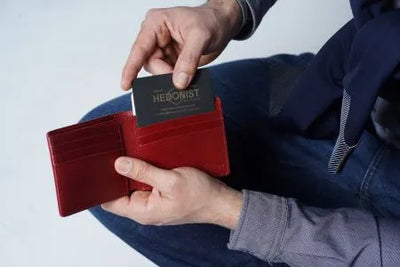
Red Leather Bifold Wallet for Men
6-12 cards, RFID blocking, flat bill section
View product →
Men's Black Slim Bifold Leather Wallet
0.5" profile, 6-12 cards, ID window, RFID lining
View product →
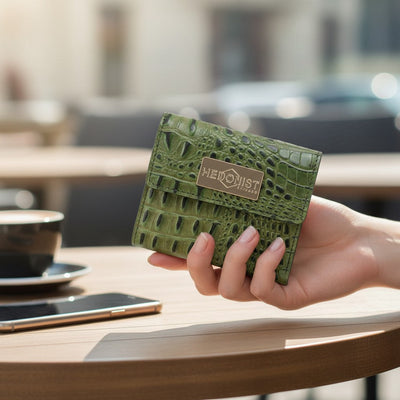
Green Croco Leather Bifold Wallet for Men
6-12 cards, RFID blocking, croco-embossed texture
View product →How to Tell If a Wallet Is Real Leather: 5 Checks
Real leather comes from an animal hide, so it has small pores, scars and slight variation from panel to panel. Synthetic leather is stamped or printed onto a fabric or plastic base, which makes the pattern repeat in a way a hide never does. These checks work in a store and, with close-up photos, from an online listing.
- Look at the grain. Real leather shows irregular pores and slight unevenness. If the texture looks perfectly uniform from corner to corner, it is very likely synthetic.
- Check the edges. Look closely at an unfinished edge, such as the inside of a card slot. Real leather shows a fibrous, suede-like cross-section. Synthetic materials show a smooth plastic edge or a fabric backing.
- Smell it. Real leather smells earthy and slightly sweet. Synthetic leather smells like plastic or has a chemical odor, sometimes masked with fragrance.
- Press it. Real leather gives slightly, springs back, and forms small wrinkles around your finger like skin. Vinyl and PU feel colder and more rigid, or spongy, and simply dent without wrinkling.
- Check the price against the claim. Full-grain leather is expensive to produce. A wallet priced far below what full-grain typically costs but still using the words "genuine leather" deserves a second look. Our guide on why leather wallets are expensive explains the price ranges that make sense for each grade.

Is Genuine Leather Real Leather?
Yes and no. "Genuine leather" is made from an actual hide, so technically it is real leather. But it is one of the lowest grades, cut from the lower layers of the hide and usually coated or embossed to hide inconsistencies. It wears out faster than full-grain or top-grain leather, so treat the phrase as a warning, not a selling point. When a listing says only "leather" or "genuine leather" and never names a grade, that omission is itself a signal.
For the difference between the two top grades, see full-grain vs top-grain leather. If you are comparing leather with a vegan alternative, read genuine leather vs vegan leather.
A Simple Water-Drop Test
If you already own the wallet, put one small drop of water on an inconspicuous spot, such as the inside of a flap. Real leather absorbs it within a few seconds and leaves a faint, temporary dark spot. Synthetic leather is waterproof at the surface, so the drop beads up and sits on top. Blot it dry promptly. Do not try this on a display item in a store, and do not use flame tests: they damage the item, and coated leathers and synthetics can behave similarly, so they are unreliable on their own.
How Real and Fake Leather Wallets Compare After a Year
| After about 12 months | Full-grain leather | PU or bonded leather |
|---|---|---|
| Surface | Slight darkening, soft sheen at high-contact points | Cracking or peeling at the fold |
| Card slots | Slightly looser, molded to your cards | Coating flaking off the backing |
| Smell | Mellows, still faintly earthy | Chemical smell fades but does not disappear |
| Structure | Holds its shape, stitching intact | Stiff patches next to cracked or delaminated ones |
A fake can look nearly identical to real leather on day one, but the difference is obvious within a year, usually after the return window has closed. That is why the checks above matter before you buy. Real leather also develops a patina, a darker color and soft sheen at the corners and fold, which synthetics never do. See how leather develops patina.
Newer Synthetics Look Better, but the Tests Still Work
Today's polyurethane and plant-based alternatives, such as cactus or mushroom-fiber materials, can look convincing in a photo and feel supple. What has not changed is the structure: none have a hide's fibrous cross-section, none smell like leather, and none develop a true patina. Coated materials show wear through cracking or peeling. The edge and smell checks remain more reliable than a first impression.
Real Leather Is Not the Same as Good Leather
A wallet can be genuine leather and still be poorly made. Look at the stitching (even, tight, finished with a backstitch), the edges (smooth and sealed, not fuzzy or painted and peeling), and whether the listing names a specific grade. Our leather wallet brand buying guide shows how to read a listing critically, and the men's leather wallet guide covers the five tests of a lasting wallet. For a general overview beyond wallets, see how to spot real vs fake leather.
What You Get With Our Wallets
All of our wallets, men's and women's, are made from full-grain vegetable-tanned leather, and the product pages say so. Every wallet can be personalized at no charge with initials, a name or a short phrase of up to 40 characters, and it comes with 30-day free US returns and a one-year warranty. See the personalization page for details, then browse real leather wallets for men, women's leather wallets or our best sellers.


Leave a comment