


Extra Durable Leather Belts: What Makes a Belt Built to Last
Most leather belt failures are not random - they happen at predictable points for predictable reasons. The buckle attachment tears from the strap because the leather at that fold was too thin or too processed to handle daily tension. The holes stretch and tear because the leather around them lacked the fiber density to distribute prong stress. The edge coating peels because it was applied over corrected leather rather than sealed into full-grain fiber. Extra durable leather belts are not a different category so much as a description of what happens when every one of these failure points is addressed with better material and construction decisions. This guide covers what genuine belt durability requires, what to evaluate before buying a belt intended for heavy daily use, and how full-grain leather construction specifically addresses the failure modes that lesser belts experience. For a complete leather belt selection guide, read our best leather belts guide.
Where Leather Belts Actually Fail
Understanding belt failure modes helps identify what durability actually requires. Durable belt construction addresses all of these failure points simultaneously rather than strengthening one at the expense of others.
The buckle attachment is the most common failure point in pin belts. The leather is folded around the buckle bar and stitched - this fold takes the full tension of the belt under wear plus the repeated bending stress of buckling and unbuckling. Leather that is too thin at this point cracks within months of daily wear. Leather that has been processed to remove the dense outer surface layer - top-grain and bonded leather - lacks the fiber structure needed to handle this combined stress.
The hole row in pin belts creates a second predictable failure zone. Each hole is a perforation that concentrates stress when the prong is under tension. In lower-grade leather, the stress radiates outward from the hole edge, eventually tearing the hole into an irregular opening that no longer holds the prong securely. Heavy duty belt construction in full-grain leather develops smooth, burnished hole edges from prong contact rather than torn edges - the fiber density distributes stress rather than concentrating it.
The strap edge is the third common failure point. Edges on lower-grade leather belts are typically coated with paint or synthetic sealant that peels and chips under daily flexing and moisture exposure. Full-grain leather edges that are hand-burnished - pressed and polished under heat to seal the fiber structure at the cut surface - maintain their integrity across years of daily wear without peeling.
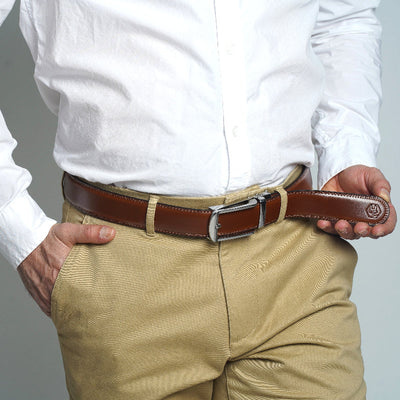
Ratchet belt durability adds a fourth consideration: the strap backing where the ratchet mechanism engages. Ratchet leather belt durability depends on the backing material holding the ratchet teeth in position across thousands of adjustment cycles. Cheap ratchet backing delaminates from the leather strap, allowing the teeth to shift and the mechanism to slip. Quality ratchet strap construction integrates the backing material fully into the strap structure rather than adhering it to the surface.
Full-Grain Leather: Why It Is the Only Grade for Durable Belts
Durable leather belt construction requires full-grain leather specifically because durability in leather accessories depends on the fiber structure at the outer surface of the hide - the layer that top-grain and bonded leather processing removes. This outer layer contains the tightest, most interlocked fiber structure in the entire hide. It is what gives quality leather its ability to flex repeatedly without cracking, to handle point-load stress at holes and buckle attachments without tearing, and to develop patina rather than deteriorating under sustained daily use.
A heavy duty leather belt in full-grain construction handles the same daily mechanical stress as one in top-grain leather but over a dramatically different timeline. A full-grain leather belt at five years of daily wear shows the history of its use in patina - a darkening and burnishing at high-contact areas that makes the belt more visually individual. The same belt in top-grain leather at three years of daily wear shows cracking at the buckle fold, stretched holes in the pin belt format, and edge delamination. These are not signs of hard use - they are the predictable outcomes of removing the fiber layer that handles stress in full-grain leather.
Strong belt construction also depends on vegetable tanning specifically. Vegetable-tanned leather maintains its fiber structure integrity under sustained tension better than chrome-tanned alternatives because the natural tannins penetrate and stabilize the fiber structure throughout the hide rather than just treating the surface. A sturdy belt in vegetable-tanned full-grain leather maintains its shape and tension resistance across years of wear in a way that chrome-tanned leather does not.
"We built the extra durable belt collection because we kept hearing the same feedback: men and women who wore belts daily in active or demanding contexts were going through standard leather belts every twelve to eighteen months. The solution was not to make a thicker belt or add more hardware - it was to use the right leather from the start. Full-grain vegetable-tanned leather at the right thickness for the format, with construction that addresses every predictable failure point, produces a belt that simply does not follow the replacement cycle that lesser belts do."
Over 2,500 customers have reviewed Hedonist Chicago leather goods and rated us 4.78 stars on average. Personalization through hot stamping and foil stamping in gold, silver, black, or white is available on every belt - up to 40 characters, adding 1-2 business days to dispatch. See our personalization page for details.
Leather Thickness and Belt Durability
Leather thickness is one of the most significant durability variables in belt construction. Dress belts use thinner leather - typically 2 to 3 millimeters - to achieve the slim profile that formal applications require. Casual and work belts use thicker leather - 3.5 to 5 millimeters - that provides more resistance to the mechanical stress of daily active wear. Extra durable leather belts use leather thickness calibrated to the specific demands of the application rather than a single thickness across all belt types.
Thickness alone does not determine durability - leather grade and thickness together determine it. A 4-millimeter bonded leather belt is less durable than a 3-millimeter full-grain leather belt because bonded leather's reconstituted fiber structure fails under sustained daily stress regardless of how thick it is. The fiber density and natural structure of full-grain leather handles the stress; thickness provides additional material for that structure to work with.
For ratchet belts specifically, leather thickness affects how the strap engages with the ratchet mechanism. Leather that is too thin relative to the mechanism allows the strap to flex within the mechanism rather than holding a clean position. Leather that is too thick creates difficulty with the adjustment mechanism and may not engage cleanly. Extra durable ratchet leather belt construction calibrates strap thickness to the specific mechanism being used.
Stitching and Edge Quality in Durable Belts
Saddle-stitch construction at the buckle attachment uses waxed thread through pre-punched holes from both directions, creating an interlocking pattern that holds under tension even as individual thread fibers wear. Machine lock-stitch creates a continuous loop that unravels from a single break point - a failure mode that appears first at the buckle attachment where stress concentrates most heavily. For a belt intended for years of daily heavy use, saddle-stitch construction at the buckle attachment is the construction decision that most directly affects longevity at the highest-stress point.
Hand-burnished edges seal the leather fiber structure at every cut surface. A belt's edges - the long sides of the strap and the strap tip - take continuous flexing and moisture exposure throughout daily wear. Unburnished edges absorb moisture that migrates into the strap interior, accelerating deterioration from the inside out. Burnished edges create a sealed surface that resists this moisture penetration while maintaining a clean visual profile that does not peel or chip the way painted edges do.
When Extra Durable Belts Are the Right Choice
Extra durable belt construction is most justified in specific daily use contexts: active work environments where the belt is under continuous tension and movement, daily wear without rotation where the same belt carries the full load of everyday use without rest days, and outdoor or variable weather contexts where moisture exposure accelerates leather deterioration in lesser materials.
Men and women who rotate between two or three belts and live in temperate indoor environments may find that standard full-grain leather construction provides adequate durability without requiring the additional thickness of extra durable designs. Men and women who wear one belt daily in active contexts, work outdoors, or simply want a belt they do not need to think about replacing will find that extra durable construction justifies its slightly higher material cost through a significantly longer replacement cycle.
Ratchet Belt Durability
Ratchet leather belt durability depends on three components simultaneously: the leather strap quality, the ratchet backing integrity, and the buckle mechanism quality. Automatic leather belt designs that achieve genuine durability address all three. Automatic ratchet belt systems that fail within the first year typically fail at the backing delamination point - the bonding between the ratchet tooth backing and the leather strap weakens under the combined stress of daily adjustment and the bending that occurs through normal wear.
Genuine leather ratchet belt construction uses full-grain vegetable-tanned leather for the strap and high-quality bonding processes for the backing integration. Real leather ratchet belt designs from quality manufacturers integrate the backing into the strap construction at the manufacturing stage rather than adhering it to a completed strap as a secondary process. The integration method determines how long the backing maintains its bond under daily use conditions. Our ratchet belts guide covers automatic belt construction in complete detail.
Track belt durability - track belts being a synonym for ratchet belts in some markets - follows the same principles. Track belts for men searches and track belt searches reflect interest in ratchet format specifically under this alternate naming convention. The construction requirements for genuine track belt durability are identical to those for ratchet and automatic belt durability: full-grain leather, quality backing integration, and precision buckle mechanism manufacturing.
Caring for Extra Durable Leather Belts
Even the most durable leather belt benefits from basic maintenance that extends its functional life significantly. Full-grain vegetable-tanned leather responds well to conditioning every three to four months - this maintains the supple fiber structure that makes full-grain leather handle stress without cracking. Apply conditioner to the full exterior surface with attention to the buckle fold area where flexing concentrates most heavily. Wipe the belt surface with a slightly damp cloth before conditioning to remove surface oils and accumulated grime that prevent conditioner penetration.
Ratchet belt strap maintenance requires occasional cleaning of the backing tooth row. Dust and fabric fibers accumulate between the teeth over daily use, eventually reducing the precision of the ratchet engagement. A soft brush drawn along the tooth row every few months keeps the mechanism engaging cleanly. The ratchet buckle mechanism benefits from a small amount of dry lubricant at the pawl contact point annually - this maintains smooth adjustment without attracting the dust that oil-based lubricants collect. For women's belt care, our women's leather belts guide covers maintenance specific to women's belt formats and widths.
Hedonist Chicago Extra Durable Belt Construction
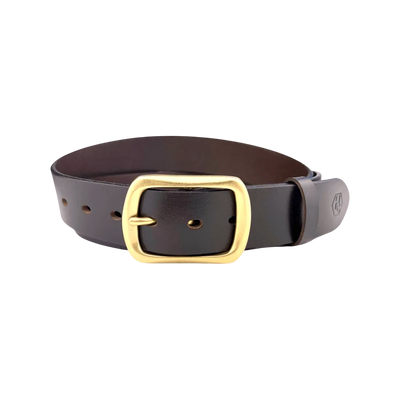
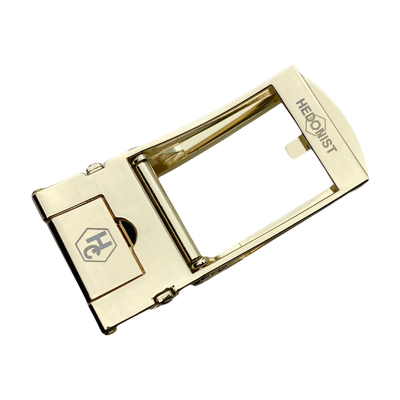
Chicago belts from Hedonist Chicago are designed with durability requirements defined by actual daily use conditions rather than marketing specifications. Hedonist Chicago brushed hollow ratchet belt designs use hollow construction in the buckle body that reduces weight without reducing structural integrity at the mechanism contact points. The brushed finish on these designs develops character through handling rather than showing fingerprint marks and contact wear the way polished finishes do - a practical durability consideration for daily-worn accessories.
Genuine leather ratchet belts for men, ratchet belts for men, real leather ratchet belt, and ratchet leather belt searches all reflect men researching quality in the ratchet belt format specifically. The extra durable belt category addresses these searches by providing the material and construction answer: full-grain vegetable-tanned leather at appropriate thickness, properly integrated ratchet backing, and mechanism hardware built to last rather than to look impressive initially. Men's leather ratchet belt and men's ratchet belt queries in GSC at high impression volumes confirm that men are actively seeking quality ratchet belts - the market demand exists and the material answer is clear.
Automatic belt buckle searches at the highest impression count in belt GSC data reflect that the buckle mechanism is the most researched component in ratchet belt evaluation. Automatic leather belt, automatic belts, and automatic ratchet belt queries all reflect this mechanism-focused research. Mens automatic belts and automatic belts for men searches confirm that the format has moved beyond the novelty stage - men are researching automatic belts as a standard belt format comparison rather than as an alternative to evaluate. Ratchet belt for business attire and ratchet belt for suits searches specifically address the format's role in professional contexts, confirming that extra durable ratchet construction serves professional daily wear rather than only casual contexts.
Ratchet buckle belt, ratchet belt buckle, and ratchet buckle searches reflect the component-level research that men do before purchasing complete belt systems. Genuine leather ratchet belt construction and full grain leather ratchet belt specifications are the quality indicators that differentiate extra durable belts from standard market alternatives in all of these search contexts. For women's extra durable belt options, our women's leather belts guide covers durability considerations in women's belt formats and widths.
Extra Durable Belts as Gifts
An extra durable leather belt is one of the most practical gift choices in the leather accessories category precisely because durability is the quality most people undervalue when buying belts for themselves. A quality extra durable belt costs more than a standard market belt and returns that cost through a significantly longer replacement cycle - the calculation that most people do not make when buying a belt as a routine purchase becomes obvious when made for a gift recipient whose daily carry habits you understand.
Ratchet belts for men in extra durable construction are among our most consistently gifted belt configurations. Genuine leather ratchet belts for men with quality automatic buckle hardware suit men who wear belts daily in active contexts - the format's micro-adjustment capability and the extra durable leather's resistance to wear combine to produce a belt that serves consistent daily use without the cycle of loosening and replacement that standard belts follow. Real leather ratchet belt options for gift-giving suit men who have mentioned wearing through belts faster than they would like, or whose current belt shows wear that a quality replacement would address.
Ratchet belt leather options for women are equally suited to extra durable construction. Women who wear belts daily for professional or casual styling benefit from the same material and construction advantages that men do - full-grain vegetable-tanned leather at the buckle fold and strap stress points, quality mechanism hardware in automatic configurations, and hand-burnished edges that maintain their integrity across years of daily wear. Our women's leather belts collection includes extra durable construction options in women's sizing and widths. Ratchet belt leather options for women in extra durable construction follow the same full-grain vegetable-tanned material standard as men's designs, with strap thickness calibrated to women's belt loop dimensions rather than simply scaled down from men's specifications.
For men and women who specifically want a belt from a Chicago-based leather goods designer, extra durable construction combined with Hedonist Chicago's design standards creates a gift that reflects both quality and local identity. Chicago belts from our collection carry the same full-grain vegetable-tanned leather specification across every format - extra durable, ratchet, pin and clip, and women's designs all use the same material standard that makes the extra durable designation meaningful rather than marketing language.
Browse our extra durable leather belts collection to compare designs across width and closure options. Our full leather belts collection covers all belt formats and durability levels. For ratchet format options in extra durable construction, our ratchet belts collection includes heavy-duty ratchet designs. For women's extra durable options, our women's leather belts collection covers durable designs in women's sizing. For comprehensive belt selection guidance, read our best leather belts guide, our comprehensive guide to leather belts for men, and our ratchet belts guide.

Leave a comment