


Belt Buckles: How to Choose the Right Buckle for Automatic and Pin Belt Systems
A belt buckle is both a functional mechanism and a visible accessory - the only part of a belt that stays in the same position throughout the day and remains visible regardless of how the jacket sits or where the shirt falls. The buckle choice determines the belt's formality level, its compatibility with different strap systems, and how it performs mechanically across years of daily use. This guide covers automatic ratchet buckles and traditional pin buckles in practical detail: how each mechanism works, what quality looks like in both hardware types, how to choose buckle finish and dimensions for different outfit contexts, and when buckle replacement makes sense. For a complete overview of leather belt options, see our best leather belts guide.
Automatic Belt Buckles: How the Ratchet Mechanism Works
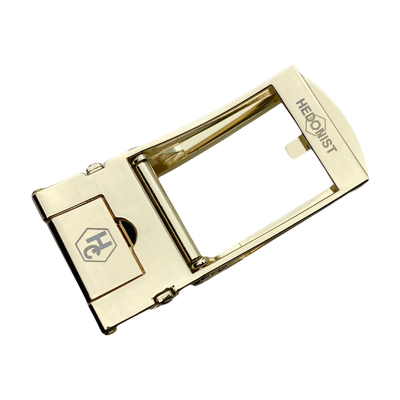
An automatic belt buckle - also called a ratchet buckle or ratchet belt buckle - uses a spring-loaded pawl inside the buckle body that engages with a row of teeth on the back of the leather strap. When the strap is threaded through the buckle frame, the pawl clicks into the tooth positions as the belt is tightened. This creates the characteristic clicking sound and micro-adjustment capability of ratchet belt systems - the belt can be tightened in small increments rather than jumping between fixed hole positions.
Automatic buckle mechanism quality determines how reliably this function works over years of daily use. A quality ratchet mechanism maintains consistent pawl tension - the force required to advance the ratchet is the same on day one as it is on day one thousand. Cheap automatic buckle mechanisms develop inconsistent pawl tension within months: sometimes clicking firmly, sometimes slipping, eventually failing to hold position reliably. The ratchet belt buckle mechanism is not a complex mechanism, but its quality depends on precision manufacturing tolerances that cheap hardware cannot achieve.
The automatic belt buckle release is the second functional element. Releasing a ratchet buckle requires pressing a button or lever that lifts the pawl clear of the strap teeth, allowing the strap to slide free. Quality release mechanisms operate with a clean, deliberate button press and fully clear the pawl every time. Poor release mechanisms require awkward pressure angles or multiple attempts - a daily frustration that compounds over thousands of release cycles.
Automatic belt buckle searches, ratchet buckle belt queries, and ratchet belt buckle searches all reflect interest in this specific mechanism. Ratchet buckle quality is the primary differentiator within the automatic buckle category - the mechanism is the same across designs, but how well it is manufactured determines whether it works reliably for years or begins slipping and sticking within months.
Custom Ratchet Belt Buckles
Custom ratchet belt buckle searches reflect interest in buckle personalization beyond standard finish options. Custom ratchet buckles are available in standard width specifications with finish variations - brushed stainless, polished gold, gunmetal, antique brass - that change the visual character of the buckle while maintaining full compatibility with standard ratchet strap systems. Hedonist Chicago steel ratchet buckle and Hedonist Chicago belt with gold ratchet buckle searches specifically reflect familiarity with our buckle hardware options.
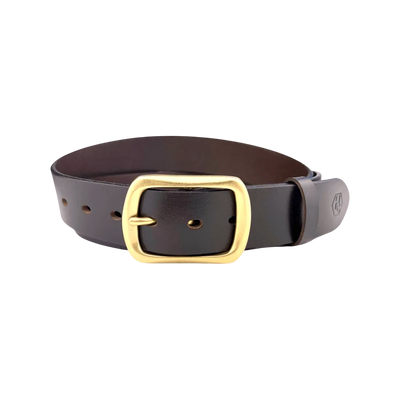
Hedonist Chicago belt with ratchet buckle designs use solid hardware rather than plated base metal. The distinction matters for durability: plated buckles develop finish wear at the edges and contact points within months of daily use, revealing the base metal underneath. Solid brass or steel buckles maintain their finish at these same contact points because the material is consistent throughout rather than a surface coating over a different base.
Pin Buckle Design and Formality
A traditional pin buckle - the prong-and-frame mechanism that has defined belt hardware for centuries - is available in designs ranging from extremely slim formal frames to more decorative casual designs. The pin buckle's visual profile is lower than a ratchet buckle because its mechanism is simpler - a fixed bar across the frame center, a prong that attaches to the bar and passes through a belt hole, and a frame that the prong locks into. This simplicity produces the slim, elegant silhouette that makes pin buckles the standard for formal dress belts.
Pin buckle belt designs for men's dress wear use rectangular frames in proportions that match the belt width exactly, with minimal decorative elements. The buckle should read as a functional necessity rather than an accessory feature in formal applications - clean lines, appropriate finish, no decorative additions. A silver or gold rectangular pin buckle on a slim leather strap is the dress belt standard precisely because it achieves this invisibility when worn correctly.
Belt pin and frame combinations for casual wear allow more design variation. Heavier frames, textured finishes, more pronounced buckle proportions - all read appropriately in casual contexts where the belt is visible as a styling element rather than a dress requirement. The formality signal of a buckle comes primarily from its proportions and finish rather than its mechanism type.
Buckle Finish: Silver, Gold, and Beyond
Mens black belt with silver buckle is one of the highest-impression belt searches in GSC data for this category, which reflects that buckle finish coordination is an active daily concern for many men. The conventional coordination standard - silver buckles with silver jewelry and watch hardware, gold buckles with gold hardware - remains accurate for professional contexts where matching metal finishes signals attention to detail.
Gold belt buckle searches and square belt buckle for men queries show interest in specific buckle configurations beyond standard rectangular silver. Gold buckles coordinate with warm metal tones - yellow gold jewelry, brass accessories, warm-tone hardware throughout an outfit. Adjustable belt buckle searches reflect interest in the ratchet mechanism specifically as the adjustable format, confirming that the automatic buckle's adjustability is a primary appeal driver for men specifically looking for that feature.
Gunmetal and brushed steel finishes are increasingly searched as alternatives to polished silver and gold. These finishes read as contemporary rather than traditional, suit both casual and business casual contexts, and show fingerprint and contact marks less visibly than polished alternatives - a practical advantage for daily wear where the buckle is touched during adjustment.
"The buckle is the only part of a belt that stays visible throughout the day and gets touched multiple times daily. A ratchet buckle that works perfectly - clean engagement, precise adjustment, reliable release - disappears into your routine. A ratchet buckle that slips or sticks creates a small frustration dozens of times per week. We build buckles for the first outcome, not the second."
Over 2,500 customers have reviewed Hedonist Chicago leather goods and rated us 4.78 stars on average. Personalization through hot stamping and foil stamping in gold, silver, black, or white is available on belt hardware - up to 40 characters, adding 1-2 business days to dispatch. See our personalization page for details.
Buckle Width and Belt Compatibility
Belt buckle dimensions must match the strap width for the system to function correctly. A 35mm buckle accepts a 35mm strap - the standard width for most dress and business belt applications. A 38mm buckle accepts a 38mm strap - common in casual belt applications. Mixing widths creates functional problems: a too-wide strap creates friction against the buckle frame, and a too-narrow strap allows lateral play that makes precise positioning impossible.
Ratchet buckle belt width is particularly important because the strap backing tooth specification must align with the buckle pawl position. A strap too wide for the buckle positions the tooth row off-center from the pawl, preventing clean engagement. Compatibility within our system is guaranteed when strap and buckle width specifications match - all 35mm straps work with all 35mm buckles in our automatic belt systems.
Replacing a Belt Buckle
Belt buckle replacement makes practical sense when the leather strap is in good condition but the buckle mechanism has failed, or when a styling change - different finish, different buckle style - is wanted without replacing the entire belt. In ratchet belt systems, buckle replacement is the reverse of strap replacement: the strap release frees the strap from the buckle, a new buckle slides onto the strap, and the system is complete.
Bugatti belt buckle searches and ratchet buckle replacement queries reflect interest in upgrade and replacement specifically. Men and women who have invested in quality leather straps but carry standard-quality buckles frequently search for upgrade buckle options - better mechanism quality, upgraded finish, or a different width for a new strap. Our buckle collection covers replacement hardware for both automatic ratchet systems and traditional pin belt hardware.
Full-Grain Leather and Buckle Construction
Full-grain vegetable-tanned leather in the belt strap provides the material foundation that allows buckle mechanisms to perform correctly over time. A ratchet buckle engaging with a full-grain leather strap and intact backing maintains its adjustment precision because the strap does not compress or deform under the pawl pressure the way lower-grade leather does. The ratchet's micro-adjustment precision depends on the strap maintaining consistent thickness and backing tooth geometry at the engagement point - qualities that full-grain construction provides and that lesser leather grades lose under daily use.
The relationship between buckle quality and leather quality is multiplicative rather than independent. A quality ratchet mechanism on a poor-quality leather strap still fails because the strap backing delaminates, destroying the tooth geometry the mechanism requires. A poor mechanism on high-quality leather fails because the pawl loses its precision engagement regardless of leather quality. Both components need to be right simultaneously for the system to perform reliably over years of daily use. This is why genuine leather ratchet belt construction specifies both material standards together rather than treating them independently.
Mens leather ratchet belts and ratchet leather belts for men searches reflect interest in complete systems - belt buyers are typically looking for the complete strap-and-buckle combination rather than components independently. Understanding that both components contribute to long-term performance helps evaluate complete belt purchases by the quality of both elements rather than just the visible exterior of the strap. For a comprehensive guide to evaluating complete leather belt systems, our best leather belts guide covers both strap and buckle quality indicators.
Ratchet Buckles for Dress and Business Contexts
Ratchet belt for business attire searches and ratchet dress belt queries confirm that ratchet mechanisms are being used in professional contexts alongside casual applications. The ratchet mechanism's micro-adjustment capability is particularly valuable in business contexts where a precise, consistent fit throughout a long workday matters. Ratchet belt for suits searches reflect men who have experienced the fit inconsistency of pin belts - sitting down and standing up changes how tightly a pin belt fits, while a ratchet belt can be adjusted to exactly the right position at any point during the day.
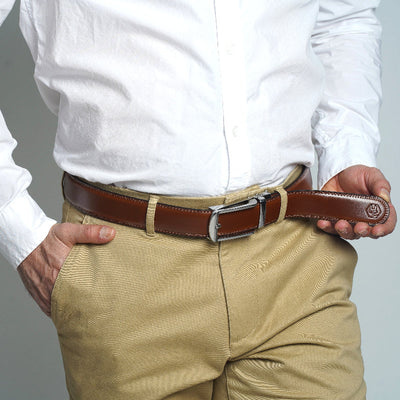
Automatic ratchet belt designs appropriate for business and dress contexts use slim buckle profiles with clean finishes rather than the larger mechanism-visible buckles common in casual ratchet designs. A slim automatic buckle in polished silver or gold with a clean edge reads as professional - the mechanism is concealed within a frame that looks similar to a traditional pin buckle from the front. This design category - dress ratchet belt - bridges the formality advantage of pin buckles with the fit advantage of ratchet mechanisms. Ratchet belt nearby searches reflect men actively looking to purchase in physical retail contexts, which suggests buckle quality assessment requires in-person evaluation - the mechanism should advance smoothly, release cleanly, and engage with consistent clicking force.
For complete belt styling guidance including how buckle choices affect outfit formality, our leather belt styling guide covers belt coordination in professional and casual contexts. For women's buckle options and styling guidance, our ultimate guide to women's leather belts addresses buckle selection for women's outfit contexts specifically.
Chicago Belt Buckles and Hedonist Chicago Hardware
Chicago belts from Hedonist Chicago use buckle hardware designed and tested for daily use durability. Hedonist Chicago brushed hollow ratchet belt buckles use hollow frame construction that reduces weight without compromising structural integrity at the mechanism contact points. Hedonist Chicago steel ratchet buckle designs use solid steel hardware that maintains its finish and mechanism precision under the daily handling stress that hollow or plated alternatives do not. Hedonist Chicago belt with gold ratchet buckle configurations use gold-finished hardware that coordinates with warm-metal jewelry and accessories without the maintenance requirements of solid gold hardware.
Chicago belts designer belts in Chicago searches reflect the local origin interest that leather goods buyers often have - purchasing from a Chicago-based designer carries a regional quality association similar to other American craft goods categories. Our buckle hardware is sourced to the specifications our collection requires rather than selected from standard catalog options, which is what allows us to maintain consistent mechanism quality across the buckle range.
Genuine leather ratchet belts for men, ratchet belts for men, mens leather ratchet belts, and ratchet leather belts for men all represent the complete-system search that often begins with buckle evaluation. Men researching ratchet buckles are typically researching complete systems - strap and buckle together - rather than hardware components independently. Men's leather ratchet belt, men's ratchet belt, and ratchet belt leather queries at high GSC impression counts confirm active demand for complete quality ratchet belt systems across professional and casual use contexts.
Automatic belt, automatic belts, and automatic ratchet belt queries along with mens automatic belts and automatic belts for men searches confirm that the automatic buckle format has broad mainstream appeal across men's belt purchasing. Best ratchet belt and best ratchet belts searches reflect men at the final evaluation stage who have decided on the format and are researching quality indicators. Ratchet belt for business attire, ratchet belt for suits, and ratchet dress belt queries confirm professional dress context demand specifically. For women's buckle options and how they integrate with women's belt sizing, our ultimate guide to women's leather belts covers buckle selection for women's outfit contexts.
Buying Belt Buckles: What to Look For
Evaluating a ratchet buckle before purchase requires assessing the mechanism through operation rather than appearance. A quality automatic buckle mechanism advances in consistent increments with the same force for each click. A poor mechanism advances unevenly - some positions click firmly, others require more force or feel softer. This inconsistency becomes a daily frustration and indicates mechanism wear that will worsen over time rather than stabilize.
Release mechanism evaluation is equally important. A quality release button operates with a clean, single deliberate press that fully clears the pawl. A poor release requires awkward pressure, multiple attempts, or partial pawl clearing that leaves the mechanism partially engaged. Ratcheting belt buckle and ratcheting belts searches reflect interest in the mechanism operation specifically - men who use the term "ratcheting" are typically more mechanically aware of how the system works and more likely to evaluate mechanism quality as a purchase criterion.
Ratchet style belt and ratchet type belt searches reflect men discovering the format for the first time and researching what distinguishes different quality levels within it. Designer ratchet belt searches reflect men who have decided quality is the priority and are looking for brands that deliver it. Automatic ratchet belt searches combine both considerations. All of these searches point toward the same evaluation criteria: mechanism consistency, release quality, finish durability, and leather strap compatibility.
Ratchet belt nearby searches reflect men who want to evaluate buckle quality in person before purchasing - the mechanism operation and finish quality are best assessed by handling rather than from product photography. For those who prefer to purchase online, our buckle specifications and mechanism descriptions provide the detail needed to evaluate quality without in-person assessment. Ratchet belts mens, ratchet belt mens, and mens ratchet belts searches collectively represent the broadest bucket of ratchet belt demand - these are men at various stages of research across the format, from initial awareness to final purchase evaluation.
Browse our belt buckles collection for automatic and pin buckle options across finishes and widths. Our leather belt straps collection covers compatible strap options for our buckle systems. Our ratchet belts collection covers complete belt systems with buckle and strap included. For women's belt hardware, our women's leather belts collection includes compatible buckle options. For belt selection guidance, read our ratchet belts guide, our leather belts for men guide, and our leather belt styling guide.

Leave a comment