5 Expert Tips on How to Style Leather Belts with Different Outfits
A leather belt is visible every time it is worn - at the waist, at checkout, seated across a desk from someone. Most men and women have never thought deliberately about what a belt communicates within an outfit beyond basic color matching. This guide covers the practical styling decisions that determine whether a leather belt works as a finishing element, a visual accent, or an inadvertent proportion problem: width selection, color coordination, buckle scale, leather texture, and how belt choice relates to the rest of an outfit's structure. For a complete leather belt selection guide, see our best leather belts guide.
1. Match Belt Width to Loop Width Before Anything Else
Belt width is a proportion decision before it is a style decision. The first constraint is functional: a belt must fit the trouser or skirt loop it will be worn through. A belt wider than the loop forces the loop partially open, creating a fabric distortion at the waistband that is visible from the front and undermines the polished appearance the belt is supposed to provide. This is a simple geometry constraint with no aesthetic workaround.
Once the functional constraint is met, width determines the visual weight the belt carries within the outfit. A 1-inch belt is a finishing element - it closes the waistband without creating visual emphasis. A 1.5-inch belt has more visual presence and works as a structural element in the outfit. A 2-inch or wider belt is a styling statement that demands outfit consideration rather than serving as a subtle finish.
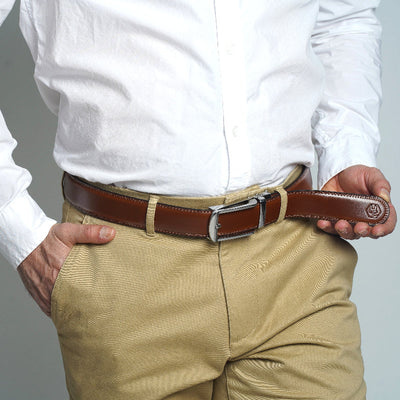
For men's professional contexts: 1.25 to 1.5-inch belts suit dress trousers and business casual. For women's professional contexts: 3/4 to 1 inch suits dress trousers and formal skirts where the belt is a finish rather than a feature. Stylish belt searches and stylish belt styling queries reflect interest in using belts as active styling tools rather than purely functional accessories - this intention requires choosing width proportionate to the visual role the belt is meant to play.
2. Understand What Color Communicates Before Matching
Belt color coordination extends beyond the basic rule of matching belt and shoes, though that rule remains accurate as a starting point. Black leather belts coordinate with black shoes and suit grey, navy, white, black, and most cool-tone outfit bases. Brown leather belts in cognac and tan coordinate with brown shoes and suit warm-tone outfit palettes. These matching standards exist because a color conflict between belt and shoes at opposite ends of the body creates a visual disruption that draws attention to both accessories as separate choices rather than a coordinated whole.
Beyond the basic matching standard: belt color can be used deliberately to add a color accent to an otherwise neutral outfit. A red leather belt against a grey outfit creates a specific visual effect that is controlled and intentional. A green leather belt against navy creates a different kind of distinctive accent. These choices work when the belt color is the single deliberate color accent in the outfit rather than competing with other colored accessories. How to choose the right wallet color guidance applies similarly to belts - vegetable-tanned leather ages in specific ways by color, and understanding how your belt color will develop over time is part of the selection decision.
Ratchet belt leather in different colors - automatic belt designs in black, brown, cognac, tan, and distinctive options - provides the format's fit advantages in the full color range. For women's color guidance specifically, womens brown dress belt and signature buckle women's leather belt searches reflect the most commonly sought professional belt color combinations in women's wardrobe building contexts.
3. Let Buckle Scale Signal Formality Level
A buckle is the most visible component of a belt when the belt is being looked at deliberately - during payment, when seated, or when an outfit's waist is a focal point. Buckle scale and profile communicate formality level more directly than leather color or texture does, because scale is the primary visual signal that determines whether a belt reads as dress, business casual, or casual.
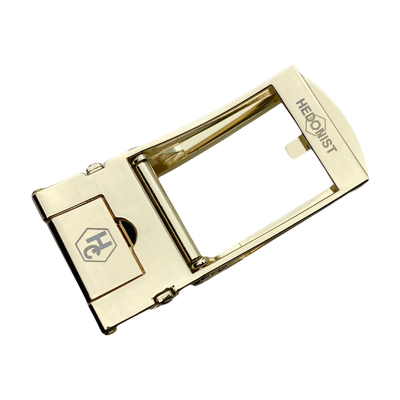
A slim rectangular buckle with minimal profile reads as formal regardless of the leather it accompanies. The same leather strap with a larger, more prominent buckle reads as casual because the buckle's visual weight shifts the outfit register downward. For men's professional dress contexts, a 1.25-inch wide belt with a slim rectangular pin buckle or a slim automatic buckle in silver or gold reads as appropriately formal. Ratchet dress belt designs that achieve this slim profile bring the fit advantage of automatic mechanisms to professional contexts. For women's professional contexts, buckle scale reduction relative to casual alternatives produces the same formality signal.
Automatic belt buckle quality is the mechanism-level decision under buckle scale. A quality automatic buckle engages with consistent clicking force, releases cleanly with a single button press, and maintains these qualities across years of daily use. A poor automatic buckle develops inconsistent engagement within months. For the complete buckle evaluation framework, our belt buckles guide covers both ratchet and pin buckle quality assessment.
4. Use Leather Texture to Control Visual Interest
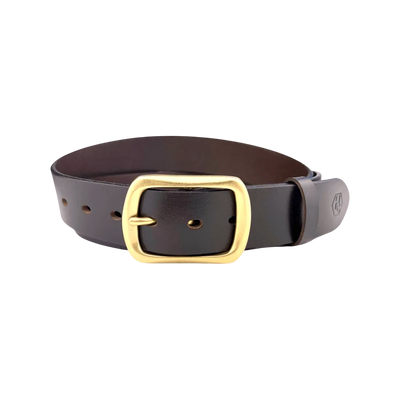
Smooth full-grain leather is the most versatile belt texture because it reads appropriately across the full formality range from dress through casual. Smooth black leather at 1.25 inches is the most versatile single belt in most men's wardrobes. Smooth brown or cognac leather covers the equivalent range in warm-tone outfit contexts.
Textured leather - embossed grain patterns, matte finishes, distressed treatments - adds visual interest that is appropriate in casual and smart casual contexts and inappropriate in formal dress contexts. The texture creates visual presence that increases with the grain contrast: a subtle embossed texture reads as slightly casual, a strongly contrasted grain reads as clearly casual. Choosing textured leather deliberately for casual applications and smooth leather for professional applications respects this formality gradient.
Full-grain vegetable-tanned leather develops its own texture through daily wear: the exterior face develops a friction-polished quality from trouser contact, the buckle fold develops burnished smoothness, and the strap edges develop a worn-smooth profile. This natural texture development is individual - no two full-grain leather belts that have been worn for several years look exactly the same. The texture becomes part of the belt's personal character rather than a manufactured surface treatment.
5. Balance the Belt Within the Complete Outfit
A belt functions best when it completes an outfit rather than competing with it. The practical test: if someone notices your belt specifically, it is either doing something deliberate and intentional within the outfit or it is creating a proportion conflict that draws attention by disrupting rather than contributing. The goal in most professional and smart casual contexts is the former when color or texture is being used deliberately, and the latter should be avoided by getting width, color, and buckle scale right.
Coordinating belts with other leather accessories - shoes, wallet, watch strap - creates a unified leather goods presentation that reads as considered. The leather does not need to match exactly, but the tones should harmonize: black with black, brown with brown, cognac with tan or warm-tone brown. A full-grain vegetable-tanned leather belt and wallet that age together in similar colors develop a visual harmony over time that is not possible with lesser leather grades that degrade rather than develop character.
"The men and women who ask us about belt styling most often are looking for a principle rather than a specific answer. The principle is simple: match width to loop, coordinate leather tone with shoes, let buckle scale signal formality. Everything else follows from those three decisions. A belt that gets those three things right is nearly always the right belt for the context, regardless of how much or how little it cost." - Hedonist Chicago founding team
Over 1,312 customers have reviewed Hedonist Chicago leather goods and rated us 4.78 stars on average. Personalization through hot stamping and foil stamping in gold, silver, black, or white is available on every belt - up to 120 characters, adding 1-2 business days to dispatch. See our personalization page for details.
Ratchet vs Pin Belt Styling Considerations
The choice between ratchet and pin belt formats has a styling dimension beyond the fit difference. A ratchet strap has no holes - the strap edge is smooth and continuous from tip to buckle, which provides a cleaner aesthetic in contexts where the strap is visible against trousers or a skirt. A pin belt strap has a visible row of unused holes below the buckle that interrupts the strap's clean edge. In formal dress contexts where the full strap face is visible against dress trousers, this aesthetic difference favors ratchet straps with slim buckle profiles.
In casual contexts where the strap is partially covered by a jacket or shirt, the hole row is less visible and the pin belt's traditional aesthetic reads as appropriate rather than outdated. Format choice in styling terms follows context: ratchet for clean professional aesthetics and fit precision, pin for traditional dress aesthetics where slim buckle profile is the priority. Our ratchet belts guide and our pin and clip belts guide cover both formats in complete detail.
Ratchet and Automatic Belt Styling Considerations
Genuine leather ratchet belts for men and ratchet belts for men searches at high impression counts confirm that the ratchet format is being actively considered in styling contexts alongside fit evaluation. Men's leather ratchet belt, men's ratchet belt, and ratchet dress belt searches specifically confirm professional dress styling interest in the automatic format. Mens automatic belts and automatic belt queries reflect the broadest awareness stage of ratchet belt discovery. Ratchet buckle belt and ratchet belt buckle searches reflect buckle-specific evaluation within the styling context - men who want to know what the buckle looks like before committing to the format's fit advantages.
Chicago belts and designer belts in Chicago searches reflect design provenance as a styling signal. A belt from a design-focused leather goods company communicates consideration in the same way that a well-selected shoe or watch does - it is legible to others who pay attention to accessories as evidence that the wearer's choices are deliberate rather than default. Real leather ratchet belt searches confirm that leather quality is part of the styling evaluation, not separate from it - men who care about how their accessories look also care about the material quality that determines how they age.
Ratchet belt for business attire and ratchet belt for suits confirm that styling questions around automatic belts in professional contexts are being actively researched. The answer - that slim automatic buckle designs in appropriate finishes work in professional dress contexts - requires understanding which buckle designs achieve the formal register. Our belt buckles guide covers buckle design and formality signals in complete detail. Our ratchet belts guide covers the format's full range of styling applications.
Leather Belt Coordination with Wallets and Everyday Carry
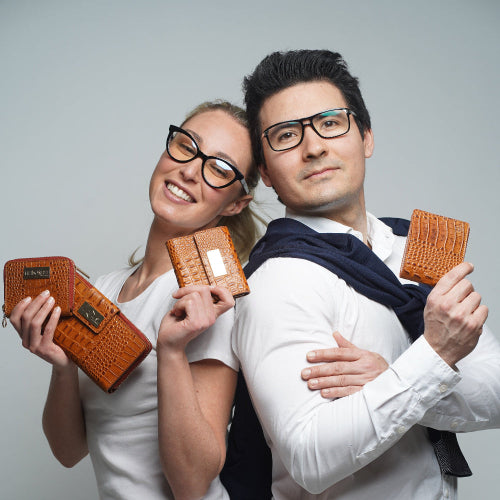
A leather belt worn alongside a leather wallet in the same material creates a coordinated everyday carry that reads as considered rather than assembled from unrelated purchases. Full-grain vegetable-tanned leather ages consistently across both pieces when used daily together - the patina development follows similar patterns in both pieces because the material responds to handling and carry in consistent ways. The wallet's card slot edges and fold develop patina in the same material register as the belt's buckle fold and strap face, creating visual harmony between two pieces whose material history is aligned.
Coordinating leather tone between belt and wallet is more important than exact color matching. A cognac wallet with a tan belt reads as coordinated within the warm leather palette because the tones harmonize rather than conflict. A black wallet with black belt reads as precisely matched, which is appropriate in professional contexts where coordination signals attention to detail. A brown belt with a black wallet creates a tone conflict that undermines both pieces, not because the individual choices are wrong but because they work against each other in the outfit context where both are visible. For leather accessories coordination guidance beyond belts, our leather belts for men guide covers belt-wallet-shoe coordination in practical detail.
Styling Belts in Specific Outfit Contexts
Professional dress contexts call for specific styling decisions that differ from business casual and casual contexts in belt selection. For men's professional dress: a 1.25-inch black leather belt with a slim rectangular silver buckle handles the full range of formal and professional applications. For women's professional dress: a 3/4 to 1-inch black or brown leather belt with a slim buckle proportioned to the loop width achieves the correct finishing register. In both cases, the belt completes the outfit without creating visual emphasis that draws attention to itself in contexts where the belt should be correct but not noticed.
Business casual contexts allow more belt character than formal dress: a 1.5-inch belt in cognac or tan leather with a moderately sized buckle reads as smart casual while providing visible structure at the waist. The leather quality reads as considered - full-grain vegetable-tanned leather develops a surface character that communicates material quality to people who pay attention to accessories. Track belt searches and stylish belt queries both reflect interest in casual belt styling where the format is a deliberate aesthetic choice rather than a dress requirement.
Casual contexts provide the most belt styling latitude: wider widths, more buckle character, distinctive colors, and intentional waist emphasis all work within the casual register. A 1.75-inch red leather belt with a statement buckle over jeans is appropriate where the same belt over dress trousers would be jarring. Context determines appropriateness more than any other single factor in belt styling - the same belt in different outfit contexts communicates differently because the outfit register sets expectations for accessory character. For belt format selection that works across multiple outfit contexts, our leather belts for men guide and our ultimate guide to women's leather belts cover context-specific selection in more detail.
Belt Color Coordination: The Practical Standard
Color coordination between belt and shoes is the styling standard most men and women know but interpret too literally. The standard - match belt leather tone to shoe leather tone - is accurate as a starting point but does not require exact color matching. Black belt with black shoes, brown belt with brown shoes, cognac belt with tan shoes. These are tone family matches rather than precise color matches. A mid-brown leather belt with dark chocolate brown shoes creates a tone conflict that draws attention. The same mid-brown belt with tan shoes coordinates within the warm leather family without exact matching.
Ratchet belt mens and mens ratchet belts searches reflect men at format evaluation stages where styling considerations are part of the decision. How to choose a leather belt and stylish belt searches reflect buyers who want styling guidance alongside format and quality evaluation. Durable belt and heavy duty belt searches reflect buyers prioritizing longevity over styling - these buyers benefit from understanding that full-grain leather's durability and its styling character are the same quality, expressed differently. The leather that does not crack at the buckle fold is also the leather that develops the burnished, considered quality that makes a well-worn belt look more refined than a new one. Durability and style are not separate considerations in full-grain vegetable-tanned leather - they are the same material property observed at different points in the belt's life. For the complete leather belt resource covering all formats and styling contexts, our leather belts for men guide and our ultimate guide to women's leather belts cover the complete selection frameworks.
Ratchet belt nearby and ratchet style belt searches reflect buyers at the purchase-ready stage evaluating styling alongside quality criteria. Stylish belt searches confirm that styling considerations are explicitly part of belt research alongside format and material evaluation for a significant portion of leather belt buyers.
Leather belts searches at 95 impressions and leather belt at 70 impressions represent the generalist research stage that precedes format-specific styling evaluation. How to choose a leather belt at 38 impressions explicitly combines selection and styling criteria in a single search - the buyer who uses this query wants both quality evaluation and styling guidance simultaneously, which this guide addresses. Best ratchet belt and best ratchet belts searches at 45 and 31 impressions respectively represent styling-aware buyers who are at the final evaluation stage comparing specific options within the format they have already chosen. Ratcheting belt and ratcheting belts searches reflect mechanically descriptive buyers new to the format. All of these buyers benefit from the same core styling guidance: match width to loop, coordinate leather tone with shoes, and let buckle scale communicate formality level.
Browse our leather belts collection for all belt formats and styling options. Our ratchet belts collection, pin and clip belts, and women's leather belts collection cover specific format categories. For additional styling guidance, read our comprehensive guide to leather belts for men and our ultimate guide to women's leather belts.
Leave a comment