The Ultimate Guide to Women’s Leather Belts

The Ultimate Guide to Women's Leather Belts

A women's leather belt serves two functions simultaneously: it provides practical waistband structure for trousers, skirts, and dresses, and it functions as a visible styling element that affects how an outfit reads from the waist up and down. Getting both functions right requires matching the belt's width, buckle scale, leather quality, and color to the specific outfit and context where it will be worn. This guide covers all of those decisions in practical detail: how to evaluate leather quality in women's belts, how to choose width and buckle scale for different outfit types, how to size correctly, how to build a versatile belt wardrobe, and how to style leather belts across professional and casual contexts. For women's belt options across all formats, browse our women's leather belts collection.

Leather Quality in Women's Belts

Best quality women's leather belts wardrobe staples searches reflect a genuine interest in belts as long-term investments rather than seasonal purchases that need replacing annually. This quality orientation is correct: a belt worn regularly for two to three years across many outfits represents a better value at a higher quality price point than an annual replacement of a lower-quality belt. The material decision that determines whether this calculation works is leather grade.

Full-grain vegetable-tanned leather is the highest grade available and the only material across the Hedonist Chicago women's belt collection. The natural outer surface of the hide - where fiber density is highest - remains intact, providing the fiber structure that handles the mechanical stress of daily belt wear without cracking at the buckle fold or delaminating at strap edges. In women's belts specifically, where narrower widths concentrate stress on less leather surface area than wider men's belts, full-grain leather's fiber density makes a more immediate difference in how the belt holds up under wear.

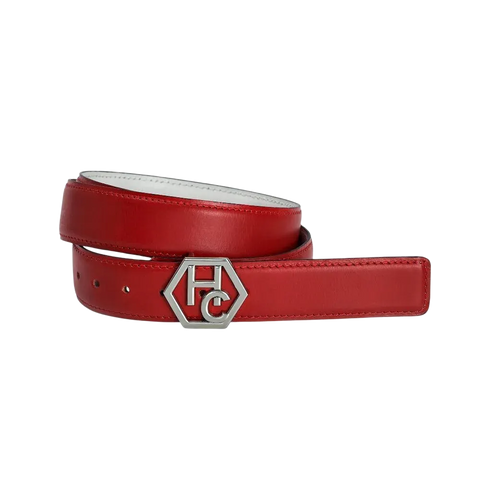
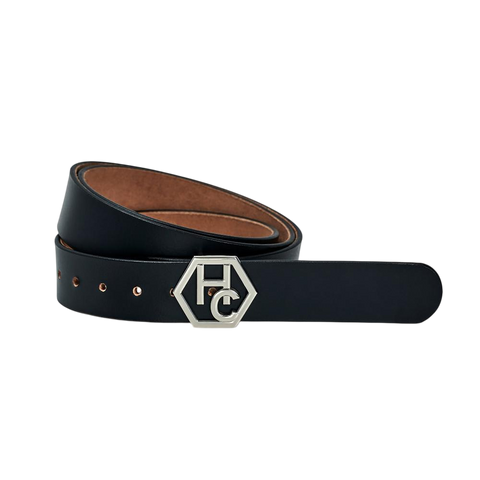
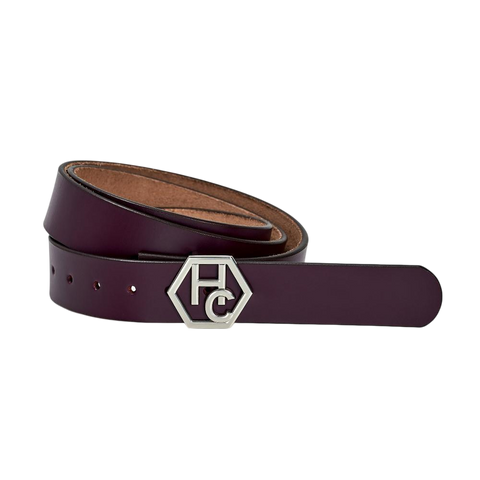
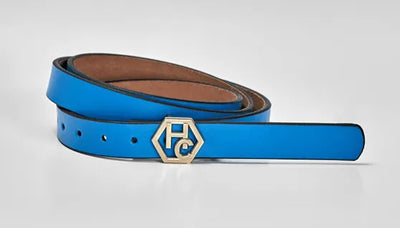
Signature buckle women's leather belt searches reflect interest in distinctive buckle hardware as a defining feature of women's belt design. The buckle in a women's dress belt is often more visible than in a men's belt because women's outfits frequently leave the full buckle visible rather than partly concealed by a jacket. This visibility makes buckle quality and design more consequential in women's belt selection - a quality buckle in solid brass or steel maintains its finish and visual clarity across years of use, while a plated base metal buckle develops visible finish wear at contact points within months.

Belt Width for Different Outfit Contexts

Belt width is the most important proportion decision in women's belt selection because it determines how the belt reads within the outfit and whether it fits the trouser or skirt loop properly. The wrong width creates either functional problems (a belt wider than the loop forces the loop open, creating fabric distortion) or proportion problems (a too-narrow belt creates an insignificant visual element in contexts where the belt is intended to structure the silhouette).

Narrow belts at 3/4 inch to 1 inch suit dress trousers, tailored skirts, and formal applications where a slim belt reads as appropriate and the loop width requires narrow proportions. At this width, the belt functions as a finishing element rather than a styling statement. Medium-width belts at 1 to 1.25 inches suit business casual trousers, smart casual skirts, and contexts where the belt contributes visible structure to the silhouette without dominating it. Wide belts at 1.25 inches and above suit casual applications, jeans, and contexts where the belt is intended to be a visible styling element rather than a subtle finishing detail.

Womens brown dress belt searches in GSC data reflect high interest in dress-appropriate belt configurations from women specifically - the narrow-to-medium width dress belt in brown leather is a frequently sought combination for professional wardrobe building. Matching brown leather belt width to dress trouser loop width and choosing an appropriately scaled buckle produces the refined professional belt that these searches are looking for.

Ratchet Belts for Women

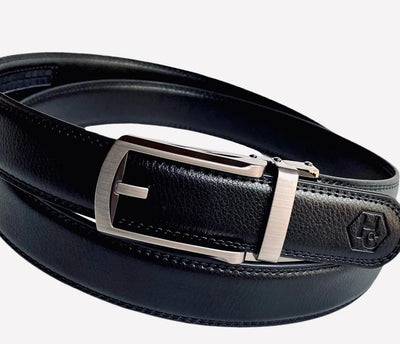
Automatic belt mechanisms are increasingly available in women's sizing - typically 25mm and 30mm widths - and provide the same fit adjustment advantages for women that they provide for men. A ratchet dress belt for women adjusts in quarter-inch increments throughout the day, eliminating the gap between available pin belt positions that can make a pin belt slightly tighter or looser than the precise position you want after a long day or a large meal.

Womens ratchet belt options in slim buckle profiles suit professional dress contexts where a smooth, hole-free strap edge against dress trousers is preferred. The ratchet mechanism in a slim frame reads as professional rather than casual when the buckle proportions are correct for the belt width. Women who have used ratchet belts report the same experience as men: they did not realize how much the pin belt's fixed positions affected daily comfort until they experienced continuous adjustment. For detailed ratchet belt guidance, see our ratchet belts guide and our leather belt straps guide.

Sizing Women's Leather Belts

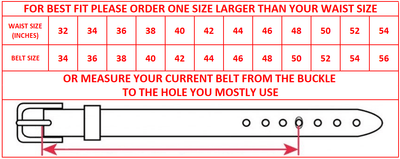
Women's belt sizing follows the same logic as men's: measure the length you need rather than ordering based on clothing size. Clothing size and belt length are not reliably correlated because belt fit depends on where the belt sits (waist, hip, or mid-rise) and how tightly you prefer to wear it - variables that are independent of clothing size. The correct measurement is either the length of a current belt you wear comfortably (from buckle mechanism to the hole used most often) or a direct measurement at the position and tightness you prefer while wearing the trousers or skirt the belt will accompany.

Standard women's belt sizing runs in even-inch increments. Order the nearest size to your measurement, rounding up if you fall between sizes for pin belts. For ratchet straps, order based on your measurement knowing that the strap can be trimmed to precise length at home, providing better fit precision than any standard size offers.

"The most versatile women's belt wardrobe is a minimal one: a narrow black belt for formal and professional contexts, a medium-width cognac or tan belt for everyday business casual and smart casual, and a wider belt in a distinctive color for casual styling when the belt is a deliberate visual element rather than a functional finish. Three belts in full-grain leather serve more contexts than ten belts in lower-quality materials because they maintain their appearance and function across years of regular use." - Hedonist Chicago founding team

Over 1,312 customers have reviewed Hedonist Chicago leather goods and rated us 4.78 stars on average. Personalization through hot stamping and foil stamping in gold, silver, black, or white is available on every women's leather belt - up to 120 characters, adding 1-2 business days to dispatch. See our personalization page for details.

Styling Women's Leather Belts

A leather belt functions as a styling tool when it creates or emphasizes waist definition, adds a color or texture accent to an otherwise neutral outfit, or provides visual structure that breaks the silhouette at the waist. For any of these functions to work, the belt must be proportioned correctly to the outfit: a belt that is too wide overwhelms a delicate outfit, while a belt that is too narrow disappears within an outfit that calls for visual structure at the waist.

For styling leather belts with different outfits across professional and casual contexts, our leather belt styling guide covers the practical coordination decisions in detail. The key principles that apply across all contexts: match belt width to loop width first, coordinate leather tone with dominant outfit colors, and let buckle scale communicate formality level - slim for professional, medium for smart casual, statement proportions for deliberate casual styling.

Women's Belt Wardrobe Building

A functional women's leather belt wardrobe covers three contexts with the minimum number of pieces. A narrow black leather belt (3/4 to 1 inch) handles all dress trouser and formal skirt applications and coordinates with black, grey, navy, and any neutral outfit base. A medium cognac or tan leather belt (1 to 1.25 inches) handles business casual and smart casual applications and coordinates with warm-tone outfit palettes. A third belt in a distinctive color or wider width handles casual applications where the belt is a deliberate styling element.

Women who currently own many belts in lower-quality leather and find themselves reaching for the same one or two consistently often discover that consolidating to fewer pieces in higher-quality leather produces better daily outcomes than maintaining a large collection of belts that feel inadequate by the second year of wear. Full-grain vegetable-tanned leather maintains its appearance and function across the rotation in a way that lower-grade alternatives do not.

Ratchet Belts and Automatic Mechanisms for Women

Automatic belt buckle searches and genuine leather ratchet belts for men searches appear in women's belt research data because women often research belt formats through the same general searches as men before narrowing to women's sizing specifications. Ratchet belts for men, men's leather ratchet belt, men's ratchet belt, and mens automatic belts queries reflect this broad initial research that applies equally to women seeking ratchet mechanisms in women's sizing. The mechanism evaluates identically regardless of strap width - consistent pawl tension, clean release, and quality backing integration are the same quality indicators in 30mm women's straps as in 35mm men's straps.

Chicago belts searches reflect local design provenance interest that applies to women's belt searches as frequently as men's. Designer belts in Chicago and best quality women's leather belts wardrobe staples searches indicate quality-oriented buyers who want leather goods with both material quality and design consideration. Signature buckle women's leather belt at significant GSC impression counts confirms that buckle design is a primary selection criterion for women's belt purchases alongside leather quality and sizing.

For ratchet belt format guidance applicable to women's sizing and context, our ratchet belts guide covers the format's advantages and evaluation criteria in detail. For strap replacement and color variation options in women's sizing, our leather belt straps guide covers the interchangeable strap system that allows one quality buckle to work with multiple leather strap colors. For buckle evaluation across pin and automatic formats, our belt buckles guide covers both mechanism types with quality indicators that apply across men's and women's sizing.

Women's Belt Maintenance and Long-Term Care

Full-grain vegetable-tanned leather maintains its appearance and function across years of regular wear with basic maintenance. Conditioning every three to four months with a formulation appropriate for vegetable-tanned leather maintains suppleness at the buckle fold - the highest-stress point in any belt regardless of width or closure type. A conditioned buckle fold flexes without cracking under daily buckling and unbuckling; an unconditioned fold develops surface cracking that deepens under sustained daily stress.

Women's leather belts in lighter colors - tan, cognac, nude leather tones - require slightly more attention to surface cleaning because lighter colors show contact marks from hands and clothing more visibly than dark colors. Wipe the strap face with a slightly damp cloth every few weeks to remove accumulated surface oils before they penetrate into the leather surface. This maintenance step is more visible in impact on lighter leather than on dark leather but benefits both by preventing accumulated oils from creating uneven patina development across the strap surface.

For extra durable belt options in women's sizing that require less frequent replacement under heavy daily use, our extra durable leather belts guide covers construction specifics. For women's belt gift guidance, our leather gift guide covers belt and wallet gift selection including sizing and personalization guidance that applies to women's gifts as readily as Father's Day gifts for men.

Complete Women's Leather Belt Selection Framework

Women's leather belt selection benefits from a clear decision sequence: material quality first, width and format second, color and buckle third. Material quality - full-grain vegetable-tanned leather in every component - determines whether the belt serves the wardrobe for years or needs replacement annually. Width and format determine whether the belt fits the loops it will be worn through and what visual function it serves within outfits. Color and buckle determine how the belt coordinates with existing wardrobe and what formality register it communicates.

Ratchet belt format evaluation applies to women's belts in the same way it applies to men's. The mechanism advantages - continuous adjustment, hole-free strap, precise fit throughout the day - are not gender-specific. The sizing specifications are different: women's ratchet belts use 25mm to 35mm strap widths depending on trouser or skirt loop width, versus the 35mm to 38mm standard for most men's ratchet belts. Within those width specifications, the mechanism quality indicators are identical: consistent pawl tension, clean release, and backing integration that holds through years of daily adjustment cycles.

Womens brown dress belt at 109 impressions in GSC data is the highest-impression women's specific belt search in the data set, confirming that brown leather in dress belt proportions is the most actively sought women's professional belt configuration. Best quality women's leather belts wardrobe staples at 25 impressions confirms quality-oriented purchasing among women who are making deliberate wardrobe investment decisions. Signature buckle women's leather belt at 26 impressions reflects the design character interest that drives women to seek distinctive belt designs rather than purely functional ones. For extra durability in women's belt options, our extra durable leather belts guide covers the construction specifics that apply to both men's and women's heavy-use belt contexts.

Women's Belt Decision Summary

The women's leather belt decision follows a clear sequence once the quality standard is established. Material quality - full-grain vegetable-tanned leather throughout - is the non-negotiable starting point. Width matched to loop width is the functional requirement that determines whether the belt works within the outfit. Color coordinated with shoe and accessory leather tone is the coordination standard that produces professional appropriateness. Buckle scale signaling formality level is the finishing detail that communicates professional register versus casual intention.

Ratchet belt format consideration for women follows the same evaluation criteria as men's ratchet belts with different width specifications. Automatic belt buckle quality, real leather ratchet belt construction, and ratchet strap backing integrity are evaluated identically in 30mm women's straps as in 35mm men's straps. The mechanism advantages - continuous adjustment, hole-free strap edge, precise fit throughout the day - apply equally regardless of strap width. Women who have not tried ratchet format belts often discover after their first ratchet belt that the fit precision improvement is as significant for their daily wearing experience as for the men's ratchet belt reviews suggest. For ratchet belt format detail applicable to women's purchasing, our ratchet belts guide provides the complete mechanism and quality evaluation framework.

Track belts searches and automatic ratchet belt queries appear in belt data that includes both men's and women's purchasing research. Ratchet type belt searches reflect buyers describing the format mechanically rather than by established product name. Ratchet style belt and ratchet strap belt searches are equivalent in buyer intent to standard ratchet belt searches - buyers who use these phrasings are at the same research stage as those using standard terminology, evaluating format and quality before purchase. The consistent quality criteria across all of these searches: full-grain leather, quality mechanism, proper backing integration, and buckle hardware appropriate for the intended use context. For women's belt and wallet coordination guidance, our women's leather belts style guide covers accessory coordination in women's wardrobe contexts specifically.

Ratchet belt mens, mens ratchet belts, and ratchet belt men searches at collective high impression counts in GSC data confirm that ratchet format has achieved mainstream adoption among men - which creates quality expectation benchmarks that women's ratchet belt research draws from. Automatic belts and automatic belt searches at 51 and 166 impressions respectively confirm broad format awareness. Leather belts and leather belt at 95 and 70 impressions represent the generalist entry point that leads to format-specific research. Ratcheting belts at 51 impressions and ratcheting belt at 25 represent mechanically descriptive searches from buyers who are new to the format terminology. All of these searches ultimately resolve to the same quality evaluation criteria that this guide covers for women's belt selection specifically.

Browse our women's leather belts collection for all women's belt formats and widths. Our ratchet belts collection includes women's sizing in automatic belt formats. Our pin and clip belts collection covers traditional format options. Our full leather belts collection covers all formats together. For additional guidance, read our women's leather belts style guide, our best leather belts guide, and our pin and clip belts guide.

Frequently Asked Questions

Belt width depends on intended use and body proportions. Narrow belts (0.75-1 inch) suit professional contexts and petite frames. Standard width (1.25-1.5 inches) provides the most versatility across casual and professional settings. Wide belts (2+ inches) create deliberate waist definition best suited for casual styling over dresses and flowing tops. Choose width based on where and how you'll actually wear the belt rather than abstract preference.
A properly sized belt fastens at or near the center hole when worn at your intended position. This allows two holes of adjustment in each direction for different outfits, wearing positions, or body changes. If you consistently use the first or last hole, the belt size doesn't match your needs well. Consider the specific wearing position when sizing—belts for natural waist positioning require different sizing than those for hip-level wear.
Belt size requirements change with rise position. High-rise pants position belts at natural waist where measurements typically differ from hip measurements used with standard or low-rise pants. One belt can work across different rises if the measurement difference falls within the belt's adjustment range, but significant rise variations may require different belt sizes for optimal fit at each position.
Neither mechanism is universally better—they serve different preferences. Ratchet belts provide precision adjustment in quarter-inch increments rather than one-inch hole spacing, valuable when your measurements fall between standard positions or vary throughout the day. Traditional pin buckles offer simplicity and reliability with no moving parts that can fail. Choose based on whether adjustment precision matters enough to accept the slightly higher complexity of ratchet mechanisms.
Traditional guidance suggests matching belt color to shoe color in professional contexts: black belt with black shoes, brown with brown. Casual settings allow more flexibility, though avoiding obvious mismatches maintains coherent appearance. Belt width should coordinate with outfit proportions—narrow belts with delicate or tailored pieces, wider belts when creating deliberate waist definition over flowing garments.
Full-grain leather belts with quality construction should last five to ten years of regular wear, often longer with proper care. The leather develops attractive patina during the first few years while maintaining structural integrity. Eventually, stress at frequently-used holes or buckle attachment may require repair, but this represents genuine end-of-life rather than premature failure from inferior materials or construction.
Yes, many belt issues can be addressed by skilled leather workers. Buckle replacement, hole addition or reinforcement, stitching repair, and edge refinishing all extend belt life significantly. However, fundamental leather damage like splitting or extensive cracking typically indicates the belt has reached end-of-life. Repair costs make sense for quality belts worth preserving but often exceed replacement costs for fashion belts.
Most women benefit from at least two foundation belts—black and brown in standard width—covering the majority of professional and casual needs. Additional belts for specific purposes (wide waist belts for dress styling, narrow belts for specific color coordination, specialty buckles for particular aesthetic preferences) add value when those situations occur frequently enough to justify the investment. Build from functional foundation rather than accumulating belts that duplicate existing capability.

Leave a comment

Please note, comments must be approved before they are published

This site is protected by hCaptcha and the hCaptcha Privacy Policy and Terms of Service apply.