


Pin and Clip Belts: How They Work and When They Are the Right Choice
Quick answer: pin and clip belts use a simple prong-through-hole closure that is more classic-looking and typically more affordable than a ratchet belt, but less flexible day to day since your size is fixed to the punched holes rather than adjustable in fine increments.
Pin and clip belts are the classic standard against which every other belt closure is measured. Before ratchet systems became widely available, the pin buckle was simply how belts worked - a prong through a hole, a fixed position, a secure closure that required nothing more than a basic buckle and a leather strap with punched holes. That simplicity is still what makes pin and clip belts the right choice in many contexts. This guide covers what pin and clip belts actually provide, when they outperform ratchet alternatives, how to identify quality construction in this format, and how to choose the right size and leather grade for daily wear. For a complete overview of leather belt options, see our best leather belts guide.
How Pin and Clip Belts Work
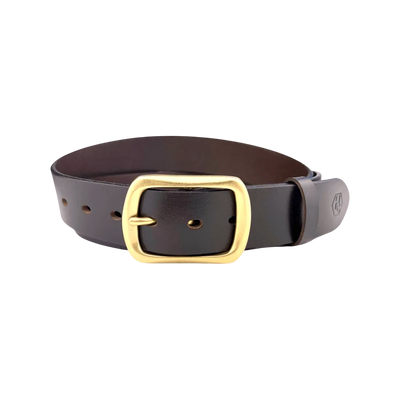
A pin belt uses a single prong - or occasionally two prongs - that passes through one of several pre-punched holes in the leather strap. The prong engages with the buckle frame to hold the belt at a fixed position. Pin buckle belts are available in two functional variations: a standard pin where the prong sits on a fixed bar across the buckle center, and a floating pin where the bar can move slightly to accommodate different hole positions more naturally.
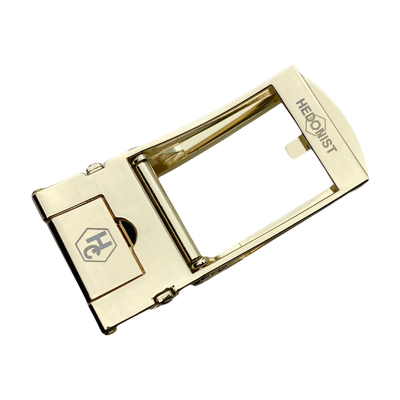
Clip belts use a different mechanism where the buckle clips or clamps onto the leather rather than using a prong and hole system. Pin and clip belts as a category describes both these traditional closure types as distinct from ratchet automatic systems. The defining characteristic of both is that they work with a fixed strap position - you choose a hole and the belt holds that position until you deliberately move it.
Pin buckle belts remain one of the most popular configurations in this format. They appeal to men and women who want a classic belt format in quality leather - the pin buckle is associated with formal dress belts, traditional leather accessories, and a classic aesthetic that ratchet mechanisms do not provide. This preference holds across both professional and casual carry contexts.
Pin Belt vs Ratchet Belt: The Honest Comparison
Pin belt vs ratchet belt is the most common format comparison in the leather belt category, and the decision is more practical than it is about preference. Ratchet belts offer micro-adjustment in small increments without requiring pre-punched holes - the strap moves continuously along a track rather than snapping to fixed positions. This provides more precise fit adjustment and eliminates the gap between available hole positions that pin belts create when a body fluctuates slightly between sizes.
Pin belts provide a different set of advantages. The buckle profile is lower and sleeker because pin buckle mechanisms are simpler than ratchet mechanisms. This matters specifically for formal wear and dress belts where the buckle's visual profile under a jacket or against a dress shirt is visible. A ratchet buckle's additional height and mechanism visibility reads as casual in formal contexts where a slim pin buckle reads as appropriate. Pin belts also work with any standard leather strap without requiring specific ratchet-compatible strap backing, which makes them more versatile as replaceable accessories.
Men who choose ratchet mechanisms for dress belt contexts are typically drawn to the no-holes design, which keeps the strap smooth and clean-edged without the hole row that pin belts require. This is where the formats diverge most clearly: pin belts provide the traditional aesthetic and slim buckle profile, ratchet belts provide the hole-free strap and micro-adjustment. Our ratchet belts guide covers the ratchet format in complete detail for comparison.
Full-Grain Leather in Pin Belt Construction
The pin belt format's durability depends on two points: the leather at the buckle attachment and the leather at the hole row. At the buckle attachment, the leather is folded and stitched around the buckle bar - this fold takes concentrated stress with every buckling and unbuckling cycle. At the hole row, each hole is a deliberate perforation in the leather that concentrates stress when the prong is under tension. Full-grain vegetable-tanned leather handles both stress points better than lower grades because the natural fiber structure at the outer surface of the hide remains intact.
In lesser leather grades, the buckle attachment fold cracks within the first year of daily wear because the processed leather lacks the fiber density to handle repeated folding under tension. The hole edges in lower-grade leather tear progressively outward from the prong stress, eventually making specific holes unusable and reducing the belt's effective adjustment range. Full-grain leather at the hole edges develops a slight smoothing and darkening from prong contact rather than tearing - the fiber density distributes the stress rather than concentrating it at the perforation edge.
Vegetable tanning produces leather that develops patina at the most-used hole and at the buckle fold - a darkening and burnishing that makes these stress points more visually refined rather than obviously worn. A full-grain vegetable-tanned pin belt at three years of daily wear shows its use in a way that reads as quality rather than deterioration. Chrome-tanned and corrected leather at the same duration shows cracking at the buckle fold and tearing at the holes.
"Pin buckle belts are the format most people are familiar with, which means they are also the format most people have worn in poor quality without realizing what a quality version feels like. A full-grain vegetable-tanned pin belt has a different weight and hand than the belts most men and women have carried. The buckle fold stays supple rather than cracking. The leather develops character at the holes rather than tearing around them. The difference is in the material."
Over 2,500 customers have reviewed Hedonist Chicago leather goods and rated us 4.78 stars on average. Personalization through hot stamping and foil stamping in gold, silver, black, or white is available on every belt - up to 40 characters, adding 1-2 business days to dispatch. See our personalization page for details.
Sizing Pin and Clip Belts
Pin belt sizing is more nuanced than ratchet belt sizing because the hole positions determine available fit, and the holes are at fixed intervals rather than continuous. Standard pin belts have holes punched at 1-inch intervals, with five holes total - the middle hole is the intended wear position, with two holes on either side for adjustment. A belt sized to your waist measurement at the middle hole gives you two inches of adjustment in each direction.
The most common sizing mistake with pin belts is ordering based on waist size rather than current belt size. If you wear a 34-inch belt currently, order a 34-inch pin belt. If you measure your waist at 34 inches but your current belt is 36 inches, order the belt size you currently wear comfortably rather than your waist measurement - these are different numbers for most people because belts are measured differently than waist circumference.
Pin belt sizing and fit is a common question from women specifically, particularly around brown dress belt options. Women's pin belts use the same sizing logic as men's but are often available in narrower widths - 3/4 inch to 1 inch for dress applications compared to the 1.25 to 1.5 inch standard in men's dress belts. Width selection for women's pin belts follows the same proportion logic as other belt widths: narrower belts for narrower loops, matched to outfit formality.
Belt Width and Buckle Style
Pin buckle belts are available in widths ranging from 3/4 inch for very formal dress applications to 1.5 inches for casual and business casual wear. The width should be matched to the trouser loop width - a belt wider than the loop creates the uncomfortable situation of forcing loops to stay partially open, which distorts the trouser fabric and creates a visual break at the waistband.
Buckle style in pin belts affects both visual formality and practical function. A simple rectangular frame buckle in polished silver or gold reads as formal and suits professional and dress contexts. A more textured or decoratively shaped buckle reads as casual regardless of the leather quality. For professional contexts where the belt will be partially visible under a jacket, a slim rectangular pin buckle in silver or gold with a clean edge provides the appropriate formal signal without drawing attention to itself.
Belt pins, the prongs themselves, are available in single and double configurations. Double-prong pin belts are often found in western-style or decorative belt designs rather than professional dress applications. Single-prong pin buckle belts are the standard for professional and dress wear. The single prong engages more cleanly, creates less visual bulk at the buckle, and wears more evenly across the hole it uses than double-prong designs.
Pin Clip Belts for Everyday Wear
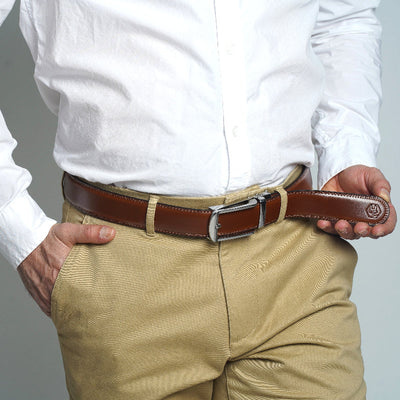
The pin clip belt category covers everyday wear applications where the classic closure format is preferred for its simplicity and proven reliability. Clip belts as a specific format use a clasp mechanism rather than a prong, which eliminates holes entirely but provides a fixed rather than adjustable closure. Clip belts suit very consistent waist measurements and formal contexts where a completely clean strap edge is the priority.
Belts with clips are most common in formal dress applications where the smooth strap edge of a clip belt against dress trousers creates a cleaner silhouette than a hole-punched pin belt strap. Clip belts for everyday wear suit men and women whose weight and waist measurement are very stable - the fixed clip position has no adjustment range, making fit precision at the time of sizing critical.
For everyday casual and business casual contexts, standard pin belts with five-hole adjustment provide more practical versatility than clip designs. The adjustment range accommodates natural weight fluctuation, different trouser cuts, and the variation between morning and evening measurements that affects how a belt sits throughout the day. Browse our pin and clip belts collection to compare available configurations. For belt care guidance, see our leather belt styling guide and our women's belt guides at ultimate guide to women's leather belts and women's leather belts guide.
Maintaining a Pin Belt
Pin belts require attention at two specific points: the buckle fold and the holes. The buckle fold is the highest-stress point in any pin belt - the leather here bends under tension with every wear. Conditioning this area every three to four months maintains the leather's suppleness and prevents the drying and cracking that concentrated stress creates at fold points in unconditioned leather. Apply conditioner specifically at the fold area rather than just across the exterior face of the belt.
The holes develop a slight darkening and smoothing from prong contact over time. This is normal patina in full-grain leather and does not indicate damage. If a specific hole shows fraying rather than smooth darkening, the leather grade was insufficient for the stress that prong use creates at that point. In full-grain vegetable-tanned leather, the holes develop character rather than damage across years of daily use.
Pin Belts for Women
Women's pin belt options follow the same material and construction logic as men's designs but in proportions suited to women's trouser and dress loops. Women's dress belt widths are typically 3/4 inch to 1 inch - narrower than men's dress belts because women's trouser loops are designed for narrower belt widths. A pin belt at the correct width for women's clothing sits flat in the loops without forcing them open, which would create the fabric distortion at the waistband that an oversized belt causes.
Women specifically look for pin belt designs in classic neutral colors for professional wear, and brown is consistently one of the most requested options. A brown pin belt in full-grain vegetable-tanned leather for women develops the same patina character as men's brown leather belts - the hole row darkens and burnishes, the buckle fold develops a polished smoothness, and the exterior develops character from daily carry. Brown leather coordinates with warm-tone outfits and brown shoe combinations in women's professional wardrobes in the same way it does in men's.
Interest in clip belts for women often goes beyond basic dress belt function - many women look for belts that serve as visual accessories rather than purely functional waistband elements. Pin and clip belts in distinctive colors and with decorative buckle options provide this visual character while maintaining the slim, clean profile that makes the format appropriate for professional and semi-formal contexts. For women's belt guidance across all formats, our ultimate guide to women's leather belts covers selection, sizing, and styling in comprehensive detail.
Choosing Between Pin Belt Configurations
Within the pin belt format, the most practical configuration decisions are hole count and belt width. Standard five-hole belts with the middle hole as the intended wear position provide two inches of adjustment range in each direction. Extended hole configurations - seven or nine holes - provide more adjustment range at the cost of a longer visible row of unused holes below the buckle. For most wearers, five holes provides adequate range. For those whose weight fluctuates more significantly, extended hole belts prevent the situation of using the last available hole and having no further adjustment range.
Belt width selection should be driven by the loop width on the trousers or dress the belt will be worn with most frequently. Men's dress trousers typically accept 1.25 to 1.5 inch belts. Men's casual trousers and jeans accept 1.5 inch belts. Women's dress trousers and skirts typically accept 3/4 to 1 inch belts. Wearing a belt wider than the loop creates the uncomfortable appearance of loops that cannot close fully around the belt - a small but visible detail that undermines the polished appearance a quality pin belt provides. For complete belt selection guidance across all formats, our comprehensive guide to leather belts for men covers width selection in practical detail.
Pin Clip Belts and Chicago Leather Quality
A meaningful portion of belt buyers specifically seek locally-designed leather goods as a quality signal. Hedonist Chicago pin and clip belt designs go through a long selection process, design discussions and sampling, with manufacturing partners we vet directly for the material and construction standards our collection requires. The belt design process starts with specific functional requirements - strap thickness, buckle proportions, hole spacing, and edge finishing - rather than with appearance and works backward.
Many men compare pin and ratchet formats before committing to either, even when they start out specifically researching pin belts. The honest comparison is that ratchet belts provide better fit precision and ratchet dress belt options are growing as men discover automatic mechanisms in formal contexts. Pin belts retain the advantage of a slimmer, more traditional buckle profile and a lower mechanism complexity that some men prefer in formal dress contexts. Both formats in full-grain vegetable-tanned leather provide the material durability that cheap alternatives in either closure type cannot. Chicago belts in both formats share the same full-grain construction standard across our collection.
Many of these men are researching quality alternatives to the standard belt market. Pin buckle belt buyers are often in the same research position - they have experienced poor quality in the format they prefer and are looking for a version built to last. The answer in both cases is the same: full-grain vegetable-tanned leather with saddle-stitch construction and hand-burnished edges, regardless of which closure mechanism the belt uses.
Track belts and track belts for men - ratchet-style belts marketed under this alternate name in some regions - use the same automatic buckle mechanism as standard ratchet belts and benefit from the same strap quality considerations. The ratchet format is the most actively sought leather belt configuration for men despite the traditional dominance of the pin buckle format. Our ratchet belts collection covers this format in detail for those researching the alternative to pin and clip.
Browse our full leather belts collection to compare pin and clip designs alongside ratchet and automatic belt formats. Our ratchet belts collection covers the alternative format. For women's pin belt options, our women's leather belts collection covers pin, clip, and ratchet designs in women's sizing. For a complete leather belt selection guide, read our best leather belts guide and our comprehensive guide to leather belts for men.

Leave a comment