Handmade Luggage Tags: Durable Leather Travel Identification
Handmade luggage tags serve critical function beyond simple bag identification by providing secure contact information attachment that survives baggage handling systems while remaining legible and intact through years of international travel. Our luggage tags collection features work from select artisan workshops using hand-stitched construction, full-grain vegetable-tanned leather, and secure attachment methods creating handcrafted luggage tags that withstand the stress baggage handling creates without the strap failures, information card deterioration, or structural damage characterizing mass-produced alternatives. These artisan leather luggage tags demonstrate how traditional construction methods combined with appropriate material selection create travel accessories worthy of multi-year service life protecting valuable identification information through demanding conditions in these handmade bag tags.
The difference between quality handmade luggage tags and factory equivalents matters particularly for items experiencing extreme conditions: mechanical baggage handling, exposure to weather during tarmac operations, compression in cargo holds, and general abuse throughout travel journeys. Mass-produced luggage tags often use thin leather providing inadequate durability, plastic attachment straps breaking under stress, or adhesive-based construction failing when baggage handling creates forces exceeding bonding strength. Handcrafted leather luggage tags address these failure modes through construction techniques prioritizing survival under travel stress: appropriate leather thickness resisting tearing and abrasion, reinforced attachment loops withstanding mechanical handling forces, and saddle-stitch creating seams that maintain integrity despite the punishment baggage systems deliver in these artisan travel tags.
This guide examines construction techniques creating durable handmade luggage tags, attachment system security preventing tag loss during travel, information protection methods maintaining contact detail legibility, leather thickness requirements for baggage handling survival, and how different luggage tag formats serve specific identification needs. Whether you're replacing a failed travel tag or selecting identification for new luggage, understanding these construction fundamentals helps identify handmade leather luggage tags worthy of investment versus those claiming artisan status while using shortcuts compromising identification security and durability. For comprehensive context on handmade leather accessories, see our complete guide to handmade leather goods.
Hand-Stitched Construction for Travel Durability
Saddle-Stitch Under Extreme Stress
Hand-stitched luggage tags use saddle-stitch construction where two needles on opposite ends of waxed thread pass through pre-punched holes from different directions, creating interlocking pattern that remains secure even if thread breaks at specific points. This handcrafted luggage tag technique proves essential for accessories experiencing the extreme stress baggage handling creates: mechanical conveyor abrasion, impact forces from bag drops, and general punishment throughout cargo handling systems. Machine lock-stitch used in factory luggage tags creates continuous thread vulnerable to complete seam failure if breakage occurs anywhere along its length, making saddle-stitch's redundant construction critical for handmade leather luggage tags intended to survive years of international travel rather than single trips in these artisan bag tags.
The thread used in artisan leather luggage tags measures significantly thicker than machine stitching thread, providing durability through having more material resisting the abrasion baggage systems create. The wax coating on thread used in handmade travel tags serves dual purposes: waterproofing against moisture exposure during tarmac operations while providing lubrication that prevents friction damage to leather fibers during the constant flexing and stress travel creates in these handcrafted luggage tags.
Stitch spacing in handmade luggage tags typically measures 4-5mm providing balance between seam strength and construction efficiency. Closer spacing in handcrafted leather luggage tags creates stronger seams but requires more labor and potentially weakens leather if holes are punched too densely. Wider spacing reduces construction time but compromises seam integrity under the extreme stress travel creates. Quality construction in artisan travel tags optimizes spacing for the specific leather thickness and anticipated baggage handling stress rather than using arbitrary standard in these handmade bag tags.
Reinforcement at Critical Stress Points
Attachment loop areas in handmade luggage tags experience concentrated stress as bags swing from conveyor movements and handling forces transmit through the attachment point. Quality handcrafted luggage tag construction addresses this through specific reinforcement techniques: leather folded multiple times at loop areas creating substantial thickness, additional stitch rows distributing stress across larger areas, and sometimes metal grommets or rivets providing mechanical reinforcement beyond stitching alone. The attachment reinforcement in artisan leather luggage tags prevents the premature failures characterizing mass-produced alternatives where attachment loops represent the most common failure point in these handmade travel tags.
Corner stress points in handmade luggage tags experience forces as tags flex and bend during baggage handling. Quality construction in handcrafted leather luggage tags uses gradual stitch turns at corners rather than sharp angles that concentrate stress. The corner reinforcement in artisan travel tags often includes additional stitch passes or slightly closer stitch spacing distributing forces that would otherwise cause stitching failure or leather tearing in these handmade bag tags.
Baggage handling systems create forces that casual luggage tag construction cannot survive. We've examined failed tags from travelers seeking handmade replacements. The damage patterns reveal consistent failure modes: attachment loops torn where inadequate reinforcement met mechanical handling stress, seams separated where machine stitching couldn't withstand baggage system forces, or complete structural failure where thin leather lacked protective capability. Quality handmade construction addresses each failure mode through reinforced attachment loops, saddle-stitch creating seams surviving travel stress, and appropriate leather thickness resisting the punishment baggage handling delivers.
Attachment System Security
Loop Construction and Materials
Attachment loops in handmade luggage tags must withstand substantial forces as bags move through mechanical handling systems. Leather loops in handcrafted luggage tags provide traditional aesthetic while requiring proper thickness and reinforcement for travel durability. The leather loop construction in artisan leather luggage tags typically uses material measuring 3-4mm thick, often folded multiple times at the attachment point creating even greater thickness resisting tearing forces mechanical handling creates in these handmade travel tags.
Some handmade luggage tags incorporate metal cable or chain attachment providing maximum security against loss during travel. The metal attachment in handcrafted leather luggage tags eliminates the tearing risk leather loops face while adding slight weight and industrial appearance. The cable selection in artisan travel tags should use stainless steel resisting corrosion from weather exposure during tarmac operations in these handmade bag tags.
Attachment Point Reinforcement
Where attachment loops connect to luggage tag bodies in handmade construction, reinforcement becomes critical because this junction experiences maximum stress during baggage handling. Quality handcrafted luggage tag construction uses multiple leather layers at attachment points, creating substantial thickness distributing forces across larger areas. The reinforcement in artisan leather luggage tags often includes rivets or grommets providing mechanical fastening that supports stitching rather than relying solely on thread tension in these handmade travel tags.
The attachment loop diameter in handmade luggage tags affects both security and functionality. Larger loops in handcrafted leather luggage tags accommodate various bag handle sizes but create more material potentially catching on baggage system components. Smaller loops provide minimal profile reducing catching risk in artisan travel tags but may not fit all handle configurations. Quality construction balances these considerations through loop sizing appropriate for standard luggage handles while maintaining slim profile in these handmade bag tags.
Leather Selection for Baggage Handling Survival
Thickness Requirements for Protective Function
Handmade luggage tags typically use leather measuring 2.5-3.5mm thick providing durability that survives baggage handling abrasion and impact while maintaining reasonable tag dimensions. This thickness range in handcrafted luggage tags creates protective barrier resisting tearing from mechanical handling and impact damage that would destroy thinner material. Lesser thickness compromises survival capability in artisan leather luggage tags while excessive thickness creates bulky tags potentially catching on baggage system components in these handmade travel tags.
The leather firmness in handmade luggage tags affects durability as much as thickness because soft leather lacks structure resisting abrasion and impact while excessively firm leather becomes brittle potentially cracking under the flexing stress travel creates. Full-grain vegetable-tanned leather in handcrafted leather luggage tags typically achieves good balance between adequate protective firmness and flexibility surviving the constant bending and stress baggage handling creates in these artisan travel tags.
Full-Grain Leather Advantages in Travel
Full-grain vegetable-tanned leather provides optimal material for handmade luggage tags because the intact grain surface contains strongest fibers resisting the abrasion baggage systems create while vegetable tanning produces material accepting hand-stitching and developing attractive patina rather than simply deteriorating under travel stress. The natural grain in handcrafted leather luggage tags maintains integrity through years of baggage handling while lesser grades show surface cracking or delamination from the punishment mechanical systems deliver in these artisan travel tags.
The vegetable tanning process in artisan leather luggage tags creates material resisting moisture exposure during tarmac operations better than chrome-tanned alternatives. The natural tannins provide some water resistance in handmade travel tags while allowing vapor transmission preventing moisture accumulation that would accelerate deterioration. Lesser tanning methods in factory luggage tags often produce material vulnerable to moisture damage from weather exposure in these handmade bag tags.
Lesser leather grades used in factory luggage tags fail to provide adequate travel durability. Top-grain leather has been sanded to remove the natural grain layer in handcrafted leather luggage tags. Genuine leather represents bonded scraps providing minimal structural integrity in handmade luggage tag applications where material quality directly affects survival through demanding baggage handling systems in these artisan travel tags.
Information Protection and Legibility
Contact Information Security
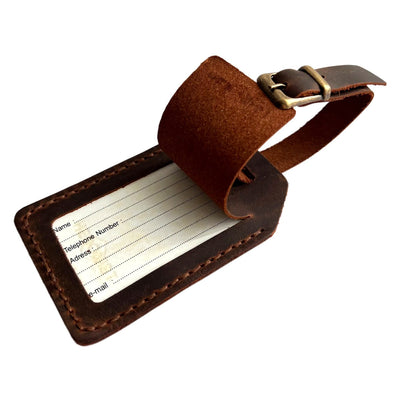
Information card protection in handmade luggage tags requires balance between accessibility for legitimate identification and security preventing unauthorized access to personal contact details. Covered pocket designs in handcrafted luggage tags protect information cards from weather exposure and casual viewing while allowing airline staff or found luggage services to access details when needed. The pocket construction in artisan leather luggage tags must maintain card security during baggage handling without making authorized access difficult in these handmade travel tags.
Some handmade luggage tags incorporate privacy flaps or shields covering printed contact information while leaving name visible for bag identification. This design in handcrafted leather luggage tags balances identification function with privacy concerns about displaying full contact details publicly on bags. The privacy feature construction in artisan travel tags requires secure attachment preventing loss during baggage handling while maintaining coverage protecting information from casual observation in these handmade bag tags.
Information Display Methods
Direct stamping or embossing on leather surfaces in handmade luggage tags provides permanent identification that cannot separate from the tag during travel. This approach in handcrafted leather luggage tags eliminates the card loss risk pocket designs face while creating permanent display of contact information. The stamping durability in artisan leather luggage tags proves excellent when properly executed, maintaining legibility through years of travel and baggage handling in these handmade travel tags.
Replaceable information cards in handmade luggage tags allow contact detail updates when addresses or phone numbers change without requiring complete tag replacement. The card pocket construction in handcrafted luggage tags must secure cards against loss during baggage handling while allowing easy replacement when information updates become necessary. Quality pocket design in artisan leather luggage tags achieves card security through appropriate pocket depth and optional closure mechanisms in these handmade bag tags.
Edge Finishing for Travel Conditions
Hand-Burnishing Under Abrasive Stress
Edge finishing in handmade luggage tags affects durability significantly because edges experience maximum abrasion during baggage handling as tags scrape against conveyors, other bags, and mechanical system components. Hand-burnishing creates sealed, smooth edges in handcrafted leather luggage tags through friction and compound application providing superior abrasion resistance compared to painted edges that chip away under travel stress. The burnished finish in artisan travel tags maintains edge sealing and appearance through years of baggage handling in these handmade bag tags.
The burnishing process for handmade luggage tags involves multiple compound applications and friction burnishing creating protective seal that withstands abrasive conditions travel creates. This edge treatment in handcrafted leather luggage tags proves more labor-intensive than factory edge painting but provides durability justifying the additional construction time. Quality edge finishing in artisan leather luggage tags requires skill ensuring consistent burnishing across all edges in these handmade travel tags.
Edge Exposure During Travel
All edges in handmade luggage tags experience abrasive contact during baggage handling as tags drag across surfaces throughout mechanical systems. This universal edge exposure in handcrafted luggage tags requires consistent finishing quality across the entire piece rather than prioritizing only highly visible areas. The comprehensive edge treatment in artisan leather luggage tags creates uniform abrasion resistance maintaining appearance and protective sealing through extended travel use in these handmade bag tags.
Edge finishing quality separates luggage tags surviving years of travel from those requiring replacement after minimal baggage handling. Proper hand-burnishing requires multiple applications and careful technique that factory production eliminates for cost savings. We've rejected otherwise well-constructed luggage tags for edge finishing not meeting our durability standards because edges experience maximum abrasive stress during travel. The finishing investment creates tags maintaining appearance and protective function through years of international baggage handling rather than showing premature edge deterioration.
Luggage Tag Format Options
Standard Rectangle Tags
Standard rectangular handmade luggage tags provide traditional format with adequate space for contact information while maintaining compact dimensions appropriate for bag attachment. This format in handcrafted luggage tags suits most travelers through proven functionality and straightforward construction allowing focus on durability rather than complex design features. The rectangular design in artisan leather luggage tags creates efficient use of leather while providing adequate information display area in these handmade travel tags.
Specialty Shapes and Designs
Some handmade luggage tags incorporate distinctive shapes making bag identification easier in luggage carousels while maintaining construction durability. Circular, oval, or custom-shaped designs in handcrafted leather luggage tags provide visual distinction but may require additional leather and construction complexity. The specialty shape construction in artisan travel tags must maintain structural integrity despite the design features in these handmade bag tags.
Business Card Holder Integration
Certain handmade luggage tags incorporate business card holders allowing easy information updates through card replacement rather than requiring permanent stamping. This design in handcrafted luggage tags provides flexibility for travelers whose contact information changes periodically. The card holder construction in artisan leather luggage tags must secure cards against loss during baggage handling while allowing easy replacement when needed in these handmade travel tags. Compare with our handmade card holders collection for everyday card storage solutions.
Care and Maintenance for Travel Use
Post-Travel Cleaning
Handmade luggage tags accumulate travel residue including baggage system grease, tarmac contaminants, and general handling soil requiring cleaning after trips. Wipe handcrafted leather luggage tags with slightly damp cloth removing accumulated contamination before it penetrates leather pores. For stubborn soil on artisan travel tags, leather cleaner formulated for vegetable-tanned material removes residue without damaging finish in these handmade bag tags.
Conditioning handmade luggage tags after extended travel maintains leather suppleness and prevents drying that could compromise durability. Apply leather conditioner formulated for vegetable-tanned material, working it into handcrafted luggage tags using circular motions. The conditioning in artisan leather luggage tags prevents brittleness that would reduce protective capability during subsequent travels in these handmade travel tags.
Attachment System Inspection
Regular inspection of attachment loops and connection points in handmade luggage tags helps identify wear before complete failure occurs. Examine stitching at attachment areas in handcrafted leather luggage tags for fraying or looseness indicating stress approaching seam capacity. Check leather loops or metal cables in artisan travel tags for wear or damage potentially compromising attachment security during future travel in these handmade bag tags.
Value Proposition for Travelers
Cost vs Travel Life Analysis
Quality handmade luggage tags using full-grain vegetable-tanned leather and proper hand-stitched construction typically cost 30-60 dollars depending on design complexity and features. This pricing in handcrafted leather luggage tags reflects material costs, skilled labor for reinforced construction, and small-batch production. However, the service life in artisan travel tags extends through years of international travel, typically lasting longer than the luggage itself, creating annual costs of 2-4 dollars compared to factory alternatives requiring replacement every one to two years at 10-20 dollars creating annual costs of 5-20 dollars in these handmade bag tags.
Why Choose Our Luggage Tags Collection
Our luggage tags collection features work from select artisan workshops chosen for construction techniques prioritizing travel survival through reinforced attachment loops, appropriate leather thickness, and comprehensive edge finishing. Every handcrafted luggage tag demonstrates construction standards creating accessories that survive years of baggage handling rather than requiring replacement after minimal travel. The leather selection in these artisan leather luggage tags emphasizes protective thickness and full-grain quality in handmade travel tags.
Free personalization through hot stamping adds individual significance to handmade luggage tags, with initials, names, or contact details appearing on leather surfaces creating distinctive travel identification. The small workshops we partner with for handcrafted leather luggage tags maintain quality standards ensuring durability remains primary design consideration in these artisan travel tags. Browse our complete handmade leather goods collection for additional travel and everyday accessories using similar construction standards.
Frequently Asked Questions
How long should a handmade luggage tag last?
Quality handmade luggage tags using full-grain vegetable-tanned leather and proper hand-stitched construction should last ten to fifteen years of regular travel, often outlasting the luggage itself. The leather develops attractive patina while maintaining structural integrity and attachment security throughout this period.
Can handmade luggage tags survive baggage handling?
Yes, appropriate leather thickness (2.5-3.5mm) combined with reinforced attachment loops and saddle-stitch construction creates tags surviving mechanical baggage handling systems. Quality construction specifically addresses the extreme stress travel creates through reinforcement at critical points.
How do I protect contact information in luggage tags?
Options include covered pockets protecting information cards from weather and casual viewing, privacy flaps covering printed details while leaving names visible, or direct stamping on leather providing permanent identification. Choose based on your privacy preferences and information update frequency needs.
Can handmade luggage tags be repaired?
Yes, hand-stitched luggage tags support professional repair when needed. Attachment loops can be reconstructed, stitching can be renewed, and edges can be refinished. The fundamental leather piece remains sound supporting these interventions, making repair economically sensible for quality construction.
What attachment type is most secure?
Both reinforced leather loops and metal cable attachments prove secure when properly constructed. Leather loops provide traditional aesthetic while metal cables offer maximum tearing resistance. Quality construction matters more than attachment material choice for travel security.
Do handmade luggage tags work for international travel?
Yes, quality handmade luggage tags are specifically designed to survive international baggage handling systems. The reinforced construction and appropriate leather thickness address the extreme stress international travel creates through multiple handling systems and extended journey durations.
How do I clean luggage tags after travel?
Wipe tags with slightly damp cloth after trips removing accumulated soil. Apply leather conditioner periodically maintaining suppleness. For stubborn contamination, use leather cleaner formulated for vegetable-tanned material. Regular maintenance extends service life significantly.
Can I update contact information in handmade luggage tags?
Options depend on design. Tags with replaceable information cards allow easy updates. Tags with direct stamping require professional re-stamping or new tags when information changes. Consider update frequency when selecting tag format.
Making the Right Choice
Choosing quality handmade luggage tags requires prioritizing construction fundamentals over superficial design elements. Examine attachment loop reinforcement for construction addressing stress concentration. Check leather thickness ensuring adequate protective capability for baggage handling survival. Verify edge finishing quality throughout the piece. These construction fundamentals in handcrafted leather luggage tags determine whether the piece survives years of travel or requires replacement from construction failures characterizing mass-produced alternatives in artisan travel tags.
Visit our complete luggage tags collection to explore standard and specialty format options combining hand-stitched construction, full-grain vegetable-tanned leather, and reinforced attachment systems creating accessories that withstand demanding baggage handling conditions. Whether you choose traditional rectangular designs or distinctive specialty shapes, focus on construction fundamentals determining whether your handmade luggage tag maintains secure bag identification through years of international travel while developing attractive patina or requires replacement from construction shortcuts creating failure modes factory alternatives exhibit in these artisan leather luggage tags designed for genuine long-term travel identification in handmade bag tags built to survive baggage handling stress.
Over 1,312 customers have reviewed Hedonist Chicago leather goods and rated us 4.78 stars on average. For more on our handmade range, see our Hedonist Chicago handmade collection overview, handmade passport cases guide.
Our handmade luggage tags are available as custom leather luggage tags and personalized leather luggage tags through hot stamping. Leather bag tags in full grain leather luggage tags construction withstand baggage handling conditions that destroy factory alternatives within a few trips. Vegetable tanned luggage tag leather develops a distinctive patina through travel - each tag becomes more characterful over years of use. Monogrammed luggage tags in leather make immediate identification on any baggage carousel. Artisan leather luggage tags from Hedonist Chicago use the same construction standard as every other piece in the handmade range. Leather travel accessories built to this standard serve as both functional travel tools and considered gifts. A leather suitcase tag personalized with initials is one of the most practical travel gifts available. Durable luggage tags in full-grain leather outlast the bags they travel with.
Leave a comment