How to Style Leather Accessories for Women: Wallet, Belt, and Everyday Carry
Leather accessories work together or they work against each other. A quality wallet in the wrong color against the bag it lives in, or a belt in a different leather tone family from the shoes it echoes, creates low-level visual friction that no individual piece can fix. Getting the coordination right is simpler than most styling guides suggest: it comes down to tone family, dress code awareness, and knowing which piece should be the single point of interest. This guide covers how to coordinate a leather wallet, belt, and bag as a coherent set, how to adapt that set across professional and casual contexts, and how to use statement colors without creating competition.
How Women's Leather Accessories Work Together
In a woman's everyday carry, leather appears in more places than in a man's: wallet, belt, bag, shoes, and watch band can all be leather simultaneously. This creates more coordination opportunity and more places for the coordination to break down. The practical approach is to treat the bag as the anchor. It is the largest and most visible leather piece in most outfits. Coordinate the wallet and belt to the bag rather than to each other independently.
A tan leather bag with a cognac belt and a brown leather wallet is a warm-tone combination where each piece belongs to the same tone family. The variation in shade within the family looks like considered layering, not mismatch. A tan leather bag with a black belt and a red wallet is three different reference points pulling in three different directions. No amount of individual piece quality fixes a coordination problem. That is a structural issue solved by the tone family rule, not by upgrading individual pieces.
The wallet lives inside the bag most of the time, which creates a practical consideration: the wallet's color needs to coordinate with the bag interior enough to be locatable, and with the bag exterior enough that when the wallet is visible on a table or at checkout, it does not create an obvious mismatch. A cognac wallet inside a dark brown bag is visible against the interior and looks natural on the table beside the bag. A bright red wallet inside a light tan bag is visible against the interior but creates a color conflict on the table. Our wallet color guide covers the practical and aesthetic dimensions of color selection across the full palette.
Tone Families and the Anchor Piece
Women's leather accessories fall into the same two primary tone families as men's: warm tones covering tan, cognac, brown, and dark brown, and cool-neutral tones covering black and dark charcoal. Every leather piece in an outfit should belong to one of these families.
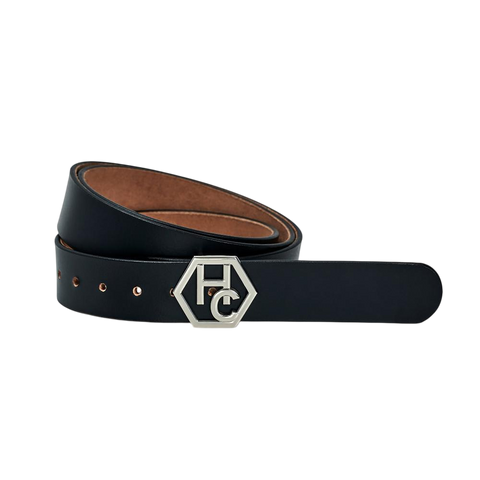
Black leather is the most versatile choice across professional and casual contexts. A black bag coordinates with a black belt and a black wallet in a way that requires no further thought. The coordination is automatic and works across every outfit color. Black full-grain leather develops a subtle gloss and burnishing at contact areas over time that looks more distinguished than it did new. For women who dress across a wide range of contexts and switch bags frequently, black is the lowest-friction starting point.
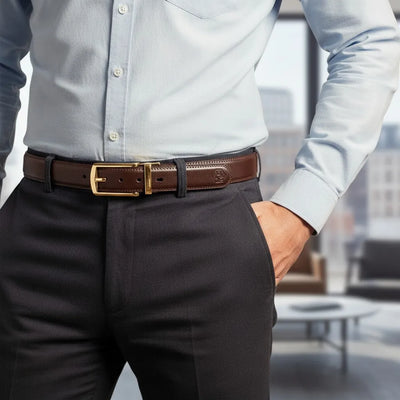
Warm tones are more expressive and develop more visible patina. A cognac bag, tan belt, and brown wallet create a warm-leather everyday carry that pairs naturally with cream, ivory, camel, and earth-tone outfits, with denim, and with most casual and smart casual wardrobes. Cognac in full-grain vegetable-tanned leather develops amber and honey tones at contact areas over months of daily carry. The bag's handle contact areas, the belt's buckle fold, and the wallet's card slot edges all develop in parallel when they share the same leather grade. For women whose wardrobe leans toward warm and natural tones, a warm-leather set is more cohesive than the same pieces in black. For more on how this parallel development works, read our guide to leather patina development.
Leather by Dress Code
Dress code determines what leather is appropriate, and understanding this prevents over-dressing and under-dressing with accessories rather than with clothing.
In formal and business professional contexts, dark leather is standard. Black is the most formal option across bag, belt, and wallet. Dark brown is a close second and suits professional wardrobes built around navy, charcoal, and dark grey. The goal in formal contexts is for leather accessories to be present but not conspicuous. They complete the look without demanding attention. A structured bag in black or dark brown, a slim belt in the same tone, and a wallet that disappears into the bag when not in use is the professional formula.
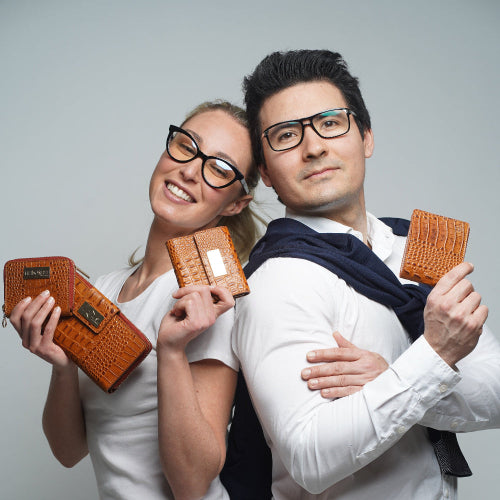
In business casual contexts, the range opens. Cognac, tan, and medium brown work here in ways they would feel out of place in stricter formal environments. A cognac leather wallet is appropriate in a business casual context in a way that a bright statement color is not. Format opens up too. A trifold with coin storage, a longer wallet, or a compact zip design all work in business casual where a formal context might call for something more streamlined. Our women's leather wallets collection covers formats across the full color range, and our women's leather wallets guide covers format selection in practical detail.
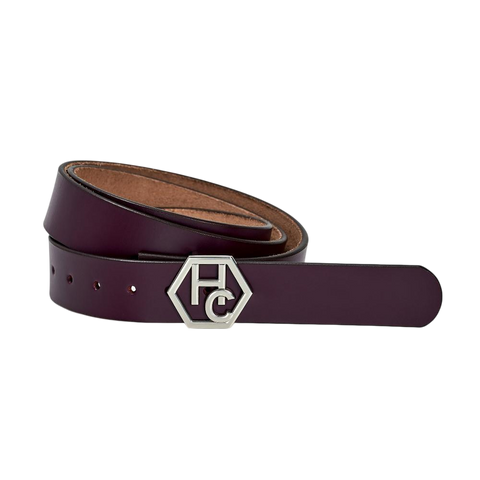
In casual contexts, statement colors become available. Pink, red, green, and burgundy work in casual and smart casual outfits when the rest of the look stays restrained. A pink leather wallet inside a neutral bag at a casual lunch is a deliberate personal accent. The same wallet in a formal business meeting is conspicuous in the wrong direction. Our women's leather belts collection covers belt styles and widths for women's wardrobe contexts across formal and casual dress codes. For a full breakdown of what works where, read our leather accessories dress code guide.
Statement Colors as a Single Accent
Statement color in women's leather accessories works on the same principle as statement color in clothing: one accent in a neutral outfit, not multiple competing accents.
Pink is the most versatile statement color for women's leather accessories because it pairs with more wardrobe contexts than most women expect. Against black, grey, navy, and camel, the most common everyday wardrobe bases, pink looks personal and considered without the boldness of red. A pink wallet inside a neutral bag, visible on a restaurant table or at checkout, functions as a quiet personal signature. Our pink wallets guide covers shades from blush to deeper rose and available formats.
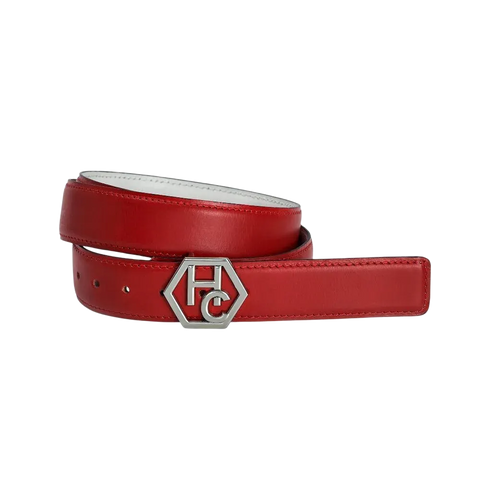
Red is the most practically useful statement color. It is immediately visible in any bag, which means you find it faster than a black or brown wallet every time you reach in, a daily functional advantage in addition to the aesthetic one. In full-grain vegetable-tanned leather, red develops a richer, more complex tone over months of daily carry. Our red wallets guide covers format options and how different shades of red work across outfit contexts.
Green in croco-embossed leather is the most distinctive option in the collection. The texture and color together create something that no neutral wallet approaches. It works as a statement piece in casual and smart casual outfits where accessories are allowed to be expressive. Our green croco leather wallets guide covers women's formats including trifold, travel, and compact zip designs.
The practical test for any statement color: does it work with the three outfits you wear most often? If yes for all three, it will work for most of your wardrobe. If it only works with one specific outfit, it will spend most of its time unused.
Belt Coordination for Women
A leather belt in women's outfits serves two functions simultaneously: it defines the waist and it introduces a leather tone into the outfit's color story. Getting the belt right means getting both functions right, the right width for the outfit's formality level and the right tone to coordinate with the bag and wallet.
Narrow belts suit dress and trouser contexts where the belt functions as a refined detail rather than an outfit anchor. Wider belts suit casual and smart casual outfits, over a coat, through jeans, or cinched at the waist of a loose dress, where the belt is a more deliberate visual element. In both cases, the leather tone should coordinate with the dominant leather tone in the outfit, not match it exactly. A cognac narrow belt with a dark brown bag and black shoes pulls the warm and cool elements into the same outfit without conflict because the belt stays within the warm-tone family that the bag establishes.
Browse our women's leather belts collection for styles across widths and finishes. For belt guidance including coordination with wallets and other leather accessories, our guide to choosing a leather belt covers the full decision in practical detail.
Texture in Women's Leather Accessories
Smooth leather is the most versatile base for women's leather accessories and works across every dress code and outfit texture. Croco-embossed and pebbled leather suit casual and expressive contexts where accessories are allowed to carry more visual weight.
The coordination rule for texture is the same as for color: one point of interest, not multiple competing ones. A croco-embossed wallet in green or burgundy against a smooth leather bag, smooth leather belt, and smooth leather shoes lets the wallet texture be the deliberate accent. Adding a pebbled leather bag and a textured belt in the same outfit creates visual competition that no individual piece quality can resolve.
Pebbled leather bags are extremely common in women's fashion, which means a smooth leather wallet inside a pebbled bag is a natural and common combination. The textures do not need to match. They need to not compete. A smooth cognac wallet inside a pebbled dark brown bag works because both belong to the warm-tone family and neither draws attention away from the other. Our embossed leather wallets and belts collection covers croco-embossed designs for women across colors and formats.
Building a Coordinated Leather Carry Over Time
The most considered everyday carry is not assembled all at once. It develops over time as individual pieces are chosen with the overall coordination in mind rather than in isolation.
The wallet is usually the right starting point because it is the piece most women interact with most frequently and most personally. Choose a tone family, warm or cool-neutral, and a leather grade. Full-grain vegetable-tanned leather is the material that makes coordination meaningful over time because it develops patina through daily use. A cognac wallet at six months of daily carry has developed contact-area character specific to how you use it. A belt in the same leather grade and tone family develops parallel patina over its own period of daily use. After a year of carrying both, the pieces develop a coherence that a recently purchased matching set cannot replicate.
For complete dress code guidance by context, read our leather accessories dress code guide. For men's coordination guidance, read our guide to styling leather accessories for men. For the broader style context, read our leather wallets as a style statement guide. Browse our women's leather wallets collection, our women's leather belts collection, and our leather accessories collection for the core pieces in matching full-grain vegetable-tanned leather across the same color range.
Leave a comment