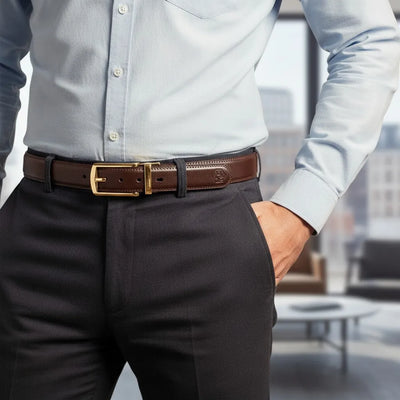
How to Choose a Leather Belt That Works With Everything
A leather belt is the most consistently visible leather accessory most people own. It runs across the full width of every outfit where it appears, at the waist, which means it is more present in the overall look than a wallet that stays in a pocket or a watch band that shows only at the wrist. Getting the belt right, in width, buckle, color, and leather grade, does more for a coordinated everyday look than any other single accessory decision. This guide covers how to choose a leather belt that works across the widest range of contexts, how to coordinate it with other leather pieces, and what separates a belt that holds up for years from one that needs replacing within months.
Width Is the First Decision
Belt width determines dress code compatibility more than any other single variable. A narrow belt in the wrong outfit looks fussy. A wide belt in a formal context looks out of place. Getting width right first makes every other decision easier.
Belts in the 1 to 1.25 inch range suit formal and business professional contexts. This width fits neatly through dress trouser waistbands, sits close to the waist without creating visual bulk, and coordinates with the slim silhouette that formal dress requires. A narrow belt in dark leather is the standard answer for any occasion where the clothing is formal.
Belts in the 1.25 to 1.5 inch range are the most versatile. This width suits business casual and smart casual contexts equally well, works with most trouser waistbands, and looks proportionate across a wide range of body types. Most men and women who want one belt that covers the majority of their wardrobe contexts choose a width in this range. Our leather belts collection covers this width range across colors and finishes.
Belts above 1.5 inches suit casual contexts, denim, and outfits where the belt is a deliberate visual element, not a background detail. A wider belt cinched over a coat or through high-waisted jeans is a styling choice, not just a functional one. For women who use belts as outfit anchors, wider belts suit that purpose well. Our women's leather belts collection covers widths suited to the full range of women's outfit contexts.
Pin Buckle vs Ratchet: Which to Choose
The buckle mechanism affects daily use more than most buyers consider before purchasing. Both pin and ratchet systems hold a belt securely. The difference is how you interact with them and what they look like on the waist.
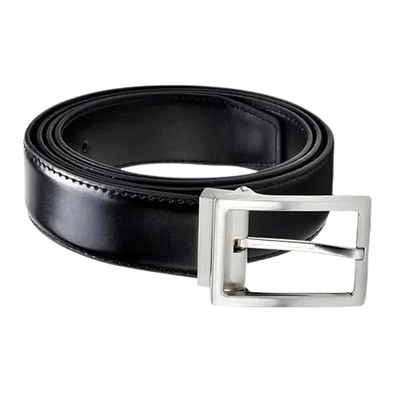
A pin buckle belt works through a series of punched holes at fixed intervals, typically 1 inch apart. Fit is adjusted by moving to the nearest hole. The prong and holes are visible on the exterior when the belt is worn. Pin buckles are the traditional format, appropriate across all dress codes from formal to casual, and available in every leather color and width. The limitation is fit precision: if your preferred fit falls between two holes, neither hole is quite right.
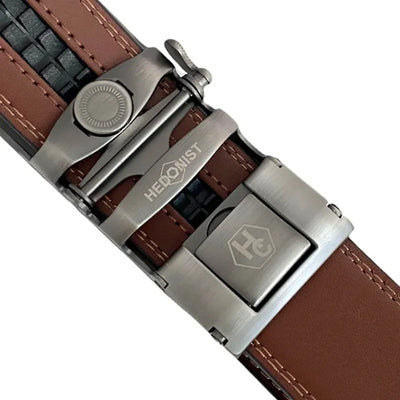
A ratchet belt uses a continuous track mechanism inside the belt, with a release lever on the buckle that allows the belt to be adjusted in small increments across the full length. There are no holes punched through the leather. The exterior surface of the belt is smooth and uninterrupted, which creates a cleaner visual profile than a hole belt. Fit is precise, not approximate. Ratchet belts suit business casual through casual contexts particularly well because the clean silhouette works in professional environments and the convenient adjustment mechanism suits daily use. Our ratchet leather belts collection covers this format for men in multiple colors and leather finishes.
The practical answer for most men who are choosing one belt to cover business casual through casual is a ratchet belt in cognac or dark brown. The precise fit, clean exterior, and versatile color work across the majority of everyday contexts without requiring a second belt for different outfit formalities. For formal contexts where a pin buckle is standard, a narrow black pin buckle belt remains the correct choice.
Color Selection and the Tone Family Rule
Belt color should coordinate with the dominant leather tone in the outfit, not match it exactly. The goal is tone family consistency, not shade precision.
Black is the most versatile belt color overall. It coordinates with black shoes, dark leather bags, and every outfit color without creating tension. In formal and business professional contexts, black is the standard. In casual contexts, black coordinates with dark denim, grey outfits, and monochrome looks. If you own one belt in black, it works across every dress code.
Brown, cognac, and tan are the warm-tone family. Within this family, variation in shade looks intentional. A cognac belt with tan shoes and a dark brown wallet is a warm-tone combination that works. A cognac belt with black shoes creates a tone family conflict that looks unresolved regardless of each piece's individual quality. Warm-tone belts are the natural choice for any wardrobe built on earth tones, camel outerwear, denim, and warm-palette clothing.
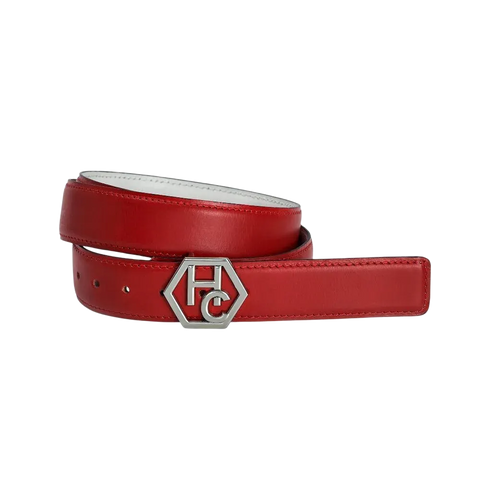
Statement colors in belts, burgundy, green, or red, follow the same rule as statement colors in wallets: one accent against a neutral outfit. A burgundy belt with a dark brown bag, neutral trousers, and a simple shirt is a deliberate, considered choice. The same belt with a patterned shirt and colored shoes creates competition, not coordination. For color guidance across the full leather palette, our wallet color guide covers the same tone family principles that apply to belt selection.
Leather Grade and Why It Matters for Belts
A belt takes more sustained mechanical stress than almost any other leather accessory. It flexes at the buckle position every time you put it on and take it off. The prong wears against the same hole hundreds of times. The exterior surface contacts clothing and sits against the body through a full day. These stress points are where leather grade becomes visible over time.
Full-grain vegetable-tanned leather handles belt stress through the same mechanism it handles wallet and watch band stress: the intact natural surface of the hide, where fiber density is highest, flexes without cracking and develops character at wear points instead of deteriorating. At the buckle fold and the most-used hole position, full-grain leather develops a burnished quality over months of daily wear. Lesser leather grades show cracking at these same points within the first year of regular use.
The vegetable tanning process produces leather that responds to wear by developing patina instead of simply wearing out. A full-grain vegetable-tanned leather belt at two years of daily use looks more individual and more considered than it did new. The burnishing at the buckle position, the slight darkening at the most-used hole, and the surface character that develops through contact with clothing all make the belt more personal over time.
Every belt in the Hedonist Chicago collection uses full-grain vegetable-tanned leather throughout. Over 1,312 customers have reviewed our leather goods and rated us 4.78 stars on average. Personalization through hot stamping and foil stamping in gold, silver, black, or white is available on leather belts, up to 120 characters, adding 1-2 business days to dispatch. See our personalization page for details.
Men's Belt Selection
For men, the belt is the leather accessory with the most visual presence in an outfit because it crosses the waistline at the center of the overall look. Getting it right makes every outfit feel more considered. Getting it wrong is visible in every context where the outfit is evaluated.
The practical starting point for most men is two belts: a narrow black pin buckle belt for formal and business professional contexts, and a ratchet belt in cognac or dark brown for business casual through casual. These two belts cover every dress code a typical men's wardrobe requires, and they coordinate with the widest range of shoe and wallet colors within their respective tone families.
Men who carry a leather wallet and wear a leather watch band should choose all three pieces within the same tone family. A cognac ratchet belt coordinates naturally with a brown or tan leather watch band and a cognac or dark brown wallet. The three pieces develop parallel patina over months of daily carry, creating a visual coherence that a recently assembled set cannot replicate. For detailed men's coordination guidance, read our how to style leather accessories for men guide. For the full men's belt range, browse our leather belts collection and our ratchet leather belts collection.
Women's Belt Selection
For women, belts serve a wider range of outfit functions than they do in men's dress. A belt can be a functional waist definition piece in a professional context, a deliberate style anchor in a casual outfit, or a statement accessory in its own right. This range means women's belt selection involves more variables than men's, but the core rules remain the same: width matches the outfit's formality level, color coordinates with the dominant leather tone, and leather grade determines how the belt holds up over time.
Narrow belts suit formal and professional contexts where the belt provides structure without visual presence. Wider belts suit casual contexts where the belt is a deliberate styling element, worn over coats, through high-waisted trousers, or cinched over dresses. The widest range of outfit use comes from a belt in the 1.25 to 1.5 inch range in cognac or dark brown, which works from business casual through casual across most women's wardrobe contexts.
For women whose wardrobe includes statement accessories, a belt in a distinctive leather tone or finish is a natural extension of that approach. A cognac belt with warm-tone outfits, a black belt with monochrome looks, and a statement-colored belt as a single accent in a neutral outfit all work when the belt coordinates with the other leather pieces in the look. For women's coordination guidance, read our how to style leather accessories for women guide. Browse our women's leather belts collection for styles across widths and finishes.
How to Choose One Belt That Works With Everything
The answer for most people is not one belt. It is two: one dark belt for formal and professional contexts, and one warm-tone belt for everything else. One belt that genuinely works across every dress code from formal to casual does not exist because formal dress code requirements and casual dress code possibilities are incompatible in a single piece.
The closest a single belt can come to universal versatility is a 1.25 to 1.5 inch ratchet belt in dark brown or cognac. This belt works from business casual through casual, covers the majority of everyday professional and social contexts for most people, and coordinates with the widest range of warm-tone leather accessories. For formal contexts, a separate narrow black pin buckle belt remains necessary. Two belts at this level of quality last years and cover the full wardrobe range without compromise.
For comprehensive belt guidance including construction details, buckle types, and coordination with wallets and other leather accessories, read our leather belts guide.
For comprehensive belt guidance including construction details, buckle types, and coordination with wallets and other leather accessories, read our leather belts guide. For wallet and accessory coordination guidance, read our leather wallets as a style statement guide. For which belt suits which dress code specifically, read our leather accessories dress code guide. For how full-grain leather develops patina at the buckle fold and wear points over time, read our guide to leather patina development.
Leave a comment