Leather Wallets as a Style Statement: How to Choose the Right Wallet for Your Look

A leather wallet is one of the few accessories that most men and women interact with every single day. It comes out at checkout counters, restaurant tables, and during every cash or card transaction. Yet most people choose a wallet based primarily on functionality: how many cards it holds, whether it has a coin pocket, how thin it sits in a pocket. Style enters the decision late, if at all.

This is a missed opportunity. A well-chosen leather wallet does not just hold cards. It communicates something about how you approach quality, and it coordinates with the rest of your leather goods in a way that elevates every outfit it appears in.

The Leather Quality Distinction

Before discussing color, format, or coordination, leather quality deserves attention because it determines whether the style investment holds up. A wallet in full-grain vegetable-tanned leather develops patina, the visible record of daily use that makes each wallet more individual and more personal over time. A wallet in genuine leather or bonded leather looks similar at purchase and deteriorates within twelve to eighteen months of daily carry.

The visual difference between these outcomes matters for styling. A wallet that has developed honest patina in quality leather looks considered and personal. A wallet that has cracked at the card slots and peeled at the corners looks like a placeholder. The style case for full-grain leather is not about premium branding. It is about whether the wallet looks better or worse at year two than it did at purchase. For a full explanation of how this process works, our guide to leather patina development covers what to expect at each stage of daily carry.

Color as a Style Decision

The color of a leather wallet is the most visible style choice in wallet selection, and it operates on two levels: coordination with other leather goods, and signal about personal aesthetic.

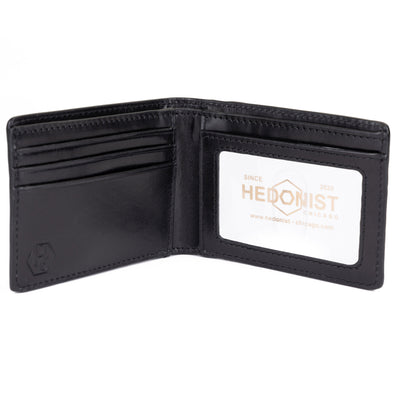
Black leather is the most versatile wallet color. It coordinates with every outfit and every bag without requiring thought. For anyone who switches regularly between bags of different colors, or who dresses across a wide range of formality levels, black is the lowest-friction choice. Full-grain black leather develops a subtle depth and surface polish over time that distinguishes it from the flat black of lesser leather.

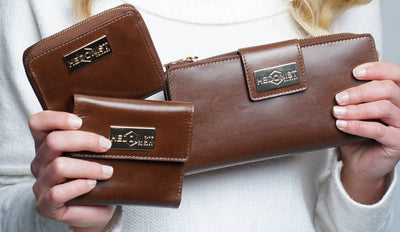
Brown and cognac are the warm-tone choices, and they are where full-grain vegetable-tanned leather shows its character most dramatically. Cognac leather develops amber and honey tones at contact points, the card slot edges, the exterior surface that contacts bag lining, while protected areas hold the original color. At a year of daily carry, a cognac wallet looks more individual than it did new. That evolution is a style asset.

Red is the statement color in the wallet category, and it earns that position practically as well as aesthetically. A red wallet is visible in any bag, against dark lining, among cluttered contents, under other items. The color serves a functional purpose alongside the aesthetic one. Red in full-grain vegetable-tanned leather develops burgundy depth at contact areas over months of daily carry, making the wallet look more complex over time. For a full breakdown of color selection across the complete palette, our wallet color guide covers every shade and its wardrobe implications.

Format as a Style Signal

The format of a wallet, bifold, trifold, long, slim card holder, communicates as clearly as the color in contexts where it is visible.

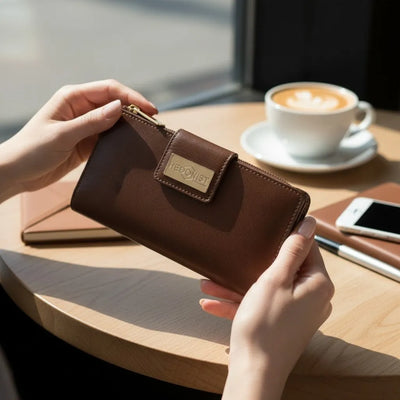
A slim bifold or card holder in dark leather suits professional settings well. A long wallet signals organizational preference and suits women who treat their wallet as a central everyday carry piece. A trifold in a distinctive color signals both practical thinking, coin storage and card organization, and personal aesthetic, choosing something specific over something generic.

The format should match actual carry volume. A wallet that cannot close properly because it is overstuffed looks worse than any color or material choice can overcome. Matching format to carry is the foundation that all other style decisions build on. Our women's leather wallets guide and our men's leather wallets guide cover format selection in practical detail.

Coordinating Wallet with Belt and Shoes

The most commonly cited leather coordination rule is matching wallet to belt and shoes. The actual rule is softer than matching: coordinate within a tone family, not shade-for-shade.

A cognac wallet with a tan belt and brown shoes is a warm-tone coordination that looks deliberate. A cognac wallet with a black belt is a tone-family conflict that looks unconsidered. The distinction is not about having identical leather. It is about keeping all leather pieces in the same temperature zone, warm or cool-neutral.

For women, the bag is often the most visible leather piece and serves as the anchor for wallet coordination. A dark brown bag with a cognac wallet creates warm-tone coherence. A black bag with a red wallet creates deliberate contrast that looks intentional, because red against black is a clear color relationship rather than a muddled one.

Belt selection and coordination is its own decision with width, buckle type, and dress code implications. Our guide to choosing a leather belt covers the full decision including pin versus ratchet, width by dress code, and tone family coordination. For complete coordination guidance by gender, our guide to styling leather accessories for men and our guide to styling leather accessories for women cover wallet, belt, and watch band coordination as a complete set.

Dress Code and Leather Accessories

The same leather wallet that suits a casual weekend context can feel out of place in a formal professional one. Dress code determines which leather colors, formats, and textures are appropriate, and understanding those constraints makes accessories work harder across more of daily life.

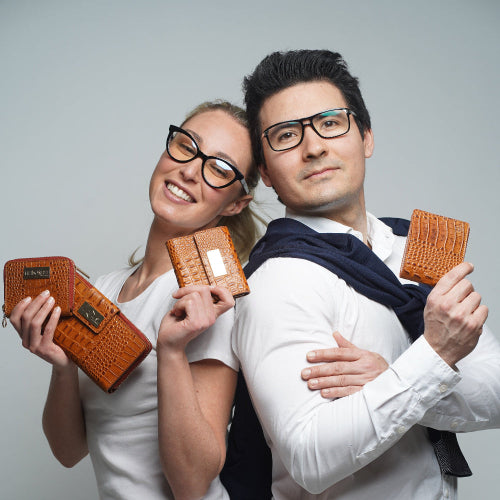
In formal and business professional contexts, dark leather and smooth finishes are standard. Statement colors and croco-embossed textures suit casual and smart casual contexts. The wallet that serves a full wardrobe is often not the most expressive one but the one that covers the widest range of dress code contexts without compromise. Our leather accessories dress code guide covers what works across formal, business casual, smart casual, and casual contexts for both men and women.

The Handmade Difference

Handmade leather wallets bring a quality of presence to everyday carry that mass-produced alternatives do not achieve at comparable price points. The visible saddle stitching, hand-burnished edges, and selection of leather that prioritizes surface character over surface uniformity all produce a wallet that looks considered from the first day and becomes more individual with time.

From a styling perspective, the handmade distinction matters because it affects how the wallet looks up close, on a restaurant table, being taken out at checkout, sitting on a desk. Mass-produced leather goods look fine from a distance and reveal their shortcuts at close range. Quality handmade leather goods look better the closer you look. Browse our handmade leather wallets collection for the full range.

Browse our complete women's leather wallets collection and men's leather wallets collection for the full range of full-grain leather wallet options across formats and colors.

Frequently Asked Questions

No. Coordinating in the same tone family works better than exact matching. A cognac wallet with a tan belt looks intentional. A dark brown wallet with a black belt can look like a mismatch. The rule is tone family, not shade precision. Keep all leather accessories in either warm tones (brown, cognac, tan) or cool-neutral tones (black, dark grey) and the coordination takes care of itself.
Black is the most genuinely versatile option. It pairs with every outfit color and every bag color without creating tension. Cognac is the most versatile warm-tone option and develops the most visible patina of any neutral color. For anyone who switches between bag colors regularly or dresses across professional and casual contexts, black or dark cognac serves the widest range of situations.
A statement color wallet works when it functions as the single deliberate accent in a neutral outfit. A red or green wallet against black, grey, or navy clothing reads as intentional. The same wallet worn with a patterned shirt, a colorful bag, and other statement accessories creates visual competition rather than coordination. Test it against your three most-worn outfits before buying.
Neither is inherently more stylish. A slim wallet in full-grain leather in the right color for your wardrobe is more stylish than a slim wallet in poor leather in a color that clashes. Format should follow your actual daily carry: if you carry many cards and cash, a slim wallet forces you to overstuff it, which looks worse than a well-proportioned standard wallet loaded correctly. The right size for your carry always looks better than the wrong size that photographs well.
Generally yes. Smooth leather coordinates naturally with smooth leather across wallet, belt, and watch band. Croco-embossed or pebbled leather works best as a single textural accent against smooth leather pieces rather than layered with other textured items. A croco-embossed wallet with a smooth belt and smooth watch band lets the texture be a deliberate accent. Layering multiple textures creates visual competition.
Start with the piece you interact with most, usually the wallet, and use its color and material as the reference for everything that follows. When the belt needs replacing, match it to the wallet's tone family. When the watch band wears out, match it to the same leather grade and color family. Full-grain vegetable-tanned leather develops parallel patina across all pieces when carried daily, so pieces bought at different times in matching material converge into a coordinated set over months of daily carry.

Leave a comment

Please note, comments must be approved before they are published

This site is protected by hCaptcha and the hCaptcha Privacy Policy and Terms of Service apply.