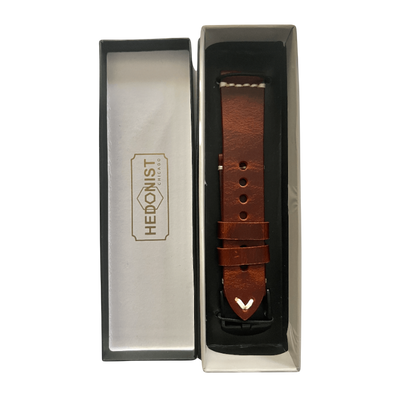
Watch Band Width & Sizing Guide

Why Watch Band Sizing Trips People Up

A watch band looks like a simple purchase until the new strap arrives and either flops loosely inside the lugs or will not fit between them at all. Unlike a belt or a shoe, a watch band is sized around a fixed piece of hardware, the lug width, rather than around your body. Get that one number wrong and no amount of adjusting the buckle will fix it.

Two separate measurements matter for a proper fit: the width of the band where it attaches to the watch case, and the overall length needed to close comfortably around your wrist. Confusing the two, or guessing at either, is the most common reason a new band gets returned. Traditional watches and Apple Watches also follow different sizing conventions entirely, which adds another layer of confusion for anyone switching between the two.

The stakes are higher with leather bands specifically, since leather cannot be stretched or resized the way a metal bracelet can be adjusted by a jeweler removing links. A leather band is cut to a fixed length and width at the point of manufacture, so getting the initial measurement right matters more than it does with other watch accessories. Buying based on the watch's overall diameter rather than its actual lug width is the single most frequent mistake shoppers make.

This guide walks through how to find your lug width, how Apple Watch sizing differs from traditional watch sizing, whether one band can serve multiple case sizes, what actually goes wrong with a mis-sized band, and how to measure your wrist correctly. It also addresses a question we hear often, whether personalization is available on watch bands, with a direct answer near the end.

How to Find Your Watch's Lug Width

Lug width is the distance between the two metal arms on the watch case that hold the band in place, measured in millimeters. Common sizes run from 16mm to 24mm, with 18mm, 20mm, and 22mm covering the majority of traditional watches on the market. The number is usually printed on the case back or on the original band itself, stamped near where the strap meets the buckle. A watch that has been passed down or purchased secondhand often arrives without any documentation of its lug width, which makes the manual measurement step even more important before ordering a replacement band.

If neither is visible, place a ruler directly across the gap between the lugs, from the inside edge of one arm to the inside edge of the other. Round to the nearest even millimeter, since bands are manufactured in standard even sizes and an odd measurement almost always means a slight misread. A digital caliper gives the most precise reading if you have access to one, since the small gap between lugs can be difficult to read accurately with a flat ruler alone.

Watch dial size is not a reliable substitute for lug width. A larger case does not automatically mean a wider lug opening, since design choices vary significantly between brands and watch families. Two watches with the same 40mm case diameter can easily have different lug widths, so always measure the actual gap rather than assuming based on the dial. Dress watches and field watches within the same brand lineup often use different lug widths despite looking similar in overall size, so relying on a sibling model as a size reference is not a safe shortcut. Our traditional watch band guide covers how to identify lug width across different watch brands, and the full watch bands collection is organized by width so you can filter directly to the size you need once you have the number.

Apple Watch Bands vs Traditional Watch Bands Sizing

Apple Watch bands do not use the lug width and millimeter system that traditional watches rely on. Instead, sizing is tied to the case size, most commonly 38mm, 40mm, 41mm, 42mm, 44mm, 45mm, or 49mm depending on the generation, and bands are built with a proprietary connector that clips directly into the watch body rather than sliding between exposed lugs.

This means an Apple Watch band and a traditional watch band are never interchangeable, even if the numbers look similar. A traditional 42mm designation refers to the case diameter on some watches or the lug width on others depending on the brand, while a 42mm Apple Watch band refers strictly to the case size the connector is built to fit. Always check which system applies to your specific watch before ordering.

The connector itself is worth a closer look too. Apple's band mechanism uses a small button release that slides the band out of a channel on the case back, a completely different engineering approach from the spring bar and lug system found on nearly every traditional watch. This is why a traditional leather strap cannot simply be trimmed or adapted to fit an Apple Watch, and why the two product categories are sold and sized separately. Our Apple Watch leather band guide breaks down exactly which case sizes pair with which band size, and the Apple Watch bands collection lists options sorted by case generation.

Can One Band Fit Multiple Case Sizes

On the Apple Watch side, band connectors are grouped in pairs, so a band built for a 42mm and 44mm case typically also fits the newer 44mm and 45mm equivalents in the same size tier, since Apple has kept connector spacing consistent within these groupings across generations. Always confirm current compatibility against your specific case size before buying, since Apple has adjusted case dimensions with newer releases, and a band that fit an older case is not guaranteed to fit a newer one without checking the listed compatibility.

On the traditional watch side, a band is generally built for one specific lug width and will not fit a case with a different measurement, even by a millimeter or two. A loose fit lets the band pivot and rattle at the lugs, while a tight fit will not seat at all. If you own several watches with different lug widths, you typically need a separate band sized for each one rather than expecting a single strap to move between them.

Some traditional watches do allow a small amount of flexibility, since certain spring bar designs can accommodate a band one millimeter narrower than the exact lug measurement without an obvious gap. This is the exception rather than the rule, and it is not something to plan around when ordering, since the safer approach is always matching the band width to the lug width exactly.

What Happens When a Band Is the Wrong Width

A band that is too narrow for the lugs leaves visible gaps on either side of the strap where it meets the case, and it will usually shift side to side during wear since nothing holds it centered. A band that is too wide will not fit into the lug opening at all, and forcing it risks bending the spring bar or scratching the case finish.

Length problems show up differently. A band that runs too long leaves excess material flopping past the buckle, while a band that runs too short will not close on a comfortable hole, forcing the wrist to sit tighter than intended. Getting both width and length right the first time avoids the hassle of a return, particularly with leather bands, which are cut to a fixed size and cannot be adjusted the way a metal bracelet can be resized by a jeweler.

A poorly fitted band also wears unevenly over time. Constant side to side movement from a too-narrow band puts extra stress on the spring bar connection point, and a too-tight band concentrates wear on a single hole rather than distributing it across the strap. Correct sizing from the start extends the useful life of the leather itself, not just the initial fit. Keeping a note of your lug width and wrist measurement on your phone makes future purchases faster, since watch band sizing rarely changes once you have confirmed it correctly the first time.

Measuring Wrist Size for the Right Band Length

Wrap a soft tape measure or a strip of paper around your wrist at the point where you normally wear a watch, just past the wrist bone. Note the measurement in millimeters or inches, then compare it against the band's listed length range, which typically covers a spread of several centimeters to accommodate different hole positions.

Most bands are designed with the buckle offset toward one end, so the usable adjustment range sits roughly in the middle of the total strap length once both pieces are combined. If your wrist measurement falls near the edge of a listed range, it is worth checking whether the brand offers a shorter or longer version, since an oversized band on a slim wrist will have excess length flopping past the buckle regardless of which hole you use.

Time of day can affect wrist measurement slightly, since minor swelling is common later in the day or after exercise. Measuring in the morning before activity gives the most consistent baseline, and if your measurement varies noticeably throughout the day, sizing toward the smaller end of your comfortable range is usually the better choice for all day wear.

Buckle and Closure Styles Explained

Most leather watch bands close with either a pin buckle or a deployment clasp. A pin buckle works like a traditional belt, with a metal pin passing through one of several punched holes, which gives some flexibility for fine-tuning fit day to day. Anyone switching from a metal bracelet to a leather band for the first time should expect a slightly different feel at the wrist, since leather sits closer to the skin and breaks in over the first few weeks of wear rather than fitting identically from day one. A deployment clasp folds flat against the wrist and locks with a hinge mechanism, offering a cleaner look with less flexibility for adjustment once the band is sized.

Closure style does not change the width measurement needed, but it can slightly affect how much total band length is required, since deployment clasps typically consume a bit more strap on the underside than a simple pin buckle. Check the specific closure listed for any band before ordering if you are working with a wrist measurement near the edge of the size range.

Comfort and appearance both play into which closure suits you best. Pin buckles tend to sit lower profile against the wrist and are simpler to adjust on the fly, while deployment clasps distribute pressure more evenly across the strap and can feel more secure during active wear. Neither closure style is inherently better sized, so the decision usually comes down to personal preference once fit is confirmed. Over 1,300 customers have reviewed Hedonist Chicago leather goods and rated us 4.78 stars on average, and correct sizing is consistently mentioned as the reason a band feels right from the first wear.

Personalization and Watch Bands: What to Know

A common question we get is whether a leather watch band can be personalized the way a wallet or belt can. The answer is no. Personalization, including hot stamping and foil stamping, is not offered on any watch band, traditional or Apple Watch, regardless of size or leather color. This applies across the entire watch band lineup with no exceptions.

We understand this comes up often since personalization is available on several other product categories, and it is worth stating plainly rather than leaving room for confusion at checkout. If you are shopping for a personalized gift and considering a watch band as the piece, a wallet or belt from the same leather family will give you that option, while the band itself will not.

If personalization matters to your purchase, our personalization guide explains exactly which product categories do support it and how the process works, and our personalization page lists current options in full. Watch bands remain a category where the leather and hardware are left exactly as manufactured, without any added text or initials.

Caring for a Correctly Sized Leather Band

Once a band fits properly, keeping it that way mostly comes down to routine care. Leather straps sit close to the skin and absorb moisture from sweat and daily wear more than a belt does, so wiping the band down after workouts or humid days helps prevent the leather from softening unevenly around the buckle holes.

Avoid submerging a leather band in water, since repeated soaking can warp the shape and loosen the stitching at the lug connectors over time. Rotating between two bands, one for daily wear and one for more formal occasions, also reduces strain on any single strap and gives the leather time to recover its shape between wears. A band that develops a slight darkening near the buckle area over months of wear is going through a natural aging process rather than damage, similar to how other leather goods develop character with regular use.

Our leather care guide and our article on water resistance by leather type cover which finishes tolerate occasional moisture better than others, and our piece on how leather develops patina explains that gradual color change in more detail. For styling advice once your band is sized correctly, see our guides on styling leather accessories for men and styling leather accessories for women, or our broader guide to choosing timeless leather accessories. Browse the full traditional watch bands collection or the broader accessories collection for pieces to pair with your correctly fitted band.

Frequently Asked Questions

Check the case back or the underside of the original band first, since the millimeter measurement is often stamped near where the strap meets the buckle. If it is not marked, place a ruler across the gap between the two metal arms holding the current band and round to the nearest even millimeter, since bands are made in standard even sizes.
Yes, completely differently. Traditional watches use a lug width measured in millimeters and a spring bar system, while Apple Watch bands are sized to the case dimension, such as 42mm or 45mm, and use a proprietary connector that clips into the case rather than sliding between exposed lugs. The two systems are never interchangeable.
On Apple Watch, band connectors are grouped in pairs, so a band sized for one case tier often fits the adjacent size within that same grouping, though this should always be confirmed against the current case generation. On traditional watches, a band is built for one specific lug width and will not properly fit a case with a different measurement.
A band that is too narrow leaves visible gaps at the lugs and shifts side to side during wear, while a band that is too wide will not fit into the lug opening at all and forcing it risks bending the spring bar or scratching the case. Neither problem can be fixed after the fact with a leather band, since the width is fixed at manufacture.
Wrap a soft tape measure or a strip of paper around your wrist just past the wrist bone, ideally in the morning before any swelling from activity or heat sets in. Compare that number against the band's listed length range, and if your measurement falls near the edge of the range, check whether a shorter or longer version is available before ordering.

Leave a comment

Please note, comments must be approved before they are published

This site is protected by hCaptcha and the hCaptcha Privacy Policy and Terms of Service apply.