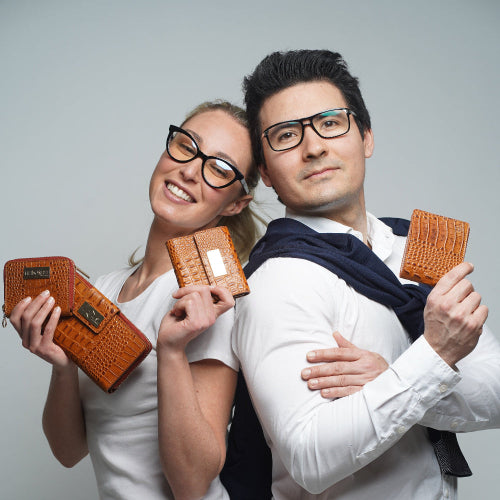
Handmade Card Holders: Minimalist Construction with Maximum Durability
Handmade card holders represent minimalist leather accessories where construction precision matters more than in almost any other category because the compact size amplifies every alignment irregularity, stitch spacing variation, or edge finishing flaw. Our handmade card holders collection features work from select artisan workshops using hand-stitched construction, full-grain vegetable-tanned leather, and precise pocket alignment techniques creating handcrafted card holders that maintain parallel edges, consistent pocket depth, and secure card retention through years of daily pocket carry. These artisan leather card holders demonstrate how traditional construction methods applied to seemingly simple accessories create quality advantages justifying premium pricing through extended service life and superior daily functionality compared to mass-produced alternatives.
The difference between quality handmade card holders and factory equivalents becomes obvious through close inspection and actual use. Mass-produced card cases often show misaligned pockets creating uneven card visibility, inconsistent stitch spacing revealing casual workmanship, or inadequate edge finishing that frays quickly with pocket handling. Card pockets in factory holders loosen over time as thin leather stretches or adhesive-based construction fails under repeated card insertion stress. Handcrafted leather card holders address these issues through construction precision mass production cannot achieve: careful pattern cutting ensuring pocket alignment, saddle-stitch creating durable seams, and hand-burnished edges maintaining appearance through years of use in these artisan card cases.
This guide examines construction precision requirements for handmade card holders, pocket alignment techniques maintaining uniform appearance and function, leather thickness selection appropriate for minimalist designs, edge finishing quality indicating overall construction standards, and how different card holder formats serve specific carrying needs. Whether you're replacing a failed card case or selecting your first quality piece, understanding these construction fundamentals helps identify handmade leather card holders worthy of investment versus those claiming artisan status while using factory shortcuts. For comprehensive context on handmade leather accessories, see our complete guide to handmade leather goods.
Construction Precision in Handmade Card Holders
Pattern Accuracy and Pocket Alignment
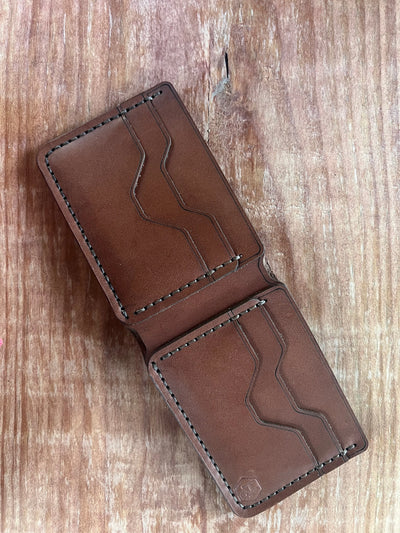
Pocket alignment precision separates quality handmade card holders from casual construction because misalignment becomes immediately visible in compact designs where minimal material surrounds pockets. The pattern cutting for handcrafted card holders requires accuracy within millimeter tolerances ensuring all pockets align perfectly when assembled. This precision in artisan leather card holders involves careful measurement, sharp cutting tools maintained properly, and understanding how leather characteristics affect cutting accuracy for different hide sections and grain orientations used in these handmade card cases.
Assembly precision in handmade card holders demands maintaining pocket alignment while stitching progresses despite leather's tendency to shift during handling. Quality handcrafted card holder construction uses temporary adhesive or careful pinning holding layers in precise position during stitching, allowing craftspeople to focus on stitch quality without fighting material movement. The alignment maintained in artisan card holders creates uniform card visibility across all pockets and predictable card positioning that makes specific card retrieval intuitive rather than requiring visual search through unevenly positioned pockets in these handmade leather card holders.
Pocket depth consistency affects both appearance and function in handmade card holders because varying depths create uneven card exposure making card identification more difficult. The depth control in handcrafted card cases requires consistent leather cutting and stitching placement across all pockets despite the challenge of maintaining precision through multiple assembly steps. Quality construction in artisan leather card holders achieves pocket depth variation within millimeter tolerances, creating clean visual lines and functional consistency that enhances daily card holder usability in these handmade accessories.
Stitch Spacing and Edge Parallel Precision
Stitch spacing consistency in handmade card holders reveals construction care because irregular spacing becomes obvious in compact designs where stitching constitutes major visual element. The hand-stitching in handcrafted card holders should maintain uniform spacing within half-millimeter tolerances despite the manual nature of saddle-stitch technique. This consistency in artisan card cases requires skilled craftsmanship, proper hole punching tools, and attention to detail throughout the stitching process rather than casual work patterns that create obviously irregular results visible in these handmade leather card holders.
Edge parallelism in handmade card holders affects both appearance and function because non-parallel edges create visual disruption in minimalist designs while potentially affecting how smoothly the card holder slides into pockets. The edge precision in handcrafted card cases requires accurate pattern cutting, careful assembly maintaining proper alignment, and edge finishing that doesn't add variable thickness creating apparent non-parallelism even when underlying leather edges align properly. Quality construction in artisan leather card holders maintains parallel edges that create clean visual lines and smooth pocket insertion in these handmade accessories.
Card holder construction precision reveals craftsmanship quality more honestly than larger accessories because the compact size provides no place to hide alignment irregularities or stitch spacing variations. We examine every card holder carefully before approving it for our collection, rejecting pieces showing pocket misalignment, inconsistent stitch spacing, or edge parallelism issues that would compromise the clean aesthetic minimalist designs require. This quality standard eliminates perhaps twenty percent of production from workshops we otherwise trust, but the precision premium justifies choosing handmade construction for accessories where details matter enormously.
Hand-Stitched Construction in Card Holders
Saddle-Stitch Technique at Compact Scale
Hand-stitched card holders use saddle-stitch construction where two needles on opposite ends of waxed thread pass through pre-punched holes from different directions, creating interlocking pattern that remains secure even if thread breaks at specific points. This handcrafted card holder technique proves essential for accessories experiencing constant stress from repeated card insertion and removal concentrating forces at pocket openings. Machine lock-stitch used in factory card cases creates continuous thread vulnerable to complete seam failure if breakage occurs anywhere along its length, making saddle-stitch's redundant construction critical for handmade leather card holders intended for years rather than months of service.
The thread used in artisan leather card holders measures thicker than machine stitching thread, providing durability through having more material resisting abrasion from card edges sliding against stitching during insertion and removal. However, the thread thickness in handcrafted card cases must be selected carefully because excessively thick thread creates visual heaviness inappropriate for minimalist designs while insufficient thickness compromises durability. Quality handmade card holder construction balances these considerations through using thread appropriate for leather thickness and aesthetic requirements in these artisan accessories.
Stitch hole size and spacing in handmade card holders affect both visual appearance and seam strength. Smaller holes with closer spacing create refined appearance in handcrafted card cases but require more labor and potentially weaken leather if holes are punched too densely. Larger holes with wider spacing reduce construction time but create heavier visual presence potentially overwhelming minimalist designs. Quality construction in artisan leather card holders optimizes hole size and spacing for the specific leather thickness and design requirements rather than using single approach regardless of optimal results for particular applications in these handmade accessories.
Thread Selection and Visual Impact
Thread color selection in handmade card holders affects visual appearance significantly because the stitching constitutes major design element in minimalist construction. Matching thread color to leather in handcrafted card cases creates subtle appearance emphasizing material quality over construction details. Contrasting thread color highlights the hand-stitching craftsmanship, making the construction technique part of the visual appeal in artisan leather card holders. The choice depends on design philosophy and user preferences, with both approaches proving equally durable when proper saddle-stitch technique is employed in these handmade accessories.
Thread wax coating in handmade card holders serves functional purposes beyond appearance, waterproofing the thread against moisture exposure while providing lubrication during stitching that prevents friction damage to leather fibers. The wax also helps maintain thread tension in handcrafted card cases after stitching completes, preventing the loosening that can occur with unwaxed thread as it relaxes over time. Quality construction in artisan card holders uses properly waxed thread creating durable seams that maintain consistent appearance through years of use in these handmade leather accessories.
Leather Selection for Card Holder Applications
Thickness Requirements for Minimalist Design
Handmade card holders typically use leather measuring 1.5-2mm thick providing structure that maintains card pocket shape when empty while remaining slim enough for comfortable front pocket carry. This thickness range in handcrafted card cases creates firm pockets that retain cards securely without developing the excessive stiffness that would make card insertion difficult or create uncomfortable pocket bulk. Thinner leather compromises pocket structure in artisan leather card holders while thicker material creates bulk inappropriate for minimalist designs intended to replace traditional wallets specifically to reduce pocket presence in these handmade accessories.
Leather firmness matters as much as thickness in handmade card holders because soft leather lacks the structure necessary for maintaining pocket shape while excessively firm leather creates stiff card cases uncomfortable for pocket carry. Full-grain vegetable-tanned leather in handcrafted card holders typically achieves good balance between adequate firmness and comfortable flexibility, though specific tannery practices create variation affecting whether particular leather suits card holder applications. Quality construction in artisan card cases selects leather appropriate for minimalist designs rather than using material better suited for wallets or other accessories requiring different characteristics in these handmade leather card holders.
Full-Grain Leather Advantages
Full-grain vegetable-tanned leather provides optimal material for handmade card holders because the intact grain surface contains the strongest fibers while the vegetable tanning creates material accepting hand-stitching without chemical residue interfering with construction. The natural grain in handcrafted leather card holders develops attractive patina through use as oils from handling darken edges and high-contact areas while protected surfaces maintain lighter tones, creating visual depth that makes each artisan card case distinctive to its user over time in these handmade accessories.
Lesser leather grades used in factory card holders fail to develop this attractive aging characteristic. Top-grain leather has been sanded to remove the natural grain layer, then often embossed with artificial patterns in handcrafted card cases. This creates uniform initial appearance but removes material characteristics allowing full-grain leather to handle stress and develop patina rather than simply wearing out. Genuine leather represents bonded scraps held together with adhesives, providing minimal durability in handmade card holder applications where quality material justifies the construction precision and labor investment in these artisan accessories.
The vegetable tanning process in artisan leather card holders creates leather that breathes, remaining comfortable during pocket carry and reducing moisture accumulation that could affect cards stored in the holder. The natural tannins also provide some antimicrobial properties in handcrafted card cases reducing odor development from bacteria accumulating on accessories experiencing constant handling. These characteristics make vegetable-tanned full-grain leather the clear material choice for handmade card holders intended for years of daily use in these handmade leather accessories.
Edge Finishing in Handmade Card Holders
Hand-Burnishing for Minimalist Aesthetics
Edge finishing quality in handmade card holders affects both appearance and durability because all edges remain exposed in minimalist designs, making edge treatment a major visual element. Hand-burnishing creates sealed, smooth edges in handcrafted card cases through friction and compound application rather than machine edge painting that chips or peels with handling. The burnished finish in artisan leather card holders proves more durable while creating refined appearance appropriate for minimalist designs where edge quality contributes significantly to overall aesthetic in these handmade accessories.
The burnishing process for handmade card holders involves multiple steps: sanding edges smooth, applying burnishing compound, then using friction through rubbing or mechanical burnishing tools generating heat that seals and polishes the edge. This creates edges in handcrafted card cases that feel smooth without roughness, appear sealed without visible layers, and show uniform color without patchiness. Quality edge finishing in artisan card holders requires skill and time that production shortcuts eliminate, making edge quality a reliable indicator of overall construction standards in these handmade leather card holders.
Edge Exposure and Treatment Priority
All edges in handmade card holders experience exposure and handling during daily use, requiring consistent finishing quality across the entire piece rather than prioritizing specific areas as might be appropriate in larger accessories. The uniform edge treatment in handcrafted card cases creates coherent appearance essential for minimalist designs where every detail contributes to overall aesthetic. Inconsistent edge finishing quality in artisan leather card holders becomes immediately obvious in compact designs, making thorough edge treatment throughout the piece essential for quality construction in these handmade accessories.
Edge thickness consistency in handmade card holders affects how smoothly the card case slides into pockets and whether edges catch on pocket fabric during insertion. Uniform edge finishing in handcrafted card cases creates consistent thickness allowing smooth pocket entry while variable edge treatment creates catching points that make pocket insertion more difficult. Quality construction in artisan card holders maintains edge consistency through careful burnishing technique that doesn't add variable material thickness in these handmade leather card holders.
Edge finishing quality tells the construction story in card holders more reliably than almost any other indicator. Proper hand-burnishing requires multiple compound applications, careful friction burnishing, and attention to edge consistency that casual construction avoids. We've rejected otherwise well-constructed card holders for edge finishing that didn't meet our standards because edge quality affects both appearance and daily usability. The few minutes additional time proper edge finishing requires separates good construction from excellent results in minimalist designs where every detail matters.
Card Holder Format Options
Single-Sided Card Holders
Single-sided handmade card holders feature card pockets on one surface only, creating minimal thickness when loaded with cards. This format in handcrafted card cases suits front pocket carry particularly well because the slim profile reduces pocket bulk while providing capacity for essential cards. The construction simplicity in artisan leather card holders allows focus on pocket precision and edge finishing quality rather than managing the complexity of double-sided designs requiring careful alignment of pocket structures on both surfaces in these handmade accessories.
Card capacity in single-sided handmade card holders typically ranges from three to six cards depending on pocket configuration and leather thickness. Overlapping pocket designs in handcrafted card cases maximize capacity while maintaining slim profile, though the overlapping creates visual layering that may not suit all aesthetic preferences. Side-by-side pocket arrangements in artisan card holders create cleaner visual lines but limit capacity within practical size constraints for these handmade leather card holders.
Double-Sided Card Holders
Double-sided handmade card holders feature pockets on both exterior surfaces, roughly doubling card capacity compared to single-sided alternatives while increasing thickness when fully loaded. This format in handcrafted card cases suits those needing greater card capacity than minimal holders provide but wanting to avoid traditional wallet bulk. The construction complexity in artisan leather card holders increases significantly for double-sided designs because both pocket structures must align precisely while allowing the piece to fold or flex naturally during pocket carry in these handmade accessories.
The center construction in double-sided handmade card holders affects both flexibility and durability because this area experiences repeated flexing as the holder conforms to pocket shape or body contours during carrying. Quality construction in handcrafted card cases uses leather selection and stitching techniques allowing natural flexing without creating permanent creases or stress cracks that would compromise appearance and structural integrity. The center reinforcement in artisan card holders must balance flexibility requirements with the structure necessary for maintaining pocket alignment on both surfaces in these handmade leather card holders.
Card Holders with Additional Features
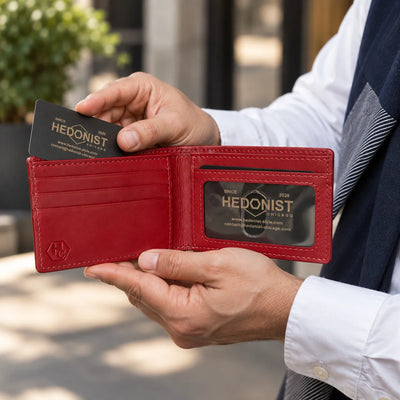
Some handmade card holders incorporate additional features beyond basic card storage: external ID windows, thumb slots for easier card access, or small cash compartments for folded bills. These features in handcrafted card cases add functionality while increasing construction complexity and potentially compromising the minimal aesthetic that attracts many users to card holders over traditional wallets. The feature integration in artisan leather card holders requires careful design ensuring additions enhance rather than detract from core functionality and visual appeal in these handmade accessories. Browse our handmade wallets collection for comparison with traditional wallet formats.
Care and Maintenance of Handmade Card Holders
Regular Cleaning and Conditioning
Handmade card holders accumulate oils from handling, pocket lint, and card edge residue requiring regular cleaning maintaining appearance and preventing leather degradation. Wipe handcrafted card cases monthly with slightly damp cloth removing surface contaminants before they penetrate leather pores. For stubborn dirt on artisan card holders, leather cleaner formulated for vegetable-tanned material removes soil without damaging finish or causing staining in these handmade leather card holders.
Conditioning handmade card holders every three to four months maintains leather suppleness and prevents drying that could lead to cracking at stress points. Apply small amount of leather conditioner formulated for vegetable-tanned material, working it into the handcrafted card case using circular motions and allowing absorption before returning cards to pockets. Avoid over-conditioning artisan leather card holders as excessive product application can soften leather excessively, reducing firmness necessary for maintaining pocket structure in these handmade accessories.
Card Edge Impact on Pocket Wear
Card edges in handmade card holders create concentrated stress at pocket openings during repeated insertion and removal, potentially causing wear over years of use. Using cards with smooth rather than sharp edges in handcrafted card cases reduces this wear potential. Rotating which cards occupy which pockets in artisan leather card holders distributes wear across all pockets rather than concentrating it in most-accessed positions, extending overall holder life in these handmade accessories.
Value Proposition of Handmade Card Holders
Cost vs Longevity Analysis
Quality handmade card holders using full-grain vegetable-tanned leather and proper hand-stitched construction typically cost 40-80 dollars depending on design complexity and workshop reputation. This pricing in handcrafted card cases reflects material costs, skilled labor time for precision construction and edge finishing, and small-batch production. However, the service life in artisan leather card holders typically extends ten to fifteen years of daily use, creating annual costs of 3-6 dollars compared to factory alternatives requiring replacement every one to two years at 15-25 dollars creating annual costs of 8-25 dollars in these handmade accessories.
Why Choose Our Handmade Card Holders Collection
Our handmade card holders collection features work from select artisan workshops chosen specifically for their construction precision and attention to detail that minimalist designs demand. Every handcrafted card holder demonstrates pocket alignment within millimeter tolerances, consistent stitch spacing, and thorough edge finishing creating refined appearance and reliable function in these artisan leather card holders. The leather selection emphasizes appropriate thickness and firmness for card holder applications rather than using material better suited for wallets or other accessories in these handmade accessories.
Free personalization through hot stamping adds individual significance to handmade card holders, with initials appearing on interior or exterior surfaces creating distinctive accessories or thoughtful gifts. The small workshops we partner with for handcrafted card cases maintain quality standards that eliminate pieces showing the alignment irregularities, stitch spacing variations, or edge finishing inconsistencies that would compromise the precision minimalist designs require in these artisan leather card holders. Browse our complete handmade leather goods collection for additional artisan accessories using similar construction standards.
Frequently Asked Questions
How long should a handmade card holder last?
Quality handmade card holders using full-grain vegetable-tanned leather and proper hand-stitched construction should last ten to fifteen years of daily use when properly maintained. The leather develops attractive patina while maintaining pocket structure and card retention throughout this period.
Can handmade card holders be repaired?
Yes, hand-stitched card holders support professional repair when needed. Stitching can be renewed if thread breaks or loosens. Pockets can be reconstructed if they stretch excessively. Edge finishing can be refreshed if wear affects appearance. The fundamental leather piece remains sound supporting these interventions.
How many cards can handmade card holders carry?
Capacity varies by design. Single-sided card holders typically accommodate three to six cards. Double-sided designs roughly double capacity. However, minimalist designs prioritize reduced bulk over maximum capacity, requiring users to select essential cards rather than carrying entire card collections.
Do handmade card holders stretch over time?
Quality full-grain leather in handmade card holders develops slight suppleness during break-in but shouldn't stretch excessively if properly constructed. Pockets may relax slightly to accommodate cards more comfortably while maintaining secure retention. Excessive stretching indicates either inadequate leather thickness or inferior material quality.
What makes handmade card holders better than factory versions?
Construction precision matters enormously in compact designs. Handmade card holders demonstrate pocket alignment within millimeter tolerances, consistent stitch spacing, and thorough edge finishing that factory production cannot achieve at mass-production pricing. The precision creates both superior appearance and enhanced functionality.
How do I choose between single and double-sided card holders?
Choice depends on card capacity needs versus bulk tolerance. Single-sided holders create minimal thickness ideal for front pocket carry with limited card capacity. Double-sided designs roughly double capacity while increasing loaded thickness. Assess your essential card count before selecting format.
Can handmade card holders replace wallets completely?
For those carrying primarily cards with minimal cash, yes. Card holders provide card storage without traditional wallet bulk. However, those needing substantial cash storage, coin pockets, or extensive organization may find wallets more practical. The choice depends on actual carrying needs rather than theoretical preferences.
Why are handmade card holders more expensive?
Precision construction requires more skilled labor time than casual assembly. Pattern accuracy, pocket alignment, consistent stitch spacing, and thorough edge finishing all demand attention that mass production eliminates. Small-batch production cannot achieve factory efficiency. However, extended service life makes handmade more economical over actual use period.
Making the Right Choice
Choosing quality handmade card holders requires prioritizing construction precision over superficial design elements. Examine pocket alignment for uniform card visibility and predictable positioning. Check stitch spacing for consistency indicating careful workmanship. Verify edge finishing quality throughout the piece rather than just highly visible areas. These construction fundamentals in handcrafted card cases determine whether the piece maintains appearance and function through years of use or shows premature wear from inadequate construction standards in artisan leather card holders.
Visit our complete handmade card holders collection to explore single-sided, double-sided, and feature-enhanced options combining hand-stitched construction precision, full-grain vegetable-tanned leather, and thorough edge finishing creating accessories that withstand demanding daily use. Whether you choose minimal single-sided designs or higher-capacity double-sided formats, focus on construction precision that determines whether your handmade card holder develops attractive patina through years of service or requires replacement from construction failures characterizing mass-produced alternatives in these artisan leather card cases designed for genuine long-term daily carry in minimalist handmade accessories.
Leave a comment