



What Belt Do Navy SEALs Wear?
Quick answer: The belt most associated with Navy SEALs is the rigger's belt, a 1.75-inch nylon webbing belt closed with a black D-ring locking buckle. It's an official part of Navy uniform regulations for the utility uniform, and tactical variants built by companies founded by former SEALs are used for operational gear like war belts and duty belts. It is nylon, not leather, because the design priorities are load-bearing strength, quick release under tension, and reliability in wet or abrasive conditions rather than everyday dress wear.
Rigger's belt vs. a leather dress or casual belt
| Feature | Rigger's belt | Leather belt |
|---|---|---|
| Material | Nylon webbing | Full-grain or top-grain leather |
| Buckle type | Locking D-ring, no holes needed | Pin buckle or ratchet track-and-pawl |
| Width | 1.75 inches, fixed | Typically 1-1.75 inches depending on use |
| Built for | Load-bearing gear, quick adjustment under tension, wet/abrasive conditions | Everyday dress, business, and casual wear |
| Appearance changes with use | No, functional wear only | Yes, full-grain vegetable-tanned leather develops patina over years |
Picks to go with this guide

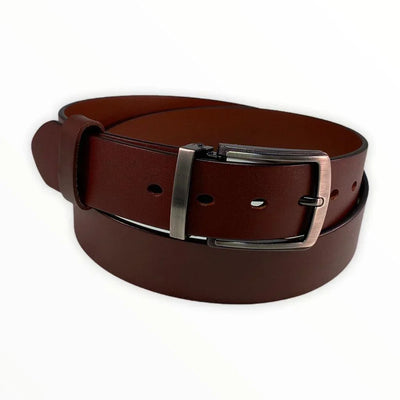
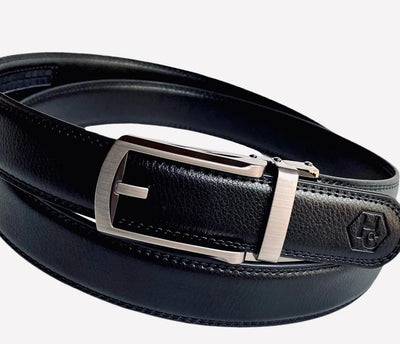
Black Extra Durable Leather Belt with Buckle 2 1.55 Inch
Black wide leather belt with buckle 2
View product →
Dark Brown Extra Durable Leather Belt with Buckle 123 1.55 Inch
Dark brown wide leather belt with classic buckle 123
View product →
Brown Extra Durable Leather Belt with Buckle 02 1.55 Inch
Brown wide leather belt with buckle 02
View product →Why the rigger's belt design exists
Nylon webbing doesn't stretch, absorb moisture, or degrade the way leather can under repeated abrasion and wet conditions, and a locking D-ring buckle can be tightened or released in seconds without needing to align a pin with a specific hole. Those are the priorities for gear meant to carry weight and hold up in the field, not the priorities most people have for a belt worn with regular clothing.
How the D-ring locking mechanism actually works
A rigger's belt threads through two metal D-rings rather than a traditional buckle frame. Pulling the webbing through both rings and folding it back creates friction that locks under load, and the belt tightens further the more weight that's applied, the opposite of a pin buckle, which stays fixed at whatever hole you chose. Releasing it just means pulling the folded-back webbing free, a motion that takes a fraction of a second, one reason the design suits gear that needs to come off quickly.
Do SEALs wear leather belts at all?
Away from operational settings, service members wear standard leather dress belts as part of formal and everyday uniform wear, the same category worn with slacks and business attire in civilian life. The rigger's belt stays in utility and tactical contexts instead.
If you want a leather belt built with the same no-nonsense priorities
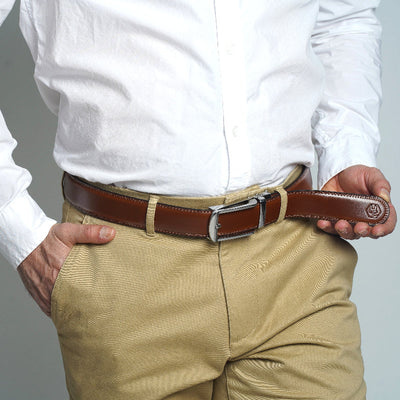
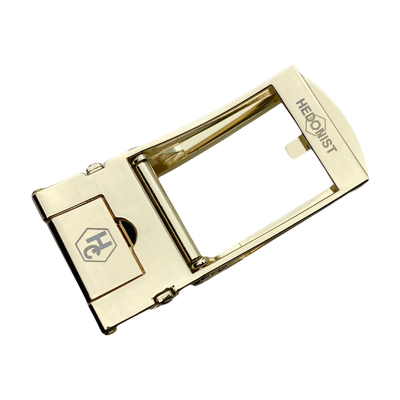
For daily wear rather than tactical use, a full-grain vegetable-tanned leather belt with reinforced buckle stitching and either a solid pin buckle or a quality ratchet mechanism gives you that same emphasis on function over decoration. Look for a stated leather grade and, for ratchet belts, a hardened steel pawl and tempered spring; our guide to how a ratchet belt buckle works covers what to check there.
Why durability language shows up in both military and civilian belt marketing
Terms like reinforced stitching and built to last show up in both tactical gear descriptions and everyday leather belt listings for a similar reason: a belt's single job, holding steady tension at a stress point, doesn't change much between a rigger's belt and a well-made leather one. Our guide to what makes a belt built to last covers the construction details that carry that same priority into everyday wear.
Rigger's belts in popular culture and gear culture
The rigger's belt shows up well beyond military circles now, in outdoor and tactical fashion and EDC (everyday carry) communities that value its no-frills load-bearing design for carrying a knife, flashlight, or other gear on a belt loop. That crossover has led to a wide range of commercial versions, some genuinely load-rated and others built mostly for the look, with lighter webbing and non-rated hardware. If you're buying one to actually carry gear, checking the load rating matters the same way checking leather grade matters when buying a dress belt.
How to tell a genuine tactical rigger's belt from a fashion imitation
- Check for a stated load rating on the webbing and hardware, which genuine tactical versions typically specify and fashion imitations often omit
- Look for mil-spec or equivalent certification language if the belt is marketed for actual gear-carrying use
- Genuine tactical webbing has a stiffer, more substantial feel than the thinner webbing used in decorative versions
- Metal D-rings on a genuine tactical belt are typically welded or forged rather than simple stamped rings, which affects how much load they can safely bear
Frequently asked questions
Do Navy SEALs wear leather belts at all?
Leather belts aren't part of standard SEAL operational gear, which relies on nylon rigger's belts for load-bearing strength and quick release under tension. Leather shows up only in dress and everyday uniform contexts, the same role it plays in civilian business and casual wear, not as tactical equipment used in the field.
Can a civilian buy a rigger's belt?
Yes. Both military-surplus and commercial versions of the rigger's belt are widely sold, including tactical variants built by companies founded by former special operators. Prices and quality vary considerably, so checking for a stated load rating and genuine welded D-rings matters if you plan to actually carry gear on it rather than wear it purely for looks.
Is a rigger's belt better than a leather belt for everyday wear?
It depends on what you need from it. A rigger's belt excels at load-bearing and quick adjustment under tension, which is exactly what tactical gear demands. A leather belt is built for everyday dress and casual wear instead, and unlike nylon, a full-grain leather strap develops character and patina the longer you wear it.
Why is the rigger's belt exactly 1.75 inches wide?
That width is set by Navy uniform regulations for the utility uniform, and it's sized to match the belt loops and load-bearing hardware the belt works with in the field. A narrower strap wouldn't distribute weight as evenly across the waist, which matters when the belt is carrying gear rather than just holding up pants.
Does the rigger's belt come in leather versions?
Not in the way that keeps the design's core advantages. The rigger's belt depends on nylon webbing's stretch resistance and moisture tolerance to work in wet or abrasive conditions, so a leather version marketed under the name trades away exactly the functional benefits, quick release under load and durability when wet, that make the original worth using.
What should someone look for if they want a rugged leather belt for daily carry?
Full-grain vegetable-tanned leather at a solid 3.5 to 4.5mm thickness, reinforced stitching at the buckle attachment rather than a single line, and either a durable pin buckle or a well-made ratchet mechanism. Those details translate the rigger's belt's core priority, strength and reliability over decoration, into a leather belt built for daily wear instead of gear-carrying.
Is nylon webbing ever used in civilian belts sold as fashion accessories?
Yes, nylon and webbing belts are common in casual and outdoor-oriented fashion, though most fashion versions prioritize appearance over the load-rated hardware and locking mechanisms used in genuine tactical rigger's belts.
How can I tell if a rigger's belt is actually rated to carry gear safely?
Check for a stated load rating and mil-spec or equivalent certification language in the listing. A belt marketed purely on style, with no load rating mentioned, is more likely built for appearance than for carrying real weight.
What leather belt do Navy SEALs wear?
For operational and tactical gear, SEALs don't wear a leather belt at all, they use a nylon rigger's belt with a D-ring locking buckle, since leather isn't suited to wet, abrasive field conditions. When a leather belt is called for, it's the standard-issue dress belt worn as part of the Navy uniform for formal and everyday wear, not a specific model tied to SEAL teams.
Why do Navy SEALs wear leather belts?
They don't, at least not for operational work. Leather absorbs moisture, stretches under sustained load, and wears faster in abrasive conditions than nylon webbing does, which is why the rigger's belt replaced leather for gear-carrying and tactical use. Leather belts show up only in dress and everyday uniform contexts, the same role they play in civilian business and casual wear.
Updated: October 8, 2026
For belts built to the same rugged standard, see our guide to extra-durable leather belts. Browse our leather belts for everyday dress and casual wear.
Leave a comment