



How Does a Ratchet Belt Buckle Work?
Quick answer: A ratchet belt buckle works through a track-and-pawl mechanism: a row of teeth stamped into the underside of the strap, and a small spring-loaded metal tooth (the pawl) inside the buckle that catches on those teeth as you feed the strap through. Pulling the strap tighter clicks the pawl forward one tooth at a time; a lever on the buckle releases the pawl so the strap can slide back out. It's the same mechanism found in nearly every ratchet belt on the market today, whether it comes from a boutique maker or a budget import.
The parts and what each one does
| Part | Function |
|---|---|
| Track | The row of teeth stamped into the leather strap, spaced roughly a quarter-inch apart |
| Pawl | A small hardened-steel tooth inside the buckle that catches on the track and prevents the strap from loosening |
| Spring | Keeps the pawl pressed against the track so it engages automatically as you tighten the belt |
| Release lever | A lever or button on the underside of the buckle that lifts the pawl off the track so the strap can be pulled back out |
| Frame | The rigid outer housing that keeps the pawl, spring, and track aligned under tension |
Picks to go with this guide

Black Leather Dress Ratchet Belt with Silver Frame Buckle - 1.15"
Slim dress trouser fit, micro-adjustable, interchangeable buckle
View product →
Black Leather Casual Ratchet Belt with Gunmetal Hollow Rectangle Buckle - 1.38"
Micro-adjustable fit, interchangeable buckle
View product →
Black Leather Ratchet Belt with Open Frame Buckle - 1.38"
Micro-adjustable fit, interchangeable automatic buckle
View product →Putting it on and taking it off
- To tighten: feed the strap through the buckle and pull; the pawl clicks forward automatically with no lever needed
- To loosen: hold the release lever underneath the buckle (usually the full width of the buckle's underside) and pull the strap back out to the looser position you want
- Quarter-inch spacing between teeth means you can fine-tune fit far more precisely than a five-hole traditional belt allows
Why quarter-inch increments matter more than they sound
A traditional belt with five holes spaced one inch apart gives you five fixed fit options across roughly four inches of range. A ratchet track spacing teeth a quarter-inch apart across that same four-inch range gives closer to sixteen distinct positions. That difference matters most right after a meal, at the end of a long day, or through small weight changes across seasons, since you're rarely stuck choosing between a setting that's slightly too tight and one that's slightly too loose.
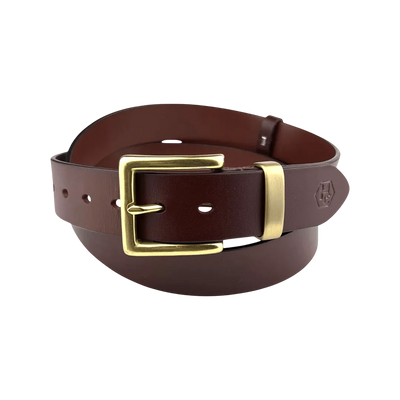
How the mechanism compares to a pin-and-buckle design
| Feature | Ratchet (track-and-pawl) | Traditional (pin-and-hole) |
|---|---|---|
| Adjustment increments | Roughly every quarter-inch | Roughly every inch, at fixed hole positions |
| Putting it on | Feed and pull, no aiming required | Must align the pin with a specific hole |
| Moving parts | Spring-loaded pawl and release lever | None; a single metal pin |
| What can wear out | Pawl and spring, if made from lower-grade metal | Holes can stretch or tear over years of use |
Why quality parts matter
A hardened steel pawl and a properly tempered spring keep tension consistent over years of daily buckling; a softer pawl wears down at the contact point, and a weak spring lets the belt slip loose gradually through the day. The frame housing the mechanism also needs to be rigid, since a housing that flexes under tension lets the pawl sit at an angle instead of catching each tooth squarely. Reputable manufacturers cycle-test a mechanism before production, engaging and releasing the pawl thousands of times to simulate years of daily use in a matter of hours; a buckle rated for tens of thousands of cycles without a meaningful drop in holding force is a reasonable proxy for one that will hold up for years rather than months. None of this is visible when you buy a belt, which is why checking a brand's stated materials, or simply testing how the buckle feels when you tighten and release it, matters more than the buckle's finish. Our guide to choosing a ratchet belt brand weighs pawl and spring quality as heavily as the leather itself, since the buckle fails before the leather does far more often than the reverse.
Attaching and swapping the buckle
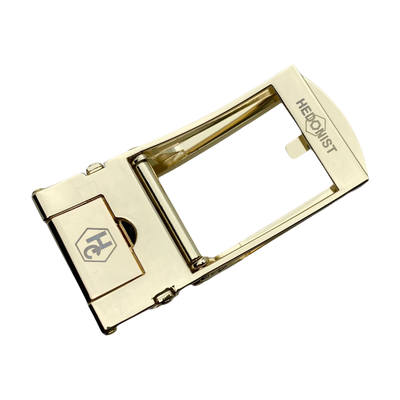
Most automatic ratchet belt buckles are designed to slide onto the strap rather than being permanently fixed, which means the buckle on a casual belt you wear every day can usually be swapped for a dressier one without buying a whole new strap. Ratchet belt straps typically end in a folded leather loop or a metal bar that slots into the buckle frame; once that connection is undone, the strap slides free and a replacement buckle slides on the same way. It's also the main practical difference from a pin buckle belt, where the strap and buckle are usually riveted together as one piece and not meant to be separated. Hedonist Chicago ratchet buckles detach from the strap and can be swapped for another buckle of the same width, in case you ever want to switch styles.
Frequently asked questions
Why does my ratchet belt feel loose by the end of the day?
This usually means the spring has lost tension or the pawl has worn down and is no longer catching the track cleanly. It's a sign of a lower-quality mechanism rather than something you're doing wrong, and it typically gets worse rather than better with continued use.
Is a ratchet buckle harder to use than a pin buckle?
No, if anything it's simpler to put on: you just feed the strap through and pull to the tightness you want. The only extra step is finding the release lever the first time you take it off, which becomes automatic after a few uses.
Can the track wear out?
Yes, if the leather was too thin for track formation or wasn't tanned to hold the stamped shape. On a properly built belt with adequate leather thickness, the track holds its shape through years of daily use without flattening or the teeth wearing smooth.
Do all ratchet belts use the same buckle mechanism?
The basic track-and-pawl principle is the same across brands, but the quality of the pawl, spring, and housing varies significantly, which is what separates a belt that stays reliable for years from one that starts slipping within just a few months of daily wear.
Can a ratchet buckle be operated with one hand?
Tightening yes, since feeding the strap through and pulling requires no second step. Loosening usually needs both hands briefly: one to hold the release lever and one to pull the strap back, though this becomes quick and automatic with familiarity.
Does the buckle mechanism make noise when adjusting?
A soft, distinct click is normal as the pawl engages each tooth on the track while tightening. That click is the mechanism working correctly; a grinding or scraping sound instead usually points to debris in the track rather than normal operation.
What metal is typically used for the pawl and spring?
Hardened steel is standard for both parts on a well-made buckle, since it resists deforming under the repeated mechanical stress of daily tightening far better than softer alloys used in cheaper mechanisms, which round off and slip sooner.
How many times can a good ratchet buckle be used before it wears out?
A well-manufactured mechanism cycle-tested to tens of thousands of engagements should handle many years of daily use, roughly two to four buckling cycles a day, without a meaningful drop in how firmly it holds tension across the track.
How do I attach a buckle to a leather belt strap?
On most ratchet belts, the strap end is a folded leather loop or a flat metal bar rather than something stitched directly to the buckle. Slide that end into the buckle frame until it seats fully, then check that it doesn't slip free when you tug the strap. If the strap has no pre-formed end for this, it's designed to be sewn or riveted rather than slotted in.
How do I change the buckle on a leather belt?
Find the small release catch or pin on the underside of the buckle frame, usually near where the strap enters, and open it to free the strap end. Slide the old buckle off, then slide the new one on the same way and close the catch. Most ratchet buckles from the same manufacturer are interchangeable across straps of matching width.
How do I replace a worn buckle on a ratchet belt?
Buy a replacement buckle in the same width as your strap, since a mismatched width won't seat properly in the track. Release the strap from the old buckle using its catch or retaining pin, slide the strap into the new buckle the same way, and test the pawl engagement on a few teeth before wearing it out the door.
Updated: September 27, 2026
More picks from the same range

Black Leather Ratchet Belt with Silver Buckle - 1.38"
Micro-adjustable fit, interchangeable automatic buckle
View product →
Black Leather Ratchet Belt with Black Plate Buckle - 1.38"
Micro-adjustable, interchangeable buckle
View product →
Dark Brown Leather Ratchet Belt with Polished Silver Buckle - 1.38"
Micro-adjustable, interchangeable buckle system
View product →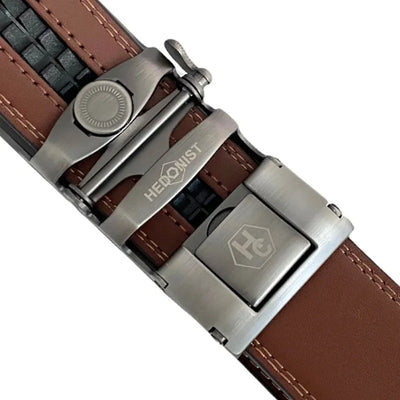

Leave a comment