



How to Add a Hole to a Leather Belt (and When to Replace the Buckle)
Quick answer: Punching an extra hole in a pin buckle belt is a simple, low-risk fix for one that's just slightly too loose or tight. Replacing the buckle is a different matter: it's straightforward on a belt built with a detachable buckle system, and not something you can do cleanly on a belt where the buckle is permanently stitched or riveted in place. For step-by-step buckle replacement, see how to replace a belt buckle.
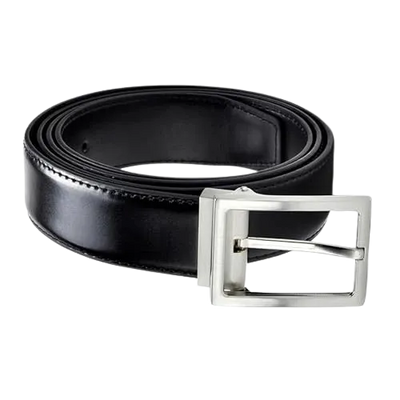
How to put a buckle on a belt
How a buckle goes on depends on how the belt was built:
- Detachable clip or screw system: match the strap width to the buckle width, then fasten the clip or screw that joins them. No stitching is involved.
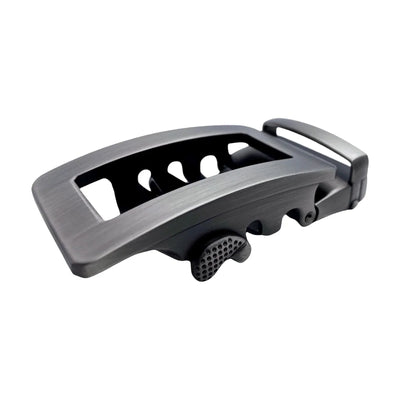
- Our Pin & Clip belts: insert the end of the strap into the opening in the buckle, then press the toothed button. The button holds the strap in place. Every strap and every buckle in the line share this mechanism, so any buckle fits any strap of the same width, with no tools.
- Stitched or riveted buckle: the buckle is part of the belt. Taking it off or putting a new one on means removing and redoing the stitching, which is a job for a leather repair shop.
The table further down shows which belt types allow a buckle swap.
Picks to go with this guide

1.55" Pin & Clip Brown Strap And 1.55" Gun Metal Pin & Clip Buckle 01
This leather run through a process which gives the leather it’s unique finish
View product →
1.55" Pin & Clip Dark Brown Strap And 1.55" Gun Metal Pin & Clip Buckle 01
This leather run through a process which gives the leather it’s unique finish
View product →How to add a hole
- Mark the new hole's position with the belt buckled at your desired tightness, using a pen or awl to make a small dot on the underside of the strap
- Use a rotary leather hole punch or a leather punch pliers tool for a clean, round hole; a heated nail or knife tip works in a pinch but leaves a rougher edge
- Punch straight through in one motion rather than sawing, which keeps the hole round instead of oval
- Space the new hole roughly one inch from the nearest existing hole, matching the belt's original spacing so the fit feels consistent
Why unreinforced holes are the weak point
A hole without a metal grommet or a properly finished edge is more prone to tearing over time as the pin passes through it repeatedly, a pattern covered in more depth in does a leather belt stretch over time. If you're punching a new hole into a belt that didn't come with grommets, expect that hole to wear faster than the factory-punched ones, and avoid punching so close to an existing hole that the leather between them thins out.
Replacing the buckle
| Belt type | Can the buckle be replaced? |
|---|---|
| Detachable clip or screw-buckle system | Yes - designed for it. Match the strap and buckle width, then swap by releasing the clip or screw mechanism |
| Traditional stitched or riveted buckle | Not cleanly - the stitching or rivets would need to be removed and redone, which most people should leave to a leather repair shop |
| Ratchet belt buckle | Depends on the specific belt - many use a removable pin or screw, but check your belt's instructions before attempting it; see how to adjust or disassemble a ratchet belt for how that works on a toothed-track system |
If you would rather not remove rivets or stitching yourself, a belt buckle repair shop or leather goods studio can usually make this swap for you, especially on a traditional stitched buckle where redoing the attachment by hand matters. The full process, with tools and steps for each attachment type, is in how to replace a belt buckle.
Our Pin & Clip belts use a toothed clip mechanism specifically built for this: any strap and any buckle in that line share the same mechanism, so as long as the width matches, you can combine them freely without tools. See buckles for pin and clip belts ($22 to $24) and buckles for automatic belts ($23).
If you came here searching for an automatic belt buckle, that's usually another name for the ratchet track-and-pawl mechanism described above, not a separate product. A mens automatic buckle belt and a ratchet belt are the same thing in most listings, so the buckle-replacement guidance above applies no matter which term the listing uses.
Tools worth having on hand
- Rotary leather punch: a pliers-style tool with a rotating head of different hole sizes, the most reliable option for a clean, consistently sized hole
- Awl or pen: for marking the exact spot before punching, so the hole lands precisely where you tested the fit
- Ruler or tape measure: to keep new hole spacing consistent with the belt's existing holes rather than guessing by eye
- Sandpaper (fine grit): lightly smoothing the edge of a punched hole reduces the initial roughness and helps it wear in more evenly
When a hole isn't the right fix
If you find yourself needing to add a hole because the belt is consistently too loose across its whole existing range, rather than just one notch off, that usually means the belt is the wrong overall size rather than needing a minor adjustment. A single added hole compensates for small fit differences; it isn't a substitute for ordering the correct length in the first place.
How this compares to servicing a ratchet belt
A ratchet belt sidesteps the hole-punching question entirely, since its track-and-pawl mechanism adjusts in quarter-inch increments rather than fixed holes. The tradeoff is that a ratchet strap can't have a hole added if it's slightly too loose; instead, the whole strap gets trimmed shorter once, a one-way step covered in how to adjust or disassemble a ratchet belt. Which approach suits you better often comes down to whether you'd rather have infinite fine-tuning built in from the start, or the simplicity of a traditional pin-and-hole system you can modify yourself with basic tools.
Getting a reinforced grommet set at home
For anyone who plans to add holes to belts regularly, a home grommet-setting kit (widely available as an inexpensive leathercraft tool) lets you add the same metal-ring reinforcement a factory-finished belt uses on its original holes. The process involves punching the hole first, then setting a two-piece metal grommet through it with a simple hammer-and-die tool, which takes only a few minutes per hole once you have the right size grommet for your belt's hole diameter. This step is optional for occasional use but worth considering if you expect to use the new hole as often as the belt's original ones.
Frequently asked questions
Will punching a new hole damage my belt?
Not if you do it carefully with the right tool. A clean punch, spaced appropriately from the belt's existing holes, adds minimal risk to the strap. Sawing at the leather or forcing a hole through with a knife is more likely to leave a rough, torn edge that wears out faster than a properly punched one.
Can I punch a hole in a ratchet belt strap?
No. Ratchet belts use a stamped track of teeth rather than individual holes, and that track can't be recreated with a hand punch at home. Sizing and adjustment on a ratchet belt work entirely through the track-and-pawl mechanism instead, so a strap that's too loose needs to be trimmed shorter rather than punched.
How do I know if my belt has a detachable buckle?
Check the product description, or look at the buckle attachment itself. A detachable system typically has a visible clip, snap, or screw where the buckle meets the strap, rather than stitching running the full width of the attachment. If you can't tell from a photo, most listings will state clearly whether the buckle is removable.
Is it worth buying a belt with a detachable buckle?
If you want the option to change buckle styles without buying a whole new belt, yes. It also means you can replace the buckle later if it ever wears out or breaks while the strap itself is still in good shape, which isn't possible on a belt with the buckle permanently stitched or riveted in place.
What size hole punch should I use?
Match the diameter of your belt's existing holes as closely as you can. Most rotary punches come with a range of sizes on the same tool, so measure an existing hole first rather than guessing. A hole punched too large won't hold the pin securely, and one too small will tear as you force it through.
Can a leather repair shop add reinforced grommets to a hole I punch myself?
In many cases yes. A shop can often set a metal grommet into a hole you've already punched, which adds the tear resistance a plain punched hole lacks. It's worth asking in advance, since setup varies by shop and belt thickness, and some shops prefer to punch and grommet the hole themselves for a cleaner result.
Is a detachable buckle system as durable as a permanently stitched one?
Generally yes, when built well. A quality detachable mechanism, whether a clip, screw, or toothed retaining pin, is engineered to hold under the same daily tension a stitched buckle faces, with the added benefit of being serviceable rather than permanent.
Can I set my own grommets at home without a repair shop?
Yes. An inexpensive grommet-setting kit with a hammer-and-die tool lets you add a reinforced metal ring to a punched hole in a few minutes, as long as you match the grommet size to your hole diameter.
How do I punch a hole in a leather belt?
Buckle the belt at the fit you want, mark the spot on the underside with a pen or awl, then use a rotary leather punch or punch pliers to push straight through in one motion. Space the new hole about an inch from the nearest existing hole to match the belt's spacing. A rotary punch gives the cleanest, most consistent round hole.
How do you make a hole in a leather belt without a punch tool?
A heated nail or the tip of a sharp knife can work in a pinch, pressed straight through rather than sawn back and forth. It leaves a rougher edge than a rotary punch and is more likely to tear over time, so it's worth picking up an inexpensive rotary punch or punch pliers if you expect to do this more than once.
How can I add length to a leather belt?
Punching a new hole only adjusts the fit within the belt's existing length; it doesn't make the strap physically longer. If a belt is genuinely too short even at its loosest hole, the fix is ordering the correct longer size rather than extending the strap, since adding length to leather without weakening it isn't something you can do at home.
Updated: October 19, 2026


Leave a comment