



How to Measure Your Size for a Ratchet Belt
A ratchet belt is sized by measuring the strap length you need, not by picking your pants size off a chart. Because the track adjusts in quarter-inch increments rather than fixed holes, the right length gives you a precise fit across the entire track range instead of a fixed hole position.
How to measure
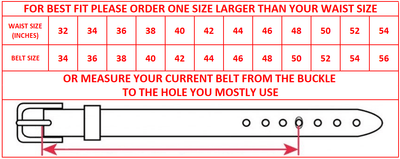
- Measure an existing belt you already wear comfortably, from the buckle end to the hole you actually use, not the belt's full length
- If you don't have a well-fitting belt, measure your waist with a soft tape at the height you wear pants, then add 2 inches for comfortable overlap through the buckle
- Round to the nearest belt size offered; the ratchet track's quarter-inch increments absorb small differences a fixed-hole belt could not
Belt size vs. pants size
| Pants waist size | Typical belt size to order |
|---|---|
| 30 | 32 |
| 32 | 34 |
| 34 | 36 |
| 36 | 38 |
| 38 | 40 |
Belt size generally runs about 2 inches larger than pants waist size, since the belt is measured from the buckle to the middle of its adjustment range rather than to where the strap ends.
Why length matters more on a ratchet belt
A ratchet track engages the buckle's pawl in quarter-inch steps across roughly 4-5 inches of adjustment. If the strap is cut too short, you lose the loosest settings in that range; too long, and you lose the tightest ones. Traditional hole belts hide a length mismatch reasonably well since holes span a wider spacing, but a ratchet belt's whole appeal is precision, so getting the base length right is what makes that precision usable day to day. Our guide to how a ratchet belt buckle actually works covers why that quarter-inch spacing exists in the first place.
Width matters too
Ratchet belts typically come in two width categories. For men, 1.25 to 1.5 inches is standard for both business and casual use. For women, 0.75 to 1.25 inches suits most garment loops, though standard widths are available for those who want more substantial waist definition. Match the width to your belt loops; a belt too wide for the loops will sit stiffly and won't thread smoothly.
Leather affects fit slightly
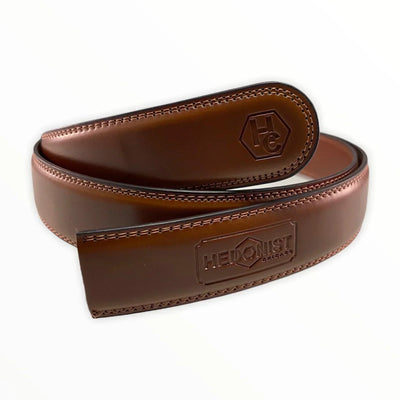
Full-grain leather stretches and softens slightly over the first few weeks of wear, so order true to your measured size rather than sizing down for a snugger initial fit. That holds regardless of color: black and brown belts made from the same grade of leather break in the same way, while bonded or coated straps hold their factory size indefinitely.
Common sizing mistakes to avoid
- Measuring the belt's total length instead of the length to the hole you use. A belt's overall length includes tip and buckle overlap that has nothing to do with your actual waist fit, so measuring the whole thing overstates the size you need.
- Measuring over thick clothing. Measure at the same layer of clothing you'll actually wear the belt with, since a tape measurement taken over a heavy coat will run larger than your real waist fit.
- Ordering pants size instead of belt size directly. The two are related but not identical, since belt sizing already builds in overlap allowance that pants sizing does not.
- Assuming all brands size belts the same way. Sizing conventions vary slightly between brands, so check the specific size chart for the belt you're ordering rather than assuming your usual number applies everywhere.
What happens if you order the wrong size anyway
Ordering slightly too large is almost always recoverable, since a strap that runs a bit long can be trimmed down once you know your actual comfortable position; see how to adjust or disassemble a ratchet belt for how that trimming works. Ordering too small is the harder mistake, since there is no way to add length back to a strap that was cut short at the factory, and you would need to size up and start again. When in doubt between two sizes, the larger one is the safer choice for exactly this reason.
Sizing across international size charts
If you're comparing a ratchet belt sized in inches against a chart using centimeters (common with belts sourced from European or Asian manufacturers), convert your waist measurement first rather than trying to match a size label directly, since numbering conventions are not standardized internationally the way they might be with, say, shoe sizes. A waist measured at 34 inches converts to roughly 86 centimeters, and from there the same two-inch (or roughly five-centimeter) overlap allowance applies regardless of which unit system the specific belt's chart uses.
Frequently asked questions
What if I'm between two belt sizes?
Size up. A ratchet belt's track only adjusts the strap shorter through the buckle, not longer, so a slightly larger size still fits correctly while a slightly smaller one may run out of usable track before you reach a comfortable setting.
Can a ratchet belt be trimmed if it's too long?
Most ratchet belts are designed so the strap can be trimmed to length once, since the track is stamped at the factory in fixed increments starting from the buckle end. If you're unsure how your specific belt handles trimming, check the instructions included with it or contact the seller before cutting.
Does the buckle add to the overall belt length I should order?
Belt sizing already accounts for the buckle length in the size chart, so you don't need to add anything extra beyond the 2-inch overlap allowance used to convert pants waist size to belt size. The chart above already reflects that adjustment for every listed size.
Will a ratchet belt still work if my weight fluctuates?
Yes, within a range. The quarter-inch track typically covers about 4-5 inches of adjustment, enough to accommodate normal day-to-day and seasonal fluctuation without needing a different size, as long as your weight stays roughly within that window.
Should I measure myself standing or sitting?
Standing, in the same posture you'll be in most of the day while wearing the belt. A waist measurement taken while sitting can compress slightly and read smaller than your true standing waist size, which can lead you to order a size that ends up running tight.
Does belt width affect what size I should order?
No, width and length are sized independently. A wider or narrower belt in the same length still fits the same waist measurement; width is chosen based on your belt loops and style preference, not your waist size.
How do I measure a leather belt I already own to find my ratchet belt size?
Lay your current belt flat and measure from the buckle's attachment point to the hole you actually wear, not to the tip of the strap. That number is your true fit length. Compare it against our size chart above, and if it falls between two sizes, order the larger one, since a ratchet track only shortens the strap, it can't add length back.
How do I cut a leather belt to size myself?
Mark the new length on the strap's underside, then use a sharp utility knife against a metal ruler for a clean, straight cut rather than scissors, which tend to leave a ragged edge on leather. Round the corners slightly to match the factory tip shape, and make sure the cut length still leaves enough strap to pass through any keeper loop comfortably.
How are leather belts sized compared to pants waist size?
Leather belts are typically sized about 2 inches larger than your pants waist size, since belt measurements run from the buckle to the middle of the adjustment range rather than to the strap's end. A 32-inch pants waist generally calls for a 34-inch belt. This convention holds across most brands, though it's worth checking the specific chart for unusual buckle styles.
Does a genuine leather ratchet belt need a different size than a bonded leather one?
No, the size chart is the same, but a genuine or full-grain leather ratchet belt will stretch and soften slightly with wear while bonded or coated leather holds its factory shape. Order true to your measured size either way. If anything, genuine leather gives you a little more forgiving fit after the first few weeks of use.
Updated: September 27, 2026
Related reading
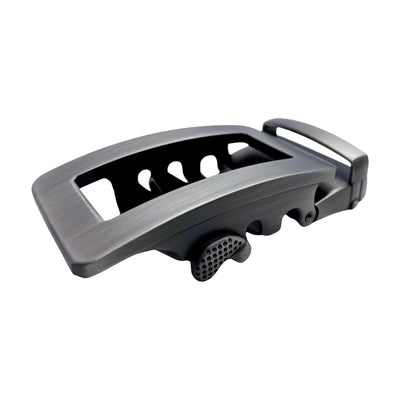
Once you know your size, our belt buckle guide covers how to pick the right buckle for a ratchet or pin system, and who invented the ratchet belt and what brand to buy covers what to look for in the mechanism itself. Browse our ratchet belts with automatic buckles to see the sizing options in person.

Leave a comment